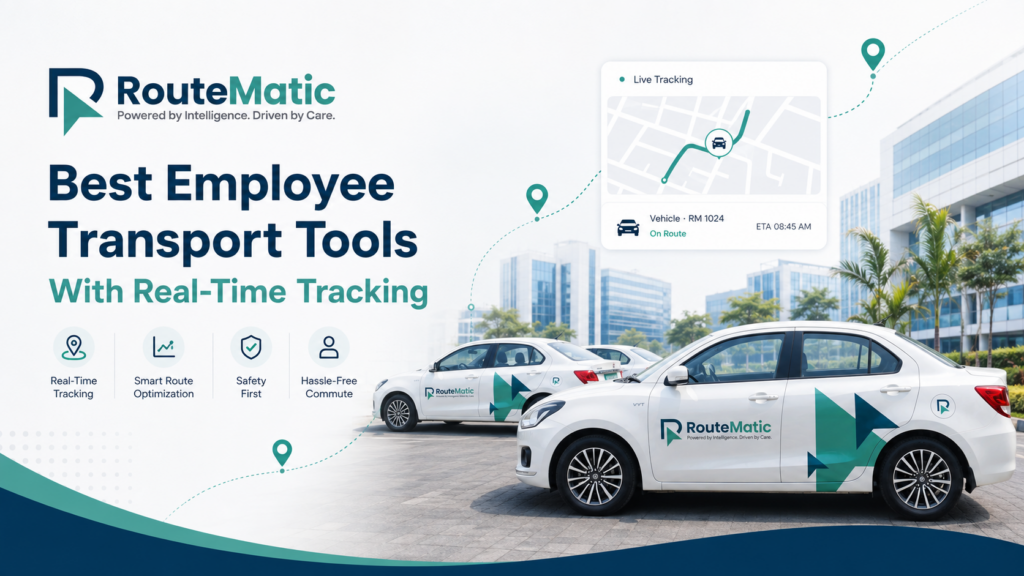
An employee’s commute is often the riskiest part of the workday, especially for organisations operating late shifts or across multiple locations. Poorly managed transportation can lead to safety incidents, delayed arrivals, employee dissatisfaction, and compliance risks. The concern is even greater for women employees, with India ranking 131st out of 181 countries on the Women, Peace and Security Index, highlighting the importance of safer workplace commutes.
Whether your organisation manages employee transport internally or through a service provider, following the right safety practices can significantly reduce risks while improving employee confidence and operational reliability.
Key Takeaways
If you only have a minute, here are the most important employee commute safety practices every employer should follow:
- Use verified drivers with background checks, licence verification, and regular safety training.
- Track every trip in real time to monitor routes, respond to emergencies, and improve visibility.
- Implement SOS and emergency response systems for faster assistance during incidents.
- Follow safe pickup and drop protocols, especially for women travelling during night shifts.
- Maintain vehicles regularly to minimise breakdowns and safety hazards.
- Use technology such as GPS tracking, geofencing, route optimisation, and transport management software to enforce safety consistently.
Why Employee Commute Safety Matters
Employee commute safety is no longer just a transport responsibility. It directly affects employee wellbeing, attendance, retention, and business continuity. Long travel times, heavy traffic, and late-night shifts increase the likelihood of safety incidents, while inadequate transport arrangements can reduce employee confidence and productivity.
A cross-sectional study among night shift workers in Chennai found that 32% of participants experienced stress and depression, showing how commute conditions can influence both physical safety and mental wellbeing. For employers, improving commute safety is therefore an investment in both employee welfare and operational performance.
Common Employee Commute Safety Challenges
Most organisations face similar challenges when managing employee transportation.
- Long commute times: Increased time on the road raises exposure to accidents and delays.
- Night shift travel: Poor lighting and limited public activity make late-night travel more vulnerable.
- Women employee safety: Secure transportation and verified safety protocols are essential during off-hour commutes.
- Limited trip visibility: Without live tracking, transport teams cannot respond quickly to delays or emergencies.
- Inconsistent transport quality: Multiple vendors often lead to varying driver standards and service quality.
- Emergency response delays: Lack of real-time communication makes incident management more difficult.
Addressing these challenges requires a structured safety programme supported by clear processes and technology.
6 Employee Commute Safety Best Practices
A strong employee commute safety programme should include the following best practices.
1. Verify Drivers Thoroughly
Conduct background verification, licence checks, and regular driver training to ensure employees travel with qualified and reliable drivers.
2. Enable Real-Time Trip Tracking
Use GPS tracking to monitor every trip, identify route deviations, and respond quickly to emergencies when required.
3. Standardise Safe Pickup and Drop Procedures
Use verified pickup locations, employee identity confirmation, and safe drop protocols, particularly for women travelling during late shifts.
4. Provide Emergency Communication
Equip employees with SOS features, emergency helplines, and app-based alerts to ensure immediate assistance during unexpected situations.
5. Maintain Vehicles Regularly
Schedule routine inspections for brakes, tyres, lights, and other critical components to reduce the risk of breakdowns and safety incidents.
6. Train Employees on Commute Safety
Educate employees about safety guidelines, emergency procedures, and reporting mechanisms while encouraging regular feedback to improve transport policies.
Building a Safer Employee Commute Programme
Improving commute safety requires more than implementing individual measures. Organisations should regularly review transport routes, audit driver performance, monitor safety incidents, collect employee feedback, and update transport policies as business requirements change.
A structured safety programme helps organisations maintain consistent standards while continuously improving employee transportation.
How Routematic Helps Improve Employee Commute Safety
Implementing commute safety best practices becomes much easier when transport operations are managed through a single platform. Instead of relying on manual processes or multiple transport vendors, organisations can standardise safety measures across every trip.
With Routematic’s AI-powered employee transportation platform, enterprises can:
- Monitor every trip in real time through a live command centre and GPS tracking.
- Strengthen employee safety with SOS alerts, geofencing, driver verification, and automated safe drop confirmation.
- Improve route planning using AI-driven optimisation to reduce travel time and avoid high-risk routes.
- Increase operational visibility with transport analytics, trip records, and performance dashboards.
- Ensure billing transparency through GPS-verified trip data and automated invoice generation.
- Scale transport operations across multiple cities, offices, and shift schedules from a single platform.
By combining technology with managed transport operations, Routematic helps enterprises build a safer, more reliable, and more efficient employee commute programme while maintaining complete visibility and control over daily transportation.
Conclusion
Employee commute safety is no longer just about arranging transportation. It requires a structured approach that combines verified drivers, safe travel protocols, real-time visibility, emergency response, and continuous monitoring.
By following these best practices and supporting them with the right technology, organisations can reduce travel risks, improve employee confidence, strengthen compliance, and build a safer, more reliable commute experience for every employee.
Frequently Asked Questions
What are the most important employee commute safety best practices?
Verified drivers, real-time tracking, standardised safe pickup and drop protocols, emergency communication, rigorous vehicle maintenance, and employee training. Together, these cover the highest risk points of any commute.
What is the employer’s responsibility for commute safety?
To assess travel risks, set clear safety policies, ensure vehicles and drivers meet standards, and maintain compliance records, particularly where transport is employer-arranged.
How can employers improve safety for women employees?
Through secure vehicles, verified drivers, live tracking, designated safe boarding points, and automated safe drop confirmation on late-night trips.
How does technology improve commute safety?
It enables live tracking, geofencing, SOS response, and safe drop confirmation, while AI routing avoids high-risk roads and digital records support compliance.
About the author

Sandeep Padhi
Chief Operating Officer, RouteMatic
As COO of RouteMatic, Sandeep Padhi brings extensive expertise in transport operations, fleet management, and enterprise mobility. He shares practical insights on scaling transportation programs, operational excellence, compliance, driver ecosystems, and building reliable mobility solutions for modern enterprises.