In India’s rapidly urbanising metros, where roads are choked with traffic and air pollution is a growing concern, the transformation of employee mobility is not just timely, it’s imperative.
Among the most promising innovations reshaping the way employees travel is the adoption of electric vehicles (EVs) in corporate transportation fleets. The emergence of electric cabs tailored for the daily office commute marks a turning point in how companies are addressing sustainability, cost-efficiency, and employee satisfaction, all in one solution.
This blog explores why electric cars are poised to redefine daily office cab service models in India and how organisations are using this shift to future-proof their employee mobility strategies.
A Shift Rooted in Necessity: Why the EV Transition Matters
Corporate India has long grappled with the inefficiencies of traditional commuting systems. Diesel-powered vehicles, unpredictable traffic, and poor air quality combine to create a frustrating and environmentally damaging commute experience for millions of officegoers.
Electric cabs address these challenges head-on. They offer not only a quieter, smoother ride but also drastically reduced emissions. In cities like Bengaluru, Mumbai, Gurugram, and Pune, where corporate offices and tech parks are densely packed, EV adoption is no longer a pilot experiment; it is becoming a strategic imperative.
The Business Case: Efficiency Meets Sustainability
Electric cabs bring measurable advantages to businesses looking to overhaul their employee transportation models:
1. Operational Cost Reduction
Electric vehicles have significantly lower per-kilometre running costs compared to fossil fuel-based vehicles. With fuel prices in India remaining volatile, electric fleets provide budget predictability for corporate transport administrators.
Additionally, lower maintenance requirements (fewer moving parts, no oil changes) lead to reduced downtime and enhanced asset life, making electric vehicles an economically sound investment for daily office cab service providers and enterprises alike.
2. Cleaner Commutes and ESG Alignment
With India’s focus on achieving net-zero emissions by 2070, corporates are under increasing pressure to demonstrate meaningful ESG (Environmental, Social, and Governance) compliance. Electric cabs allow companies to reduce their Scope 3 emissions and actively contribute to urban air quality improvement.
By integrating electric vehicles into their daily office commute networks, businesses not only reduce their carbon footprint but also create tangible sustainability milestones they can report to investors and stakeholders.
Technology Is Driving the EV Ecosystem
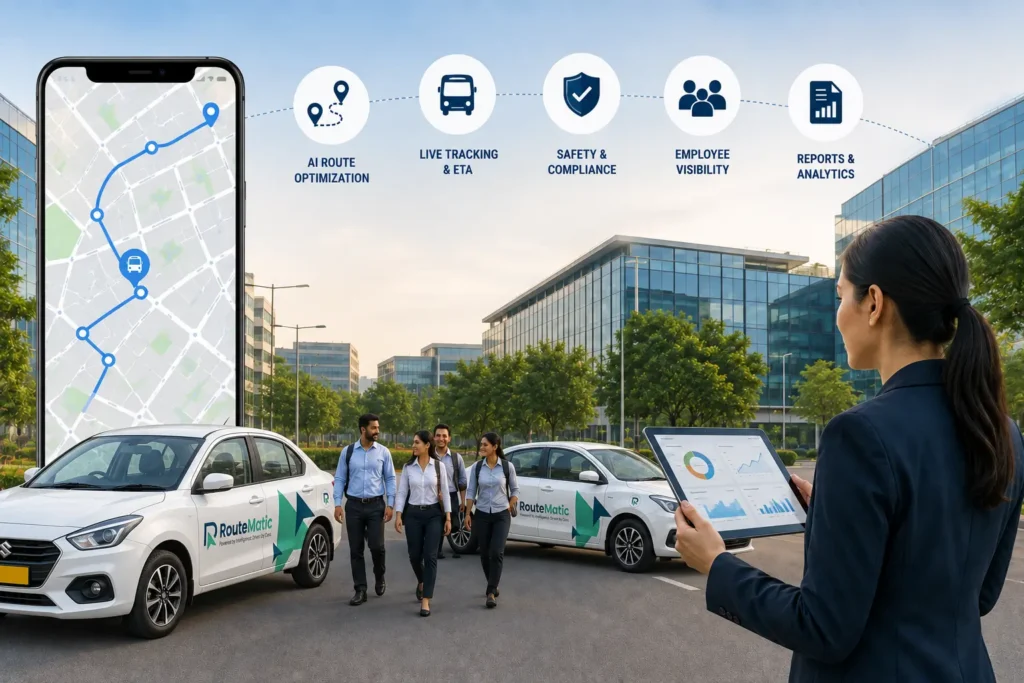
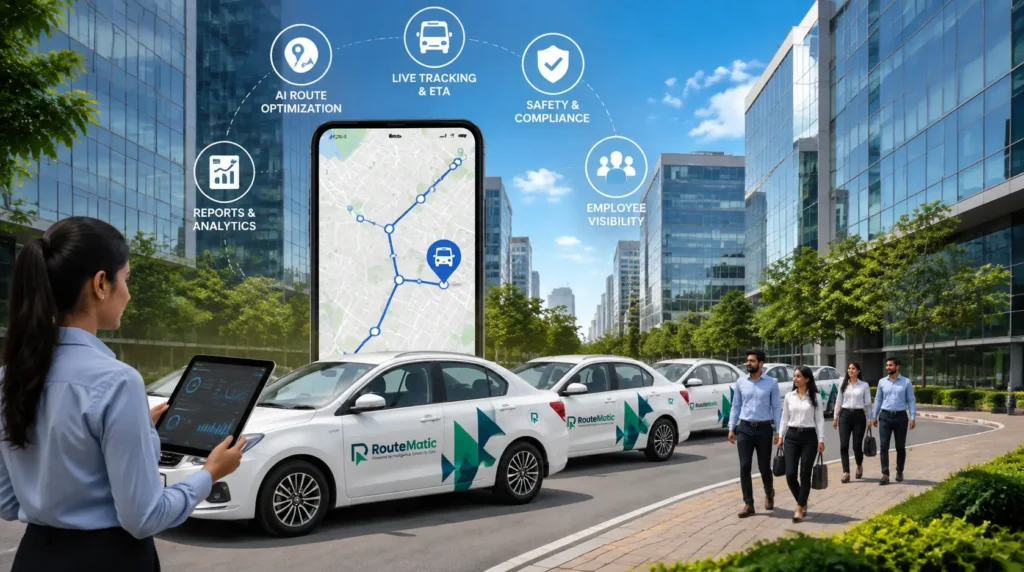
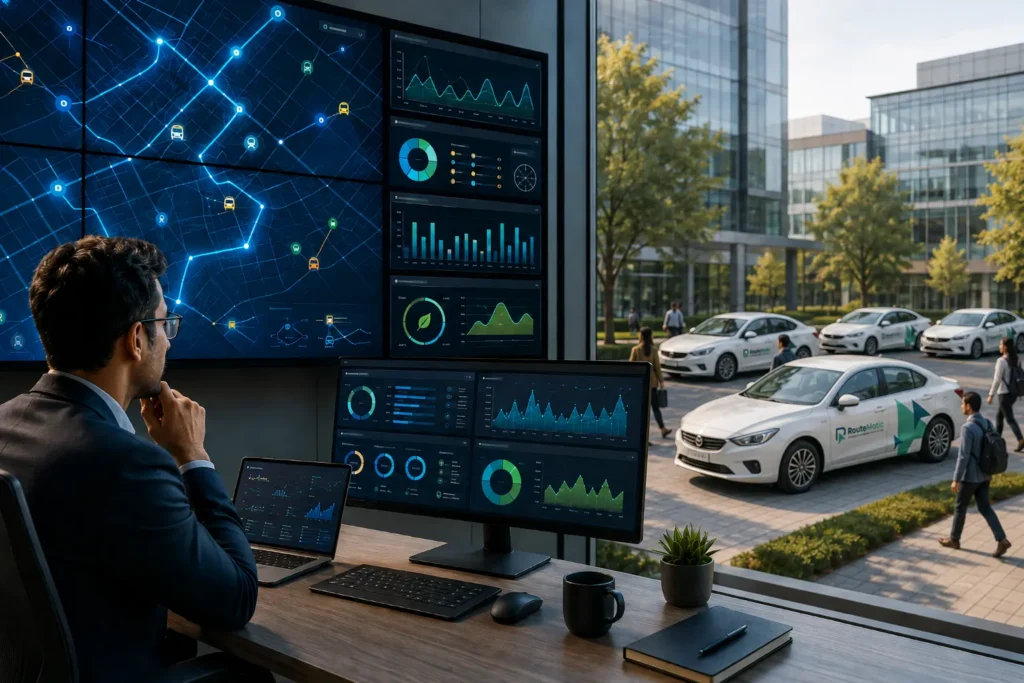
The rise of electric cabs is closely tied to the evolution of intelligent fleet management. Companies like RouteMatic are enabling this transition through platforms that offer real-time visibility, AI-powered route optimisation, and energy consumption tracking. These features ensure that electric fleets are used to their maximum potential, balancing cost, coverage, and sustainability.
Moreover, with telematics, fleet operators can monitor battery health, schedule smart charging, and preempt service disruptions, ensuring smooth and reliable operations.
Employee Experience as a Differentiator
In the battle for talent, employee experience is paramount. A reliable, eco-conscious commute not only improves punctuality but also boosts morale. Employees are increasingly valuing green initiatives, and offering electric cabs as part of corporate transportation can reflect a company’s commitment to environmental stewardship.
In cities where commute fatigue is a major contributor to burnout, a consistent and smooth electric cab experience can offer comfort and peace of mind, critical intangible benefits that enhance employee retention.
Overcoming Challenges: Infrastructure, Policy & Scale
While the benefits are clear, the path to widespread EV adoption is not without hurdles. Limited public charging infrastructure, range anxiety, and initial procurement costs have slowed down mass implementation.
However, proactive government support in the form of FAME subsidies, state-level EV policies, and the rise of private charging networks are steadily removing these barriers.
Several forward-thinking Indian enterprises are now opting for captive charging infrastructure at office campuses to support in-house fleets, while also partnering with specialised service providers for fleet-as-a-service (FaaS) models.
Conclusion: The Future of Office Mobility is Electric
Electric cars are not merely a trend, they represent the convergence of environmental responsibility, economic logic, and technological innovation. For Indian corporates, integrating EVs into the daily office commute is not just about modernising transport, but about leading by example in a carbon-conscious world.
With enablers like RouteMatic offering end-to-end EV fleet solutions, the transition becomes not only feasible but strategically sound. As infrastructure matures and employee expectations evolve, electric cars are set to become the cornerstone of India’s next-generation daily office cab service ecosystem, driving both impact and innovation forward.