As India’s urban centres grow denser and more congested, the challenges of commuting, air pollution, traffic delays, and rising fuel costs are more than just daily inconveniences. They are threats to public health, environmental quality, and economic productivity.
Against this backdrop, the concept of green transport has taken centre stage. But what does green transportation mean, and how can businesses in India actively participate in the shift?
Let’s break it down.
What Is Green Transport?
Green transport refers to commuting methods and systems that reduce environmental impact by minimising fuel consumption, emissions, and congestion. This can include:
- Electric Vehicles (EVs)
- Hybrid and fuel-efficient vehicles
- Shared mobility and pooling
- Non-motorised transport (walking, cycling)
- Public and mass transit systems
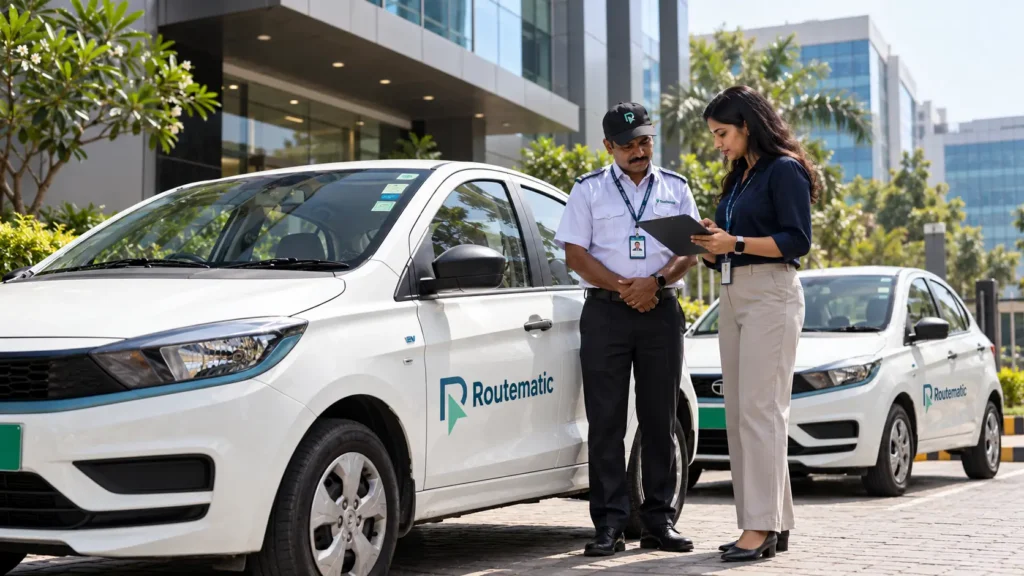
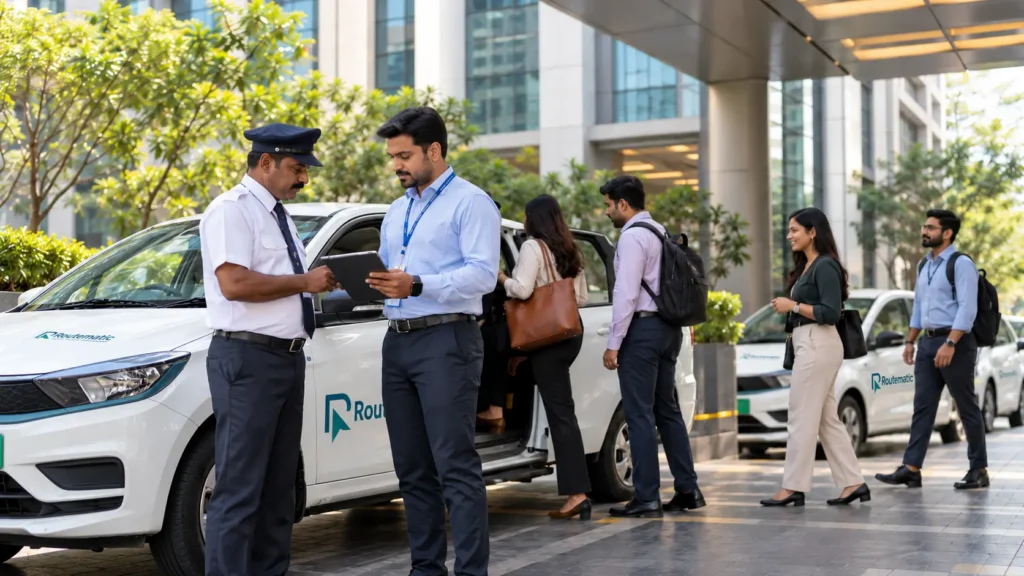
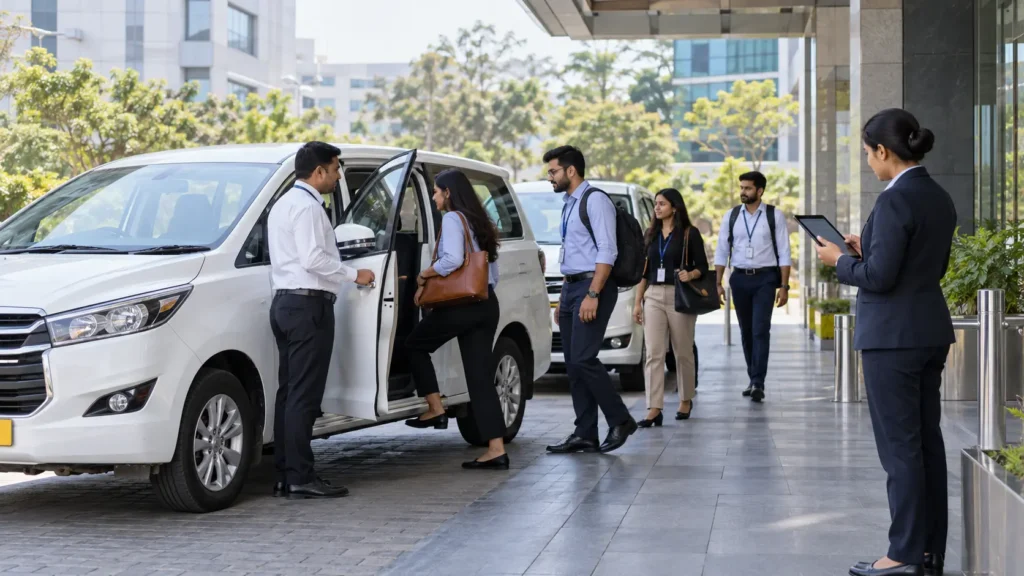
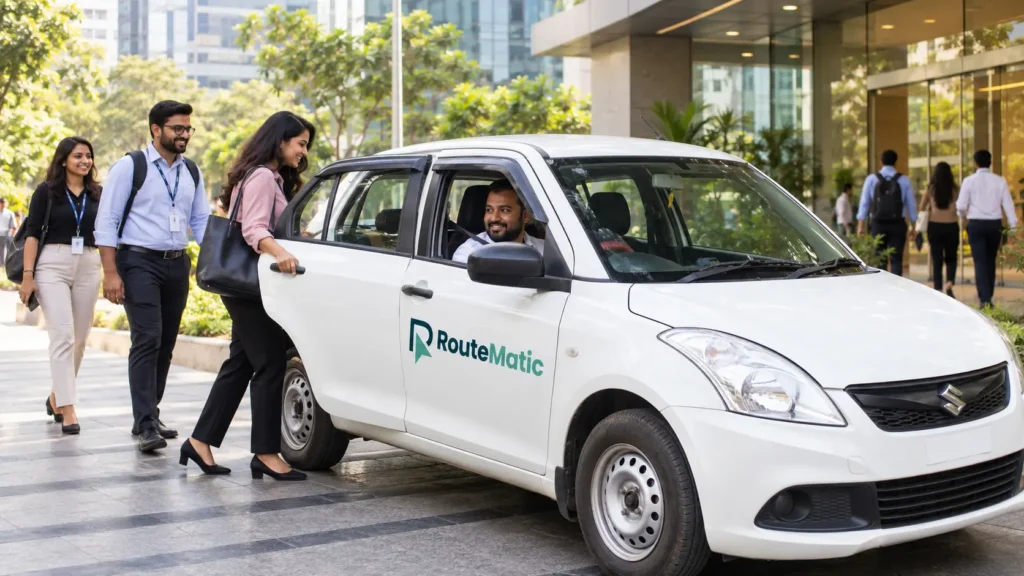
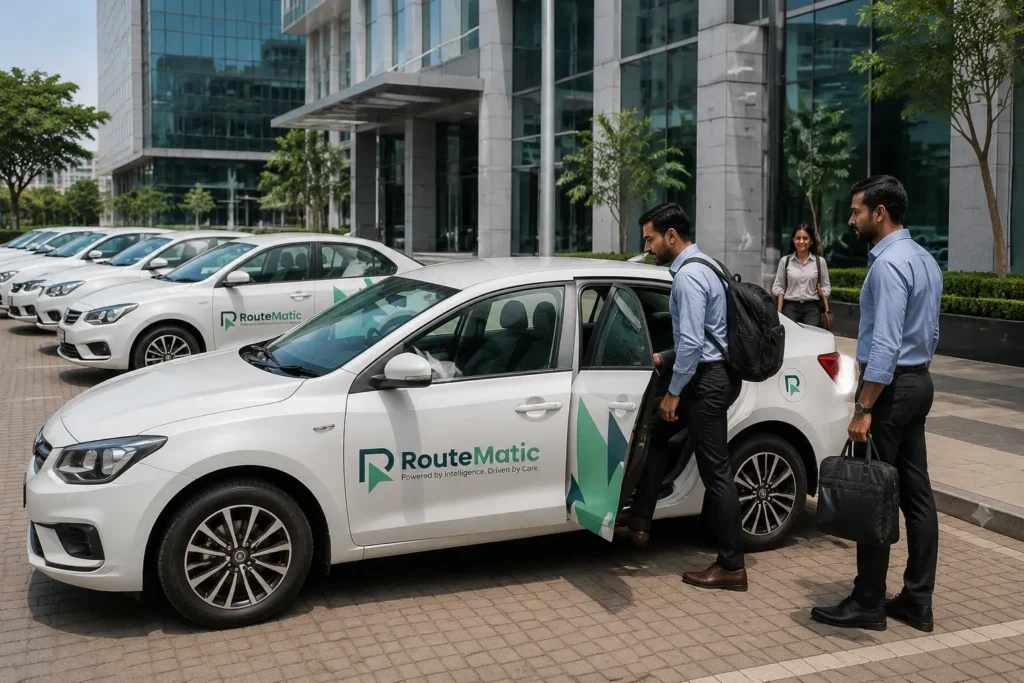
In the corporate context, this also translates into fleet electrification, route optimisation, and shared shuttle services designed to reduce the number of vehicles on the road while improving commute efficiency.
Why Green Transport Matters for Businesses
For companies operating in India’s major business hubs, Bengaluru, Hyderabad, Gurugram, and Mumbai, corporate commute is not just a logistical issue; it’s an environmental and operational one.
Here’s why companies are shifting toward green mobility:
1. Air Quality and Compliance
According to the World Air Quality Report 2023, 39 of the world’s 50 most polluted cities are in India. Urban commuting contributes significantly to PM2.5 levels. Organisations are now under pressure from both regulators and employees to minimise their environmental footprint.
2. Cost Efficiency through Shared Rides
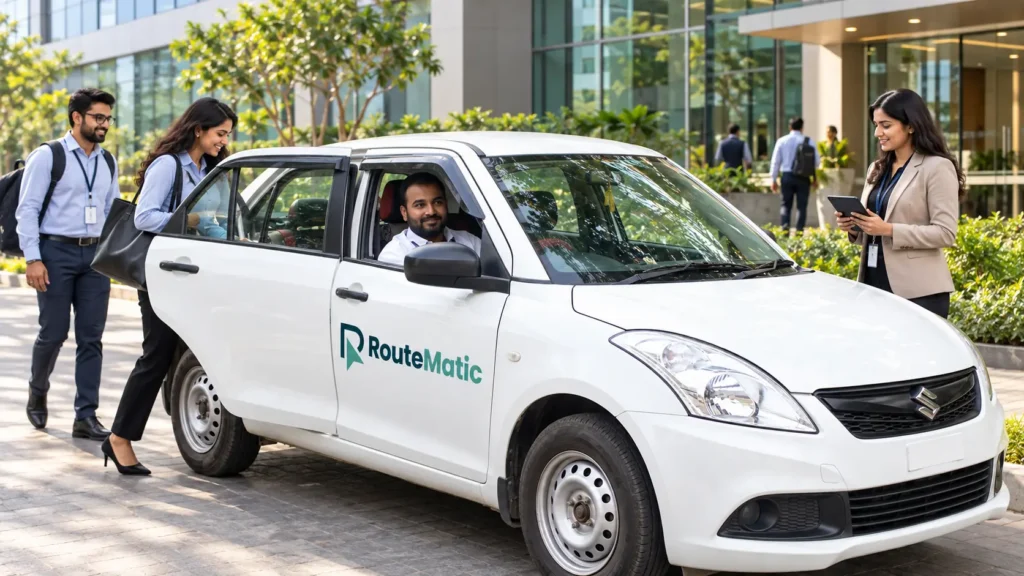
Fuel costs in India remain unpredictable. By pooling rides and optimising travel routes using AI-powered platforms like RouteMatic, companies can reduce redundant mileage, save fuel, and improve employee punctuality.
3. Support for ESG Goals
Green transportation directly contributes to Scope 3 emission reductions, which are crucial in sustainability and ESG reporting. Demonstrating tangible improvements in mobility-related emissions enhances corporate credibility in stakeholder and investor circles.
How Companies Can Adopt Green Transport
Green commuting isn’t a one-size-fits-all initiative. It requires careful design, digital systems, and policy alignment. Here are some actionable steps companies are taking:
- Transition to EVs for Corporate Commutes: Electric vehicles reduce per-kilometre emissions to nearly zero. While initial costs are higher, the total cost of ownership drops with scale. At RouteMatic, we’ve helped multiple enterprises in India switch to EV shuttles by offering end-to-end charging infrastructure, route planning, and fleet tracking.
- Optimise Routes with Data: Using real-time traffic data, dynamic scheduling, and geofencing, green mobility platforms reduce idle time and fuel usage. This is not just about sustainability, it’s also about efficiency.
- Incentivise Employees to Choose Shared Transport: Companies can offer incentives, such as transport reimbursements only for shared rides, or carbon-reduction badges on internal HR dashboards, to nudge behavioural change.
India’s Evolving Transport Ecosystem
India’s policy push is accelerating the green shift. The FAME II scheme (Faster Adoption and Manufacturing of Hybrid and Electric Vehicles) offers financial incentives for electric fleet adoption. Many states like Maharashtra, Karnataka, and Delhi have also rolled out EV-specific mobility policies to support commercial fleet operators.
This regulatory support makes 2024–2025 a crucial window for companies to realign their commute strategies with national goals.
Conclusion: A Cleaner Commute Starts at the Office Gate
Green transport isn’t just an environmental buzzword; it’s a tangible shift in how Indian businesses are redefining their role in climate action. By transitioning to electric fleets, digitising route planning, and encouraging shared commuting, companies can reduce emissions, boost operational efficiency, and offer a better daily experience to employees.
At RouteMatic, we are making this transition seamless, helping enterprises deploy intelligent, scalable, and future-ready mobility systems tailored to Indian realities.
In a world where every kilometre counts, how your employees commute is no longer a background detail; it’s part of your sustainability story.