Hyderabad has dense tech corridors, irregular shifts, and rising traffic costs. A single transport model rarely works for all needs. Treating buses, shuttles, and cars as rivals usually leads to higher costs and more chaos. A better option is a hybrid model. Use shared routes where they make sense.
Use corporate car rental where point‑to‑point travel is essential. Then run everything through one platform. This article explains how to do that in Hyderabad, and how RouteMatic supports this approach.
When to use shuttles for the daily office commute
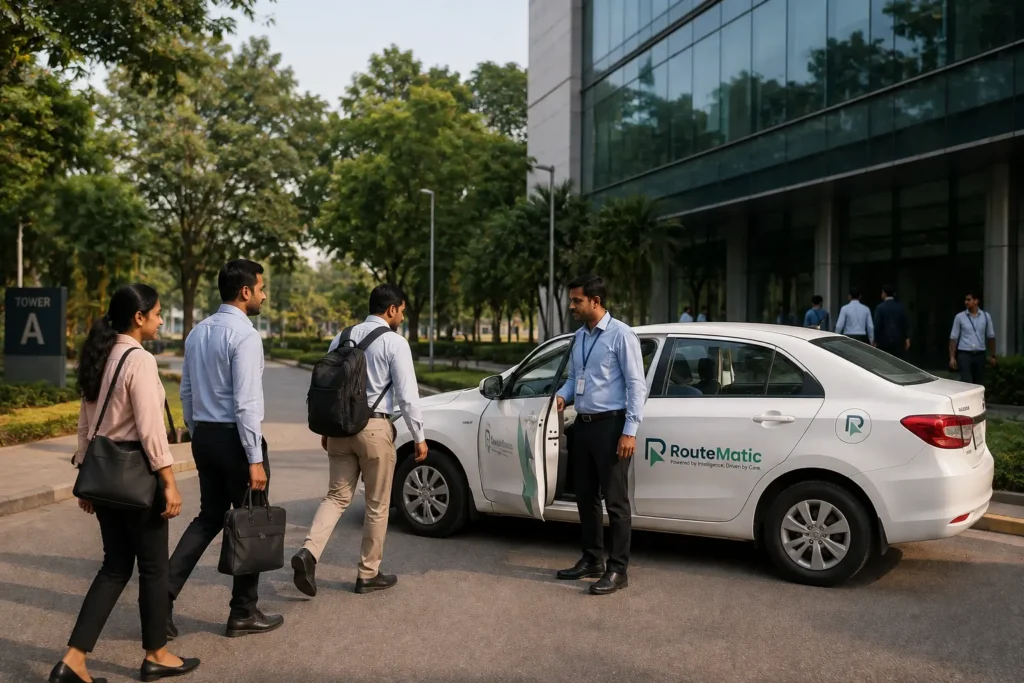
Shuttles work best when demand is predictable and concentrated. In Hyderabad, that often means large groups of employees travelling to hubs like HITECH City, Gachibowli, Financial District, or Madhapur. Here, fixed or semi‑fixed routes make sense.
Shuttles are ideal for peak‑hour movement. For example, 9 a.m. reporting and 6 p.m. drops on popular corridors. When routes are designed using proper data, shuttles can hit high occupancy, keep ETAs stable, and lower cost per seat. This supports large teams at scale.
Shuttles also work well for structured inter‑office links. Think of regular loops between two campuses or between a campus and a metro station. In these cases, a car is wasteful. A shared bus or van delivers more value and less congestion.
When to use corporate car rental in Hyderabad
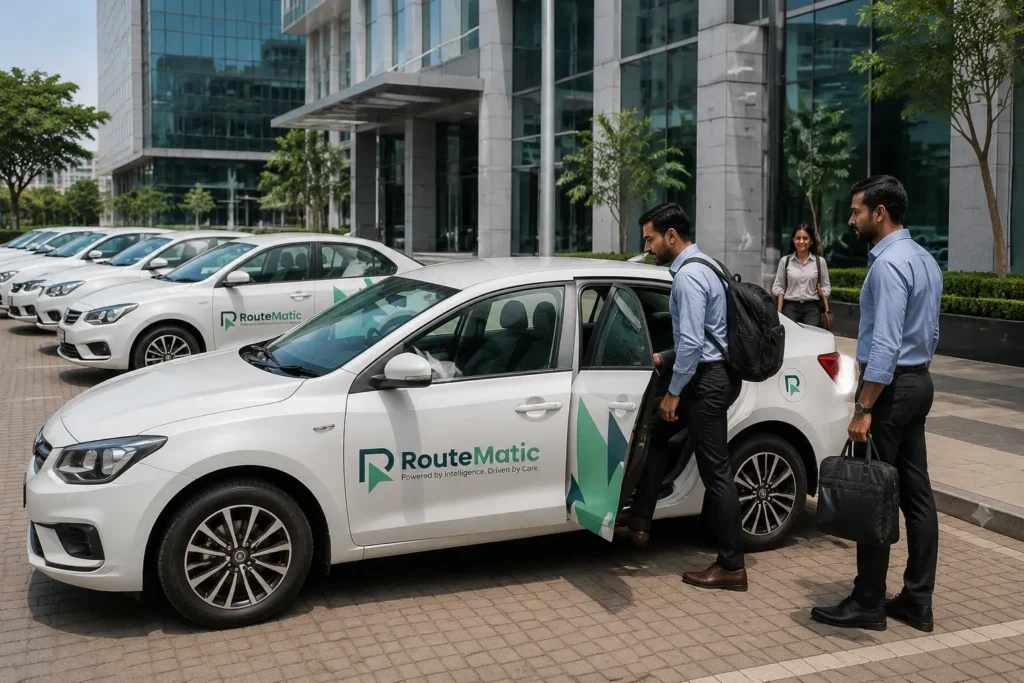
Cars still have a clear role. Corporate car rental is useful when travel is time‑sensitive, one‑off, or high‑touch. For example, senior leadership visits, client meetings, vendor audits, and interviews. It is also the better choice for off‑cycle shifts and late‑night drops where a full shuttle is not practical.
In a city like Hyderabad, some residential clusters are too thin for a bus route but still need reliable transport. Here, corporate car rental in Hyderabad fills the gap. Cars pick up a small number of riders, maybe one or two, with precise timing. This keeps service flexible without forcing the company to run half‑empty buses.
Airport transfers and hotel‑to‑office travel are also better handled via managed car rental. These trips are frequent but not always aligned with shift timings. A flexible car model with strong tracking and safety controls works better than trying to bend shuttle routes around flights.
How to decide between shuttles and cars for each use case
A simple way to choose between shuttles and corporate car rental is to ask three questions. How many people travel on the corridor? How predictable their timings are. How important punctuality and comfort are for that group.
If many people travel at similar times, and tolerance for small delays is reasonable, shuttles win. If the group is small, travel times vary, or the travellers are clients or senior leaders, cars win. This is the heart of a hybrid model.
Over time, data can refine these choices. If a corridor shows consistent demand, it can move from car‑heavy to shuttle‑heavy. If a route has frequent changes and low occupancy, it may move from bus to car. The key is to look at real numbers, not assumptions.
Why a single platform is essential
A hybrid model only works if shuttles and cars are not managed in isolation. If each vendor and mode has its own app, dashboard, and invoice, operations teams spend their time stitching information together. Finance struggles with reconciliation. Leadership never gets a full picture.
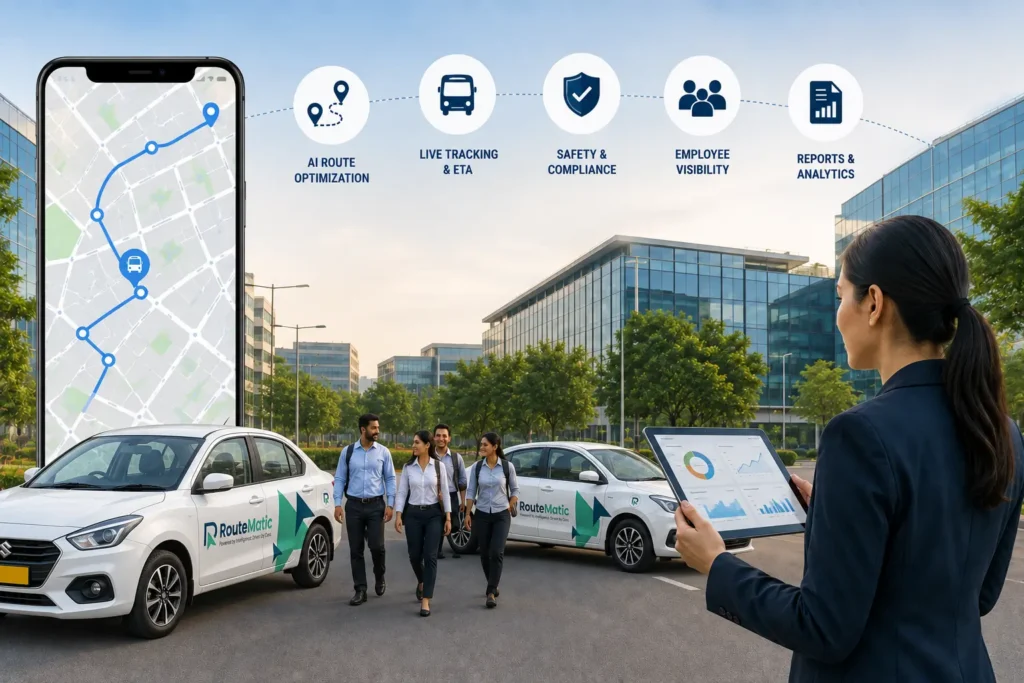
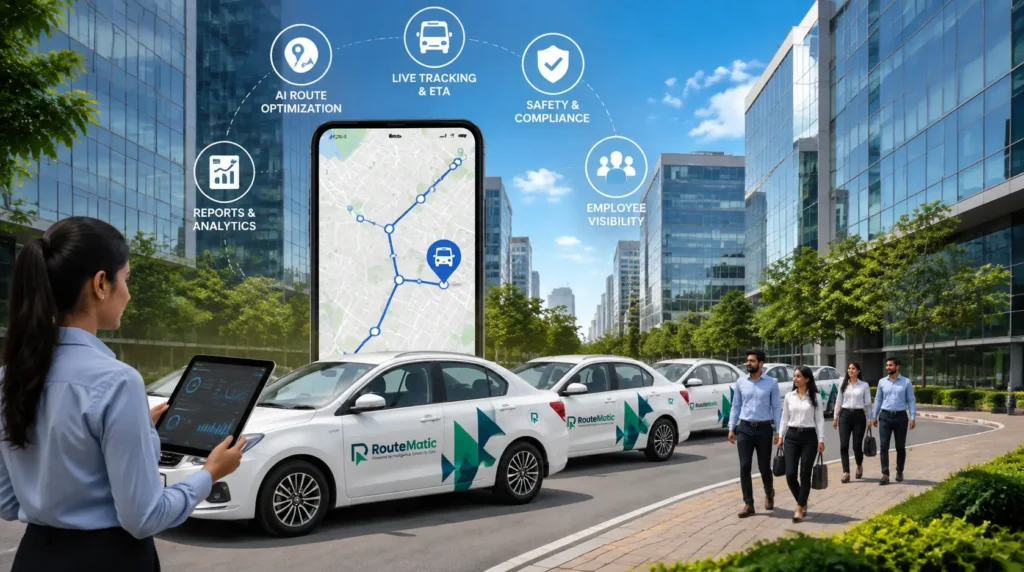
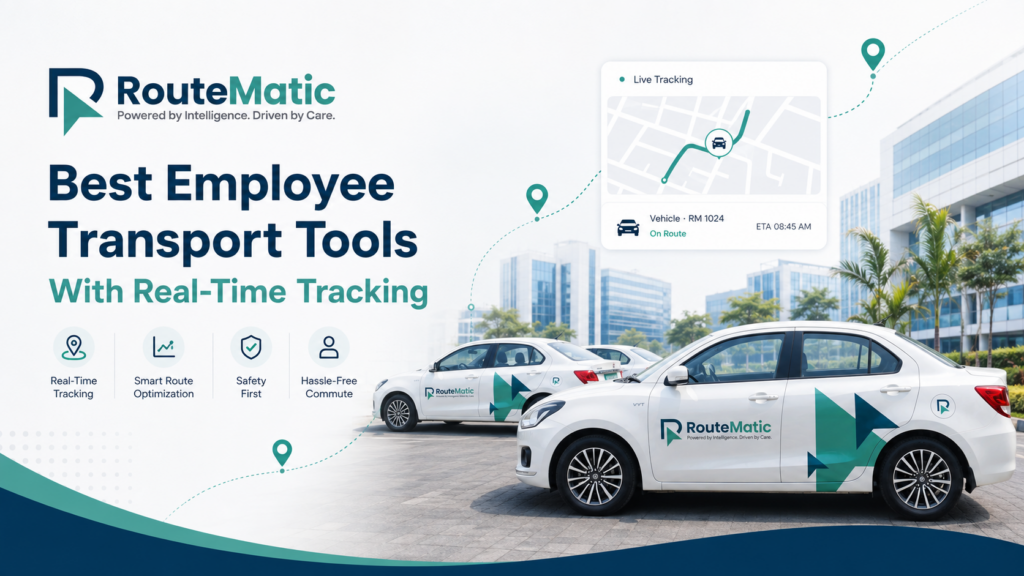
Routing all demand through one platform solves this. Office cabs, shuttles, and corporate car rental in Hyderabad appear in one control tower. The same system handles roster imports, trip creation, vehicle assignment, and tracking. The same rules apply for safety, SLAs, and billing evidence.
With this approach, transport teams can see which routes are running as shuttles, where cars are supporting off‑peak or VIP movement, and how both modes are performing. Finance gets a single, event‑led invoice, with trips from all modes documented in the same format.
How RouteMatic optimises the hybrid commute model
RouteMatic is built around this hybrid idea. The platform uses AI‑based routing to design shuttle routes and assign cars on the same map. It can decide whether a new demand should join an existing route or run as a separate corporate car rental trip. It looks at occupancy targets, SLA commitments, and past data to make these decisions.
Back‑to‑back trip assignment is another key feature. A vehicle that drops a shuttle load in HITECH City can be reassigned to a nearby car rental trip instead of returning empty. This reduces dead kilometres and lowers cost.
RouteMatic also tracks more than a hundred operational metrics across modes. These include on‑time performance, occupancy, dead‑kilometre ratio, safety incidents, driver behaviour, and dispute rates. With this detail, transport, HR, and finance can see which corridors should remain shuttle‑heavy and where corporate car rental gives better value.
Safety and compliance across shuttles and cars
Safety cannot drop when you switch modes. In a hybrid model managed by one platform, safety rules stay consistent. Verified drivers, geofenced routes, women’s safe drop, and SOS support apply to both shuttles and cars. Incident reporting and escalation ladders are the same.
This matters in corporate car rental in Hyderabad, where late‑night drops and point‑to‑point travel are common. With RouteMatic, every trip, whether shuttle or car, creates an audit trail. That trail supports internal audits, external checks, and duty‑of‑care obligations.
Billing, reporting, and decision‑making
When everything runs through one system, billing becomes simpler. Instead of separate invoices for shuttles and corporate car rental, finance receives one consolidated view. Each line has event proof. It is clear which trips belong to which business unit or project.
Reporting also improves. Leaders can see the cost per seat by route, mode, and corridor. They can track trends in shuttle occupancy and car usage. They can measure the impact of any policy change, such as shifting a route to a shuttle or adding more car capacity for late nights.
This transparency lets organisations tune their hybrid model regularly. They can move capacity between shuttles and cars based on data, not assumptions or complaints alone.
Conclusion
A modern commute strategy in Hyderabad should not force a choice between buses and cars. Shuttles handle high‑volume, predictable routes. Corporate car rental fits premium, flexible, or low‑volume needs. The real advantage comes when both are planned, monitored, and billed through one platform.
By routing all demand through a single control tower, enterprises gain better visibility on cost, safety, and service quality. With AI‑based routing, back‑to‑back trip assignment, and rich metrics, RouteMatic helps design and refine this hybrid model.
For organisations that want reliable commutes, stronger compliance, and cleaner numbers, combining shuttles with corporate car rental in Hyderabad in one managed system is a practical and future‑ready path.