In India’s dynamic corporate ecosystem, talent mobility and employee well-being have become closely intertwined. As urban centres grow denser and commute times stretch longer, companies are increasingly being held accountable for how their employees travel to work. Today, a well-designed sustainable transport program is no longer a nice-to-have; it’s a strategic imperative.
Beyond reducing emissions or easing congestion, sustainable corporate commuting plays a silent but powerful role in shaping employee satisfaction, reducing attrition, and reinforcing a company’s commitment to long-term care for its workforce.
Why Sustainable Commute Planning Has Become a Priority for Employee Programs
Let’s consider the reality for a moment. In cities like Bengaluru, Mumbai, and Noida, many employees spend 2–3 hours every day just getting to and from work. Cumulative stress, unreliable transport, and safety concerns are not just daily nuisances; they impact health, punctuality, and job satisfaction.
As HR departments look for ways to improve the employee experience without dramatically increasing payroll, sustainable commuting employee benefits offer a new path. It’s about taking a routine activity, the commute, and transforming it into a supportive, efficient, and eco-conscious system that adds value to both the employer and the employee.
The Business Case for a Thoughtful Transport Design
Building a sustainable transport framework requires more than swapping diesel cabs with electric ones. It demands a mindset shift, from reactive travel arrangements to a predictive, systematised model.
Here’s what the most forward-thinking companies are doing:
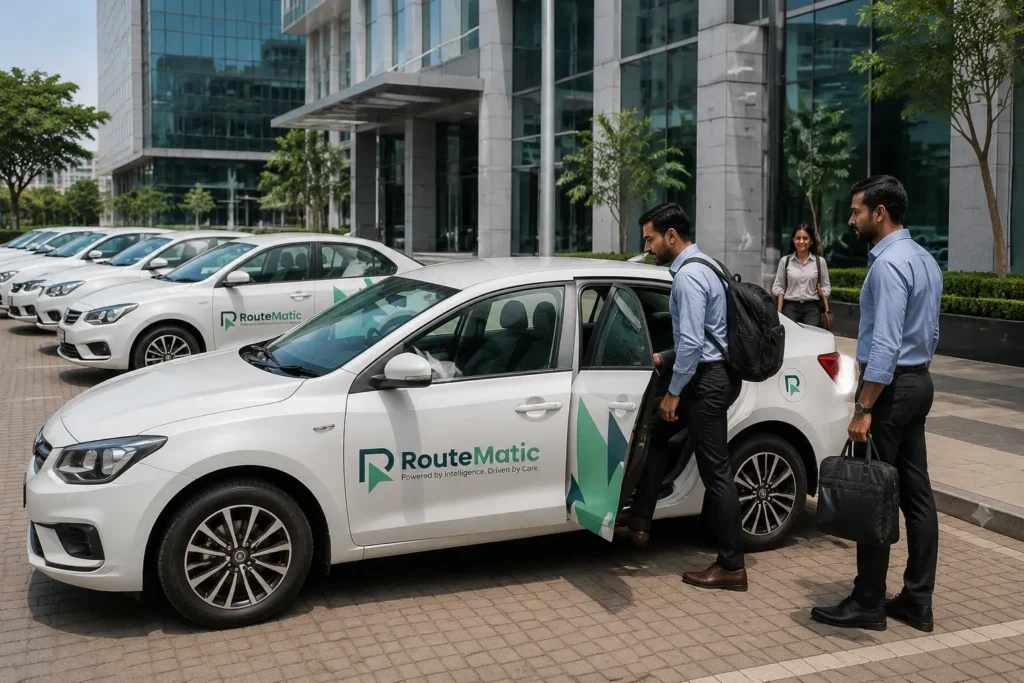
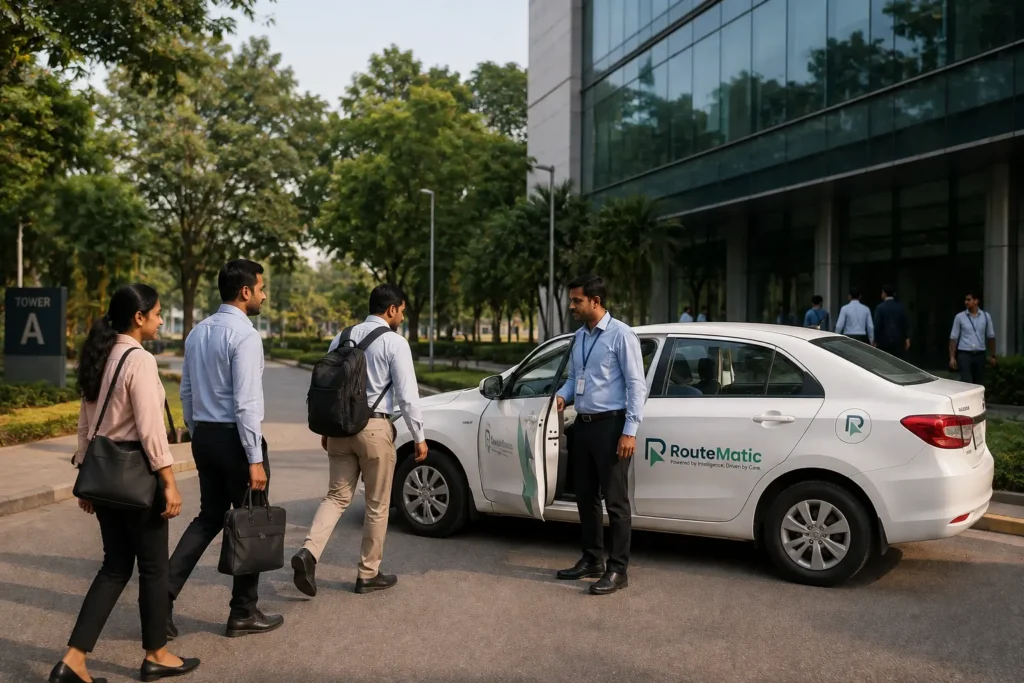
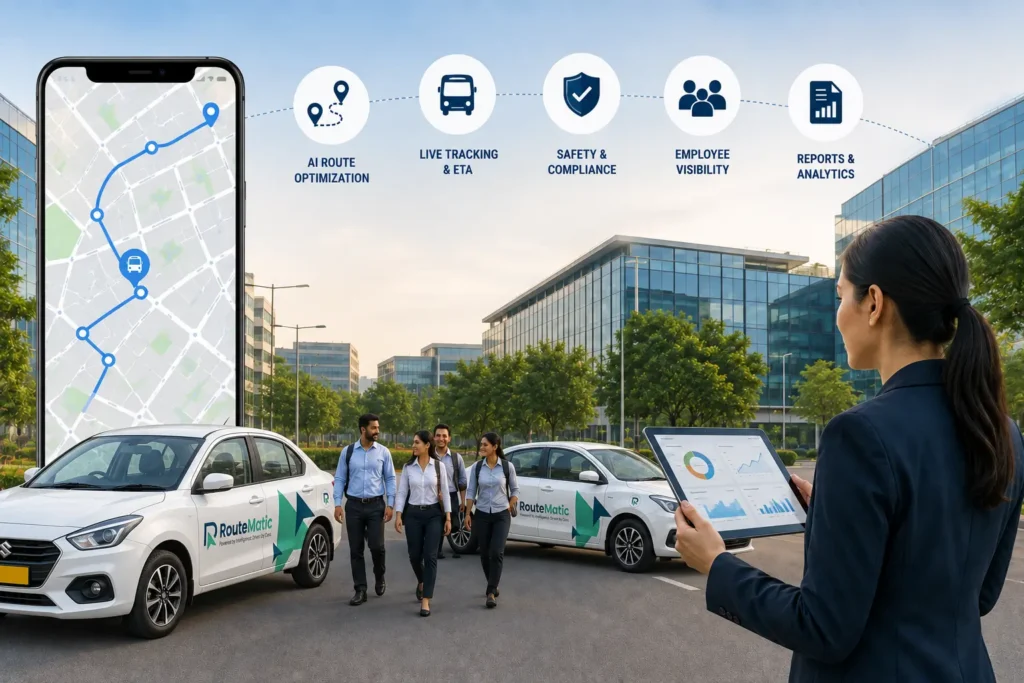
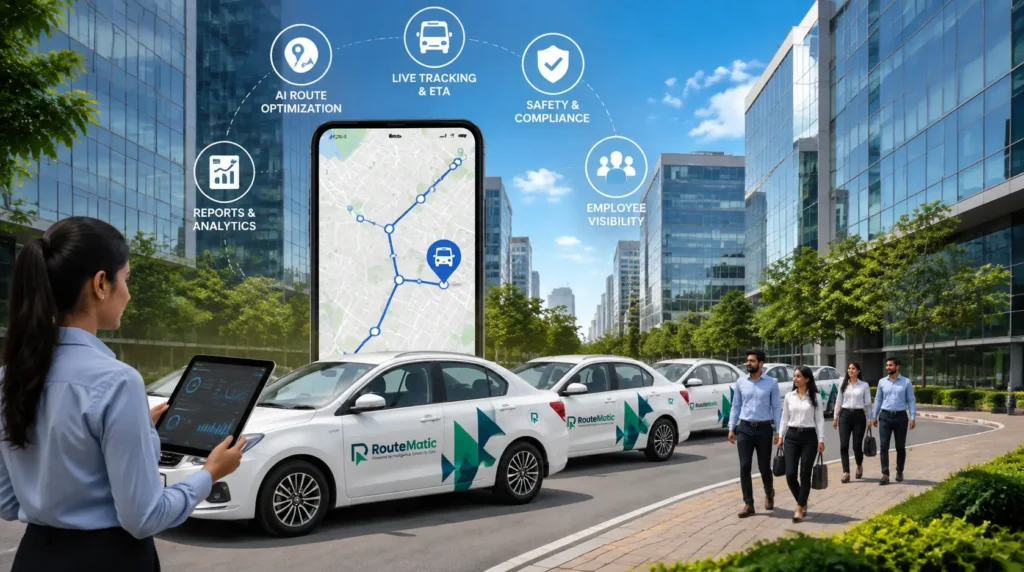
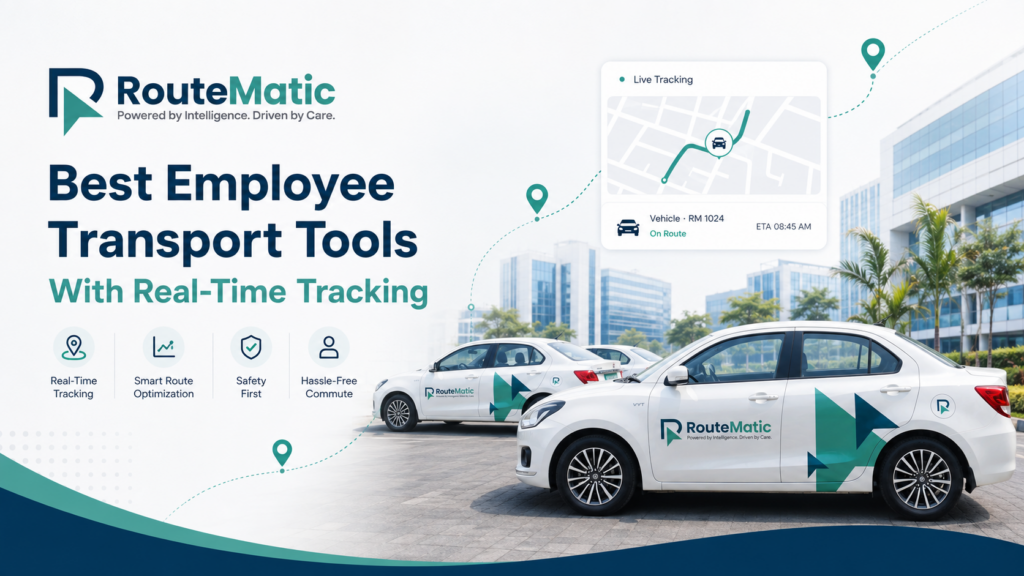
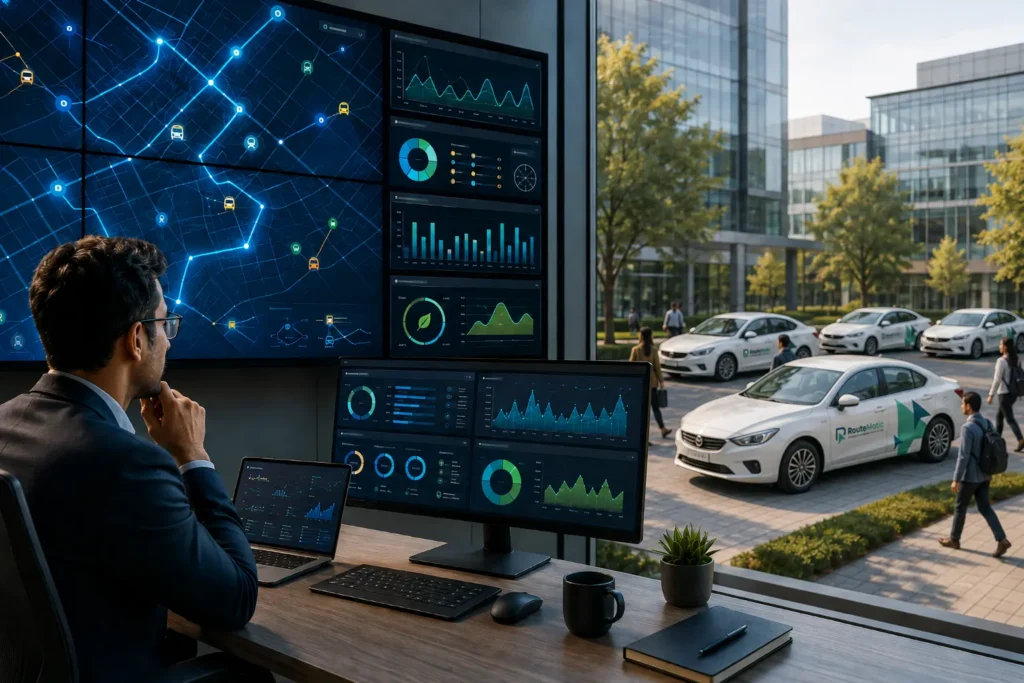
1. Deploying Centralised, Shared Mobility Systems: Gone are the days of reimbursing auto fares or leaving employees to book cabs on their own. Centralised systems, often managed by platforms like RouteMatic, bring order and accountability. With route optimisation and fleet pooling, companies reduce fuel usage, improve trip efficiency, and deliver a consistent, safer commute.
2. Prioritising Clean Vehicles and Emission Tracking: Sustainability today is measurable. Integrating EVs or hybrid vehicles into the transport fleet, coupled with tools that track CO₂ reduction per kilometre, not only demonstrates environmental commitment but also feeds into CSR and ESG reporting.
More importantly, employees take pride in being part of a workplace that minimises its ecological footprint. It aligns with the growing values of India’s young, environmentally aware workforce.
3. Customising for Employee Needs: Modern transport programs allow flexibility, whether it’s accommodating hybrid work schedules, providing gender-sensitive routing, or integrating facial-recognition-based boarding systems for added safety. These elements directly impact retention, especially among women professionals and mid-level executives balancing work and family.
The Human Side of Sustainable Commutes
When employees don’t have to worry about daily transportation, its cost, availability, or safety, they show up to work with more focus and less fatigue. Companies that offer sustainable commuting employee benefits aren’t just reducing carbon footprints; they’re also nurturing physical health and mental peace.
Consider the knock-on effects: improved punctuality, reduced absenteeism, and fewer late log-ins. Over months, this adds up to stronger team performance and a more stable workforce.
In India, where employee attrition in sectors like IT, BFSI, and telecom can cross 20% annually, the cost of replacing a trained employee far exceeds that of investing in a structured commute plan.
Conclusion: Designing for People, Sustaining for the Future
A sustainable transport program is more than a logistics solution; it’s a declaration of values. It tells current and prospective employees that the company values their time, health, and future. It signals to investors and stakeholders that the business is prepared for the next phase of urban growth and environmental responsibility.
Organisations that view mobility as part of their employee wellbeing strategy, not just as a line item in operations, are positioning themselves for resilience. Platforms like RouteMatic are already enabling this transition with scalable, tech-driven models tailored for Indian urban realities.
In the end, companies that get employee commuting right aren’t just moving people, they’re moving ahead.
To explore how RouteMatic is helping businesses design sustainable mobility programs, visit www.routematic.com.