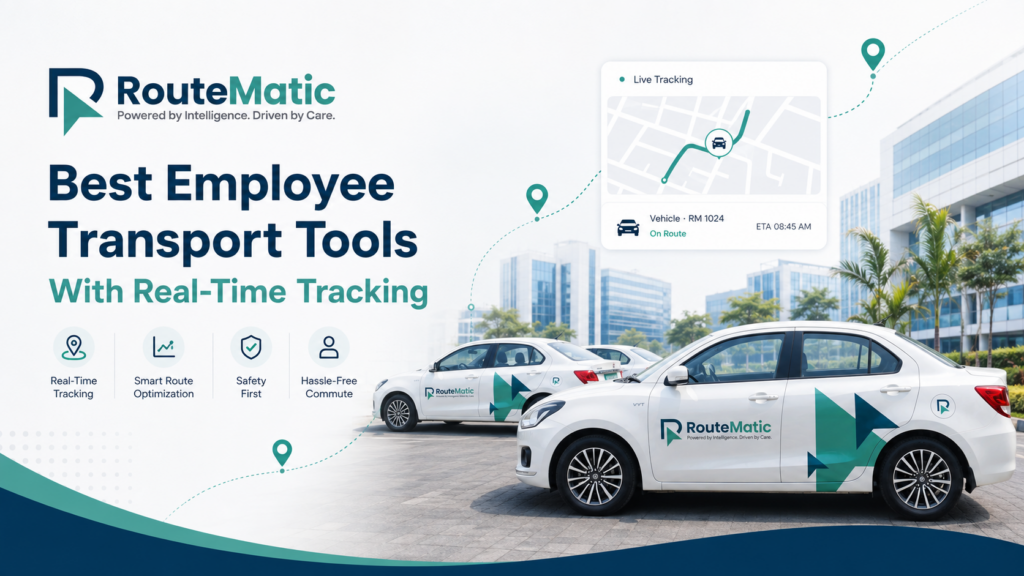
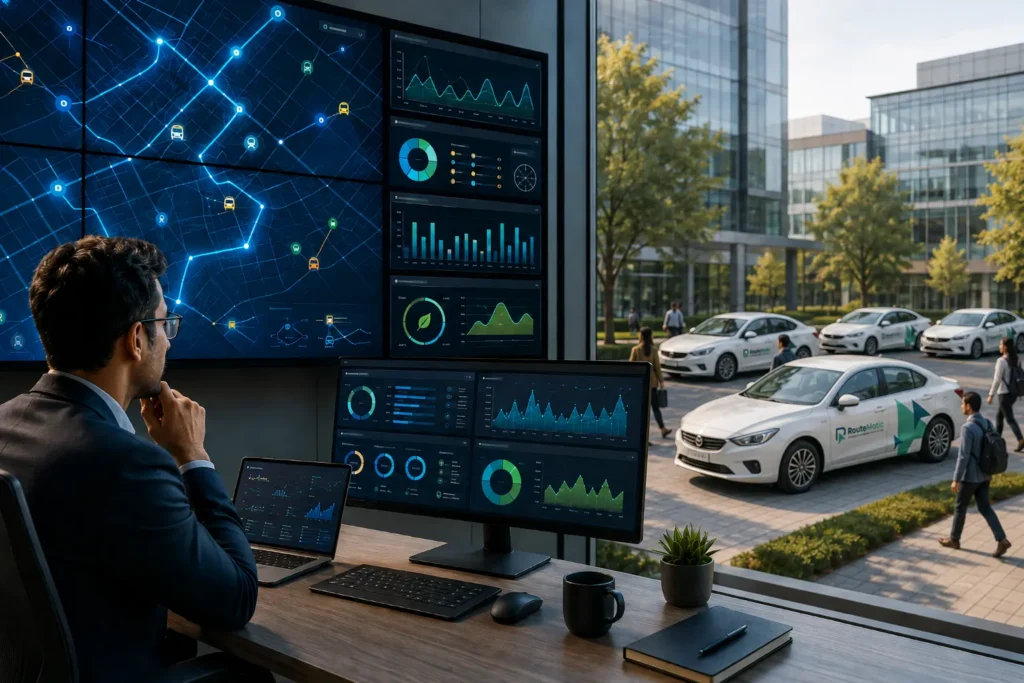
In India’s hectic business environment, where cost effectiveness, worker happiness, and punctuality converge, there is one thing that is silently but fundamentally rewriting the way business is done: eco-responsible employee transportation services. The once familiar office commute, where auto fleets once predominated alongside public transport, has been the beneficiary of a sea change. Nowadays, green-conscious, tech-enabled, and data-rich solutions have become the norm.
This post delves into how employee transport solutions not only optimise Indian companies’ logistics but also pave the way for positive environmental transformation.
The Environmental Impact of Company Commutes
Indian metropolitan cities experience expanding vehicle emissions, traffic, and increasingly urbanising labour forces. The carbon footprint of the daily commute, in which workers use private modes of transport or fragmented public modes, is significant. The one-person, five-day commute per week auto commuter generates nearly 2 tons of CO₂ per annum.
In this regard, the shared employee transport initiative is not only a logistical enhancement but also an environmentally needed initiative. In the process of converting from departmentally isolated trip planning to centralised sharing of mobility, corporates make a contribution to India’s climate goal in the Paris Agreement.
From Convenience to Consciousness: The Company Transformation
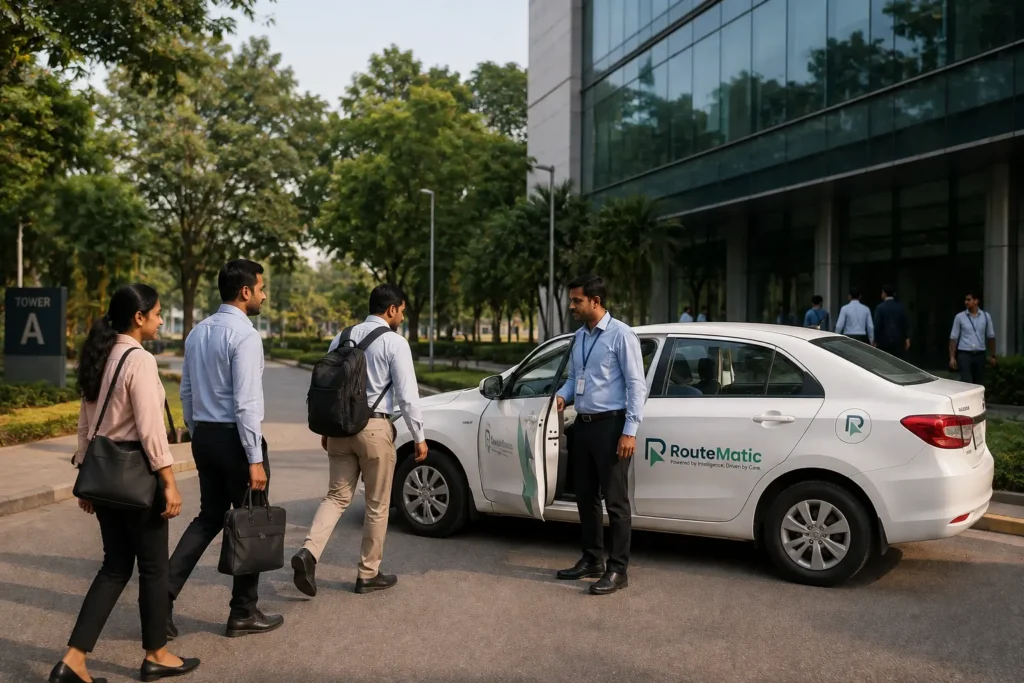
The earliest adopters of employee transportation services in India primarily focused on convenience, especially in sectors like IT, BPO, and banking, where round-the-clock shifts necessitated timely pickups and drops. However, the narrative is evolving. Today’s businesses seek to blend efficiency with eco-consciousness.
Fleet optimisation software, ride-sharing algorithms, and the electrification of transport fleets represent some important trends for greener operations. Here’s how:
- Fleet Efficiency Through Data: Current transport platforms utilise real-time data analysis to minimise dead mileage, duplication of routes, and to adjust to the flow of changing traffic. This saves not only fuel but also reduces emissions considerably.
- Vehicle Electrification and Carbon Reporting: Electric vehicle (EV) integration into employee commute fleets is a growing trend in cities like Bengaluru, Pune, and Hyderabad. Several service providers now offer carbon tracking dashboards, allowing companies to measure and reduce their environmental footprint, a powerful ESG metric for stakeholder reporting.
- Shared Mobility as the Default: Shifting from single-passenger cabs to optimised shuttles is becoming more prevalent. Shared routes reduce the number of vehicles on the road, ease urban congestion, and lower per capita fuel consumption. In large campuses, it’s now common to see AI-optimised shuttles replacing a dozen redundant cabs.
A Technology-Driven Future: India’s Competitive Edge
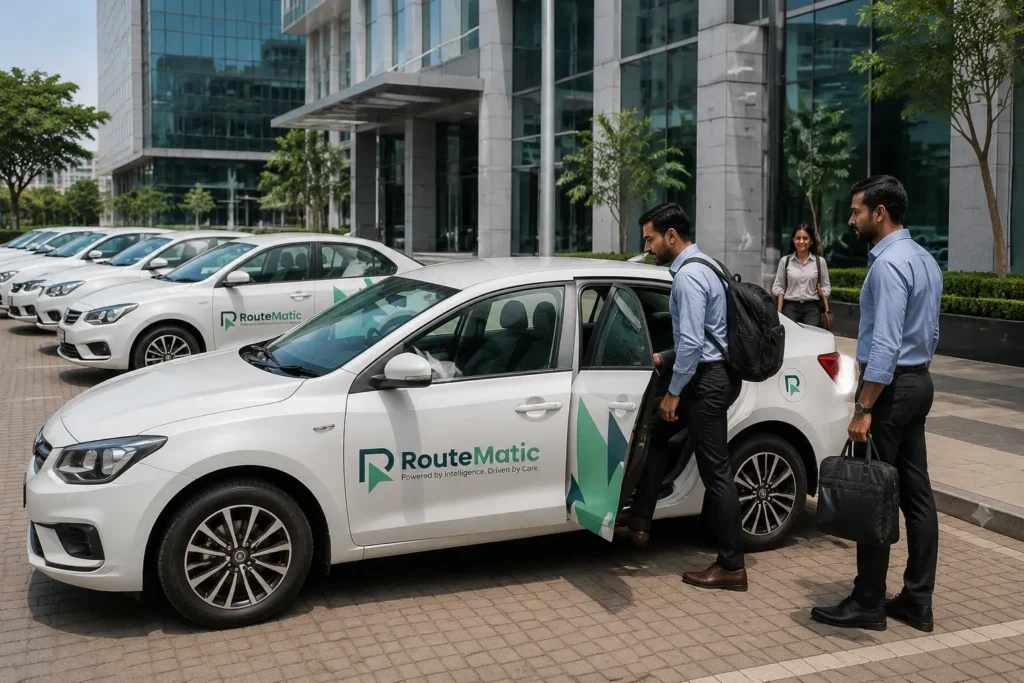
Companies like RouteMatic are at the forefront of redefining the Indian corporate world’s way of handling employee transportation services. By incorporating automation, compliance, and sustainability in their platforms, they have made it easy for organisations to grow green transport services.
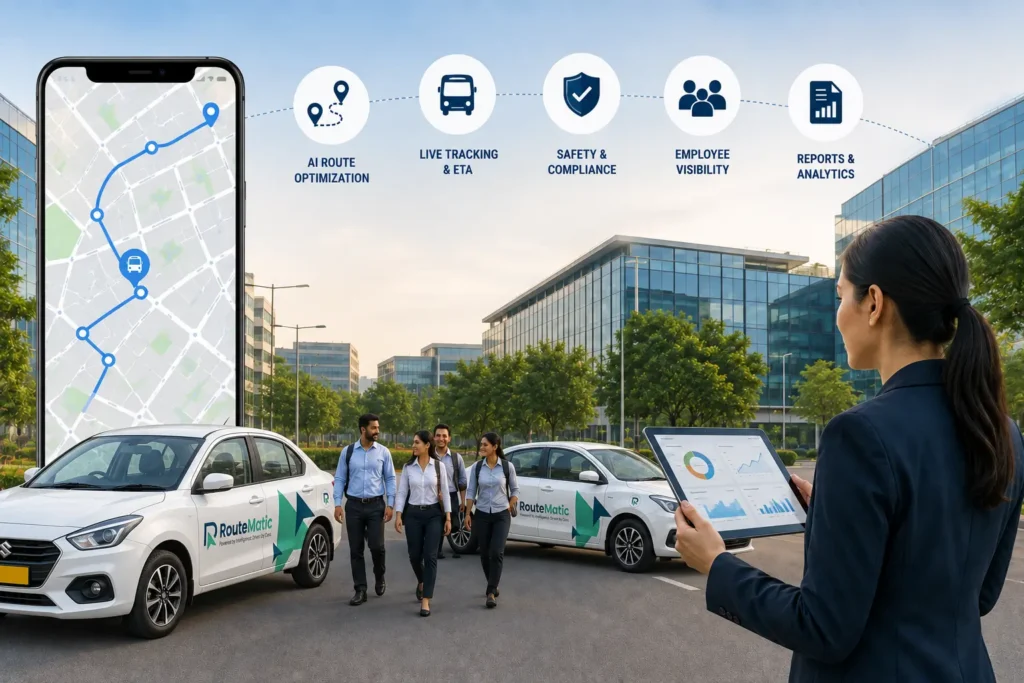
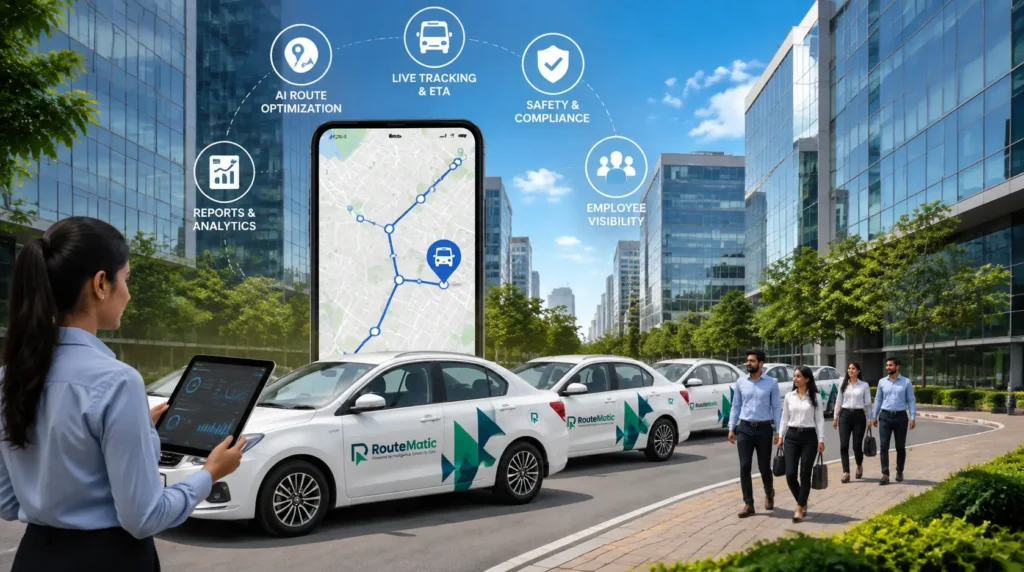
They blend the very latest in GPS tracking, face recognition, and IoT-enabled vehicle tracking with carbon footprint analytics, providing HR, admin, and operations teams with unparalleled insight and control. For progressive companies, it means safer, greener, and smarter transport infrastructure.
The Business Case for Sustainable Transport
Sustainability is more than the compliance box tick; it’s the competitive differentiator. The efficient employee transport system can:
- Minimise absenteeism and delay by means of reliability and clear routing.
- Improve employer branding by promoting dedication to the welfare of employees and the environment.
- Save costs using pooled rides, route-optimised rides, and energy-efficient fleets.
- Meet ESG mandates by actively reducing Scope 3 emissions and improving CSR outcomes.
Indeed, firms utilising organised transport services realise 30% cost reductions in terms of fuel costs alongside enormous gains in labour force satisfaction measures.
Conclusion: Road Map to the Greener Commute Culture
India’s business community is at a turning point. While urbanisation accelerates and the environment becomes a priority concern, businesses must redefine the everyday trip to the office from one of duty to one of opportunity. Employee transportation services form the unusual confluence of sustainability, technology, and worker empowerment.
Companies can lower their carbon footprints and increase business efficiency, a classic win-win in the climate urgency age. Increasing numbers of Indian companies warm to the idea in response to encouragement from innovators like RouteMatic, the collective charge to cleaner corporate transport will not only clean the air in our cities but turn the next page in India’s green business history.