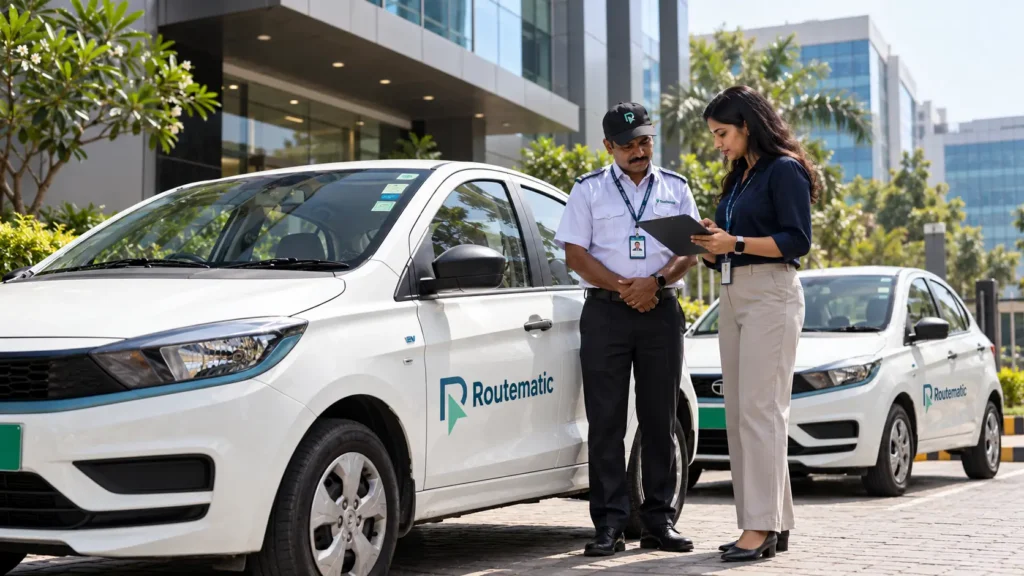
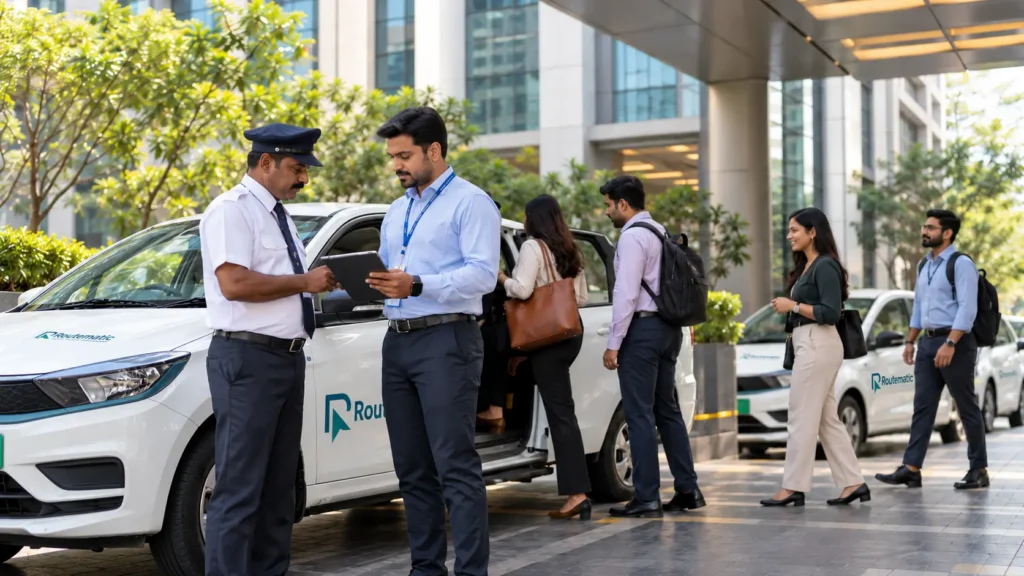
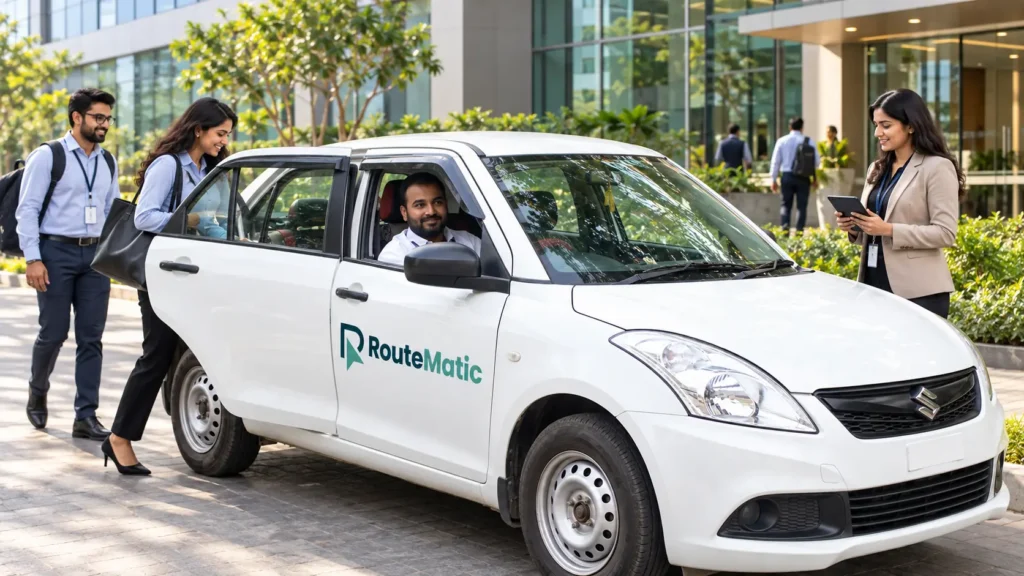
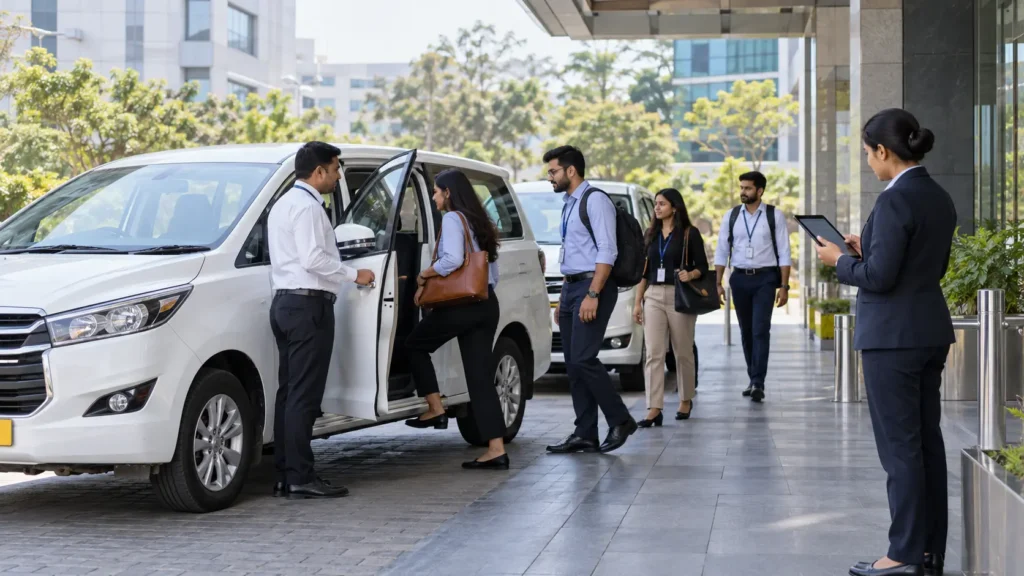
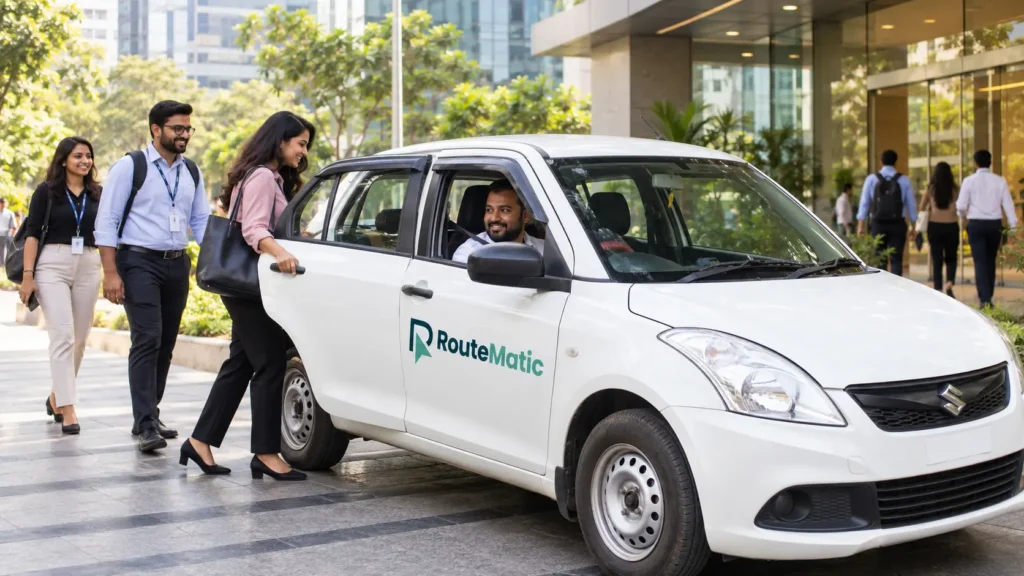
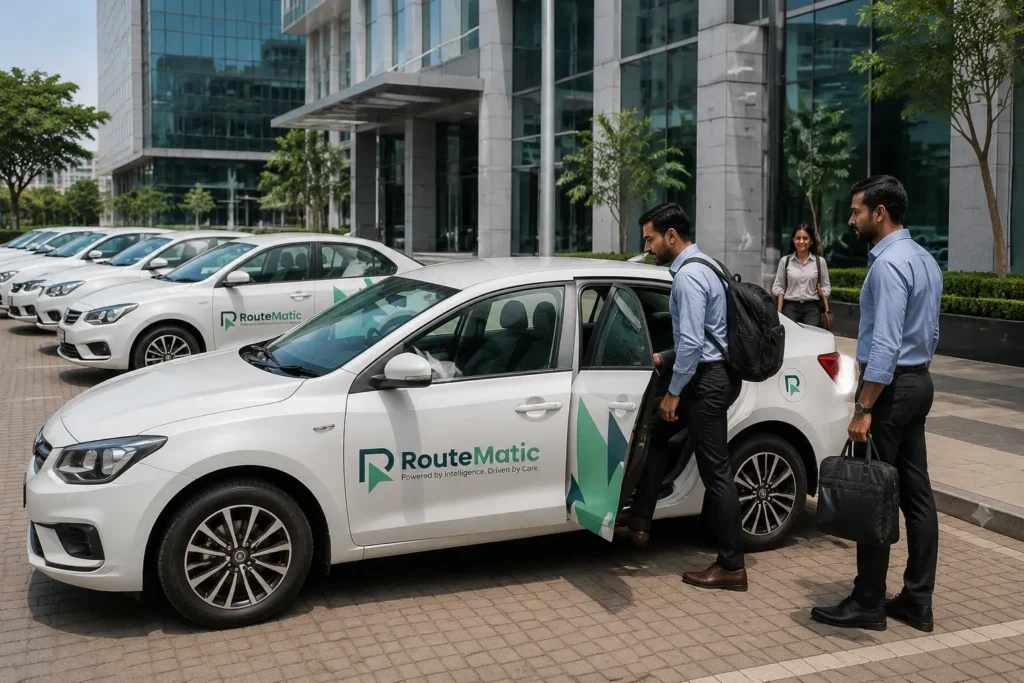
The global transportation management system market is growing rapidly, projected to reach USD 68.4 billion by 2033 at a compound annual growth rate (CAGR) of 17.8%, according to Grand View Research. In India, enterprises are increasingly adopting cloud-based transport management systems to manage complex employee commutes, reduce costs, and meet sustainability targets.
Key Takeaways
- Cloud-based employee transport management systems automate scheduling, route optimization, and real-time tracking, reducing operational costs by 10-30% for corporate offices in India.
- Choosing the right system requires evaluating core requirements (fleet size, shift complexity), scalability, integration capabilities, safety features, and vendor support in India.
- Enterprise-grade solutions support multi-city operations, compliance reporting, and hybrid fleet management (owned + third-party vehicles).
Managing employee transportation at scale can quickly become complex for growing enterprises. From shift scheduling and employee safety to route optimization and operational costs, transport teams often face multiple challenges every day.
This is where a modern cloud-based employee transport management system can make a significant difference by automating operations, improving visibility, and enhancing the employee commute experience. Scalable employee transport management systems like RouteMatic are designed to grow with your enterprise, offering flexible deployment and real-time orchestration for companies of all sizes across India.
Let’s explore the challenges companies face and how finding the right employee transport management system can make all the difference.
Challenge 1: Keeping Track of Vehicles
Real-time vehicle tracking is essential for corporate transport management, enabling admins to monitor fleet location, reduce delays, and improve employee commute coordination.
One big problem companies face is not knowing where their vehicles are. Employees often get stuck waiting because of delays or miscommunication. This creates frustration and wastes time.
What to Look For:
- Real-time GPS tracking for all vehicles
- Live route monitoring and ETA updates
- Centralized dashboard for transport admins
- Mobile app access for employees and drivers
- Geofencing and automated alerts for delays
How RouteMatic Helps:
RouteMatic enables employees and transport admins to track trips in real time, access accurate ETAs, and improve commute coordination through centralized visibility. Transport admins can track all the vehicles allocated for their employees and can take decisions accordingly.
Challenge 2: High Transportation Costs
AI-powered route optimization and automated scheduling in a TMS can reduce corporate transportation costs by 10-30% through fuel savings, better vehicle utilization, and elimination of manual errors.
Transportation can be expensive. Rising fuel prices, vehicle maintenance, and inefficient routes can quickly add up. For companies, cutting costs without affecting service quality is a major challenge.
What to Look For:
- AI-powered route optimization to minimize fuel consumption
- Automated trip scheduling to reduce manual errors
- Load balancing and seat utilization analytics
- Fuel usage tracking and cost reporting
- Integration with vendor billing for transparent cost management
How RouteMatic Helps: By avoiding unnecessary detours, our system reduces expenses and ensures efficient use of resources.
Challenge 3: Managing Safety and Security
Modern employee transport management systems include SOS alerts, real-time tracking, driver monitoring, and incident management to ensure employee safety during commutes, especially for late-night or remote routes.
Employee safety is a top concern, especially for late-night commutes or remote locations. Companies need to ensure their employees feel safe during their journey.
What to Look For:
- SOS panic button for employees
- Real-time trip tracking shared with family or HR
- Driver behavior monitoring (speed, harsh braking, route adherence)
- Incident management workflows and escalation protocols
- Safe drop confirmation and geofenced pickup/drop zones
How RouteMatic Helps: Our software is designed with safety in mind. Employees can track their rides, the SOS feature, and the safe drop confirmation ensures that employees have reached home securely.. RouteMatic has designed a full fledged incident management system in the times of emergencies.
Challenge 4: Time-Consuming Manual Processes
Automated transport management systems eliminate manual scheduling, driver assignment, and trip coordination, reducing administrative workload by up to 70% and minimizing human errors.
Handling schedules, assigning drivers, and coordinating trips manually can take a lot of time. These processes often lead to mistakes, delays, and inefficiencies.
What to Look For:
- Automated trip scheduling based on employee rosters and shifts
- Intelligent driver and vehicle assignment
- Automated SMS/push notifications for trip updates
- Self-service employee portal for booking and tracking
- Bulk upload and integration with HRMS for seamless data sync
How RouteMatic Helps: Our platform automates every step of the transportation process. From scheduling trips to sending notifications, our system does it all. This allows your team to focus on more important tasks.
Challenge 5: Sustainability Goals
Cloud-based transport management systems support corporate sustainability goals by optimizing routes to reduce fuel consumption, integrating electric vehicle (EV) fleets, and providing carbon footprint reporting.
Many companies today aim to reduce their carbon footprint. Traditional transportation methods often rely on fuel-heavy vehicles, which harm the environment.
What to Look For:
- Electric vehicle (EV) fleet integration and charging station mapping
- Route optimization to reduce fuel consumption and emissions
- Carbon footprint tracking and sustainability reporting
- Support for carpooling and shared rides to maximize seat utilization
- Compliance with environmental regulations and ESG reporting standards
How RouteMatic Helps: We offer EV integration and route optimization to promote eco-friendly commuting. By using our system, your company can reduce its environmental impact and support sustainability goals.
Challenge 6: Lack of Data for Decision-Making
Advanced TMS platforms provide real-time analytics dashboards and detailed reports on trip performance, fuel usage, vehicle utilization, and employee feedback, enabling data-driven decision-making and continuous optimization.
Without accurate data, it’s hard to make improvements. Companies often struggle to identify problem areas and find solutions.
What to Look For:
- Real-time analytics dashboards with KPIs (on-time performance, cost per trip, vehicle utilization)
- Customizable reports for management and compliance audits
- Employee feedback and satisfaction tracking
- Predictive analytics for demand forecasting and capacity planning
- Export and API access for integration with BI tools
How RouteMatic Helps: Our software provides detailed insights into every aspect of your transportation system. You can track performance, spot issues, and optimize operations with ease with our advanced AI-driven data insights.
How to Choose the Best Transportation Management System for Your Corporate Office
Selecting the right cloud-based transport management system requires evaluating your organization’s specific needs and growth plans. Follow this framework:
- Define Your Core Requirements
- Employee headcount and shift complexity (single vs. multiple shifts)
- Fleet size (owned vehicles, third-party vendors, or hybrid)
- Geographic coverage (single city, multi-city, or pan-India operations)
- Safety and compliance priorities (SOS alerts, incident management, driver monitoring)
- Prioritize Scalability and Cloud Deployment
- Choose a scalable employee transport management system that can grow with your workforce
- Ensure the platform is cloud-based for remote access, automatic updates, and lower IT overhead
- Verify multi-location support if you plan to expand operations
- Evaluate Integration Capabilities
- Check compatibility with your HRMS, ERP, or attendance systems
- Look for API access and pre-built connectors to avoid custom development costs
- Assess Real-Time Visibility and Automation
- Confirm live GPS tracking, accurate ETAs, and mobile apps for employees and drivers
- Ensure automated scheduling, route optimization, and notification workflows to reduce manual work
- Review Safety and Compliance Features
- Verify SOS buttons, geofencing, driver behavior monitoring, and incident management tools
- Ensure the system supports compliance reporting for audits and regulatory requirements
- Compare Pricing Models and ROI
- Request transparent pricing (per-employee, per-vehicle, or flat subscription)
- Calculate potential savings from fuel optimization, reduced delays, and lower administrative overhead
- Check Vendor Support and India Presence
- Prioritize companies offering scalable transport management systems with local support teams in India
- Review case studies, client references, and implementation timelines
Why Choose RouteMatic?
At RouteMatic, we understand the unique challenges of employee transportation. Our employee transport management system is designed to solve these problems and make corporate transportation seamless.
Whether it’s ensuring safety, reducing costs, or supporting sustainability, RouteMatic is here to help. We’ve already transformed transportation for many businesses in India, and we’re ready to do the same for you.
Looking for the best employee transport management system? Let RouteMatic handle your corporate taxis and employee commutes. Contact us today to get started!
FAQs
1. What is a transport management system for corporate offices?
A transport management system for corporate offices is a technology platform that helps enterprises manage employee transportation through automated scheduling, route optimization, real-time tracking, and safety monitoring.
2. How does an employee transport management system improve operational efficiency?
An employee transport management system reduces manual work by automating trip scheduling, vehicle allocation, routing, notifications, and reporting, helping enterprises improve transportation efficiency.
3. What features should companies look for in a corporate transportation solution?
Companies should look for features such as AI-based route optimization, live vehicle tracking, safety monitoring, automated compliance management, reporting dashboards, and mobile app accessibility.
4. How does AI-based route optimization help reduce transportation costs?
AI-powered routing reduces unnecessary travel, improves seat utilization, minimizes fuel consumption, and helps enterprises optimize overall transportation expenses.
6. Which TMS is best for small and mid-sized companies in India?
For small and mid-sized companies, scalable employee transport management systems like RouteMatic, Shuttl for Business, and MoveInSync offer flexible pricing, quick deployment, and essential features (real-time tracking, route optimization, safety alerts) without requiring large IT teams or upfront infrastructure investment.
7. Can a TMS integrate with existing HRMS or ERP systems?
Yes, leading cloud-based transport management system companies offer API integrations and pre-built connectors for popular HRMS platforms and ERP systems. Integration enables automated employee rostering, attendance sync, and billing workflows.
8. What are the key differences between freight TMS and employee transport management systems?
Freight TMS platforms focus on supply chain logistics, carrier management, and freight optimization. Employee transport management systems are purpose-built for corporate offices, emphasizing employee safety, shift scheduling, real-time commute tracking, and compliance with labor regulations in India.
9. How long does it take to implement a cloud-based TMS?
Cloud-based transport management systems typically deploy in 2-8 weeks, depending on fleet size, integration complexity, and customization needs. SaaS platforms with standard configurations can go live in 2-4 weeks, while enterprise solutions (Oracle, SAP) may require 8-12 weeks for full implementation.
10. Do scalable TMS platforms support electric vehicle (EV) fleets?
Yes, modern scalable employee transport management systems like RouteMatic and Locus support electric vehicle integration, including EV-specific route planning (charging station locations, range optimization), battery monitoring, and carbon footprint reporting to help companies meet sustainability goals.
About the author

Sriram Kannan
Chief Executive Officer, RouteMatic
As CEO of RouteMatic, Sriram Kannan is driving the future of enterprise mobility through technology and innovation. He shares key knowledge about AI, digital transformation, workplace mobility, and the evolving role of intelligent transportation in helping organizations improve operational efficiency, employee experience, and sustainable growth.