Employee transport in metro cities is not a logistics problem. It is a governance problem.
Most enterprises running operations in Bengaluru, Hyderabad, Pune, Mumbai, or Delhi NCR already know the pain. Missed pickups. Vendor billing disputes. Late-night safety incidents with nobody watching. Zero real-time visibility into what is happening on the road.
Managing employee transport in metro cities means structured planning, coordination, and oversight of employee commutes across high-density urban environments. It covers route design, fleet compliance, shift-based scheduling, real-time tracking, and billing accuracy. When done properly, it cuts transport spend by 12 to 18% while pushing on-time performance to 97% or above.
If you are still running metro operations on a patchwork of local vendors and manual rosters, the gaps are already costing you. You can start with a broader view of how to manage employee transport in a corporate setting, but metro operations demand a sharper lens.
Key Takeaways
- Managing employee transport in metro cities requires centralised command, not a fragmented vendor mix
- AI-driven route optimisation directly cuts costs and reduces empty seat miles across large fleets
- Compliance gaps in driver verification, vehicle checks, and night-shift protocols expose enterprises to serious legal and reputational risk
- Billing leakages from ghost trips and unverified invoices drain transport budgets silently every month
- A hybrid TaaS (Transport-as-a-Service) model combining owned fleet, integrated technology, and 24/7 command centre oversight consistently outperforms SaaS-only or aggregator-only approaches
Why Metro Cities Create a Completely Different Transport Problem
A single-city, single-shift company can manage transport with a spreadsheet and a couple of vendor calls. Metro operations are not that.
You are dealing with traffic that shifts by the hour. Multiple campuses. Night shifts. Women employees travelling after midnight. Vendors are spread across zones with no standardised process between them. Each city adds new compliance requirements, different road conditions, and its own fleet availability constraints.
India now hosts over 1,700 Global Capability Centres (GCCs) employing 1.9 million professionals, with Bengaluru, NCR, Hyderabad, and Pune leading in new setups, according to the NASSCOM-Zinnov India GCC Landscape Report 2024. GCC office leasing alone surged to 29.2 million square feet in 2024, a 29% year-on-year jump. Every one of those centres runs multi-shift, multi-location operations. The transport infrastructure supporting them is rarely built to match that scale.
That gap shows up fast. Drivers take unverified routes. Vehicles run with expired documents. Billing arrives weeks late with no trip-level audit trail. When something goes wrong at 2 am on an expressway, nobody in the command centre knows about it.
Employee transport in metro cities does not fail because companies do not care. It fails because the operating model was never built for this level of complexity.
The Operational Failures Draining Your Transport Budget
These are not edge cases. They happen every week in unmanaged metro transport programmes.
Ghost Trips and Overbilling
Vendors bill for trips that never happened. Without automated trip logs, GPS-matched records, and electronic billing validation, your finance team has no way to verify what actually ran. Transport budgets bleed quietly and consistently.
Low Vehicle Occupancy
Static routing fills seats badly. A vehicle running at 40% capacity on a fixed route costs nearly as much as one at 90%. AI-led demand forecasting and dynamic routing solve this. Manual planning cannot.
Fragmented Vendor Visibility
Managing five vendors across three city zones means five different reporting formats, five billing cycles, and five different standards for driver behaviour. There is no single number to call for a real-time picture of your full fleet.
Night-Shift and Women’s Safety Gaps
Metro enterprises with round-the-clock operations must meet women’s safety requirements under the Sexual Harassment of Women at Workplace Act and related state transport guidelines set by the Ministry of Road Transport and Highways. Inconsistent driver verification, absent safe-drop confirmation, and no live monitoring at night are the most common gaps in vendor-led models.
No Audit Trail
When your internal audit team asks for transport records, what do you pull? Manual logs from a vendor WhatsApp group are not an audit trail. They are a liability.
You can see exactly how corporate mobility platforms address these cost leakages across billing, routing, and compliance.
What Good Corporate Commute Management in Metro Cities Looks Like
Fixing corporate commute management in metro cities is not about switching apps. It is about switching models.
The enterprises that get this right combine three things that most providers keep separate. An owned and standardised fleet. AI-first technology. And human operational accountability through a 24/7 command centre.
Here is what that looks like day to day:
Route Optimisation Runs Automatically
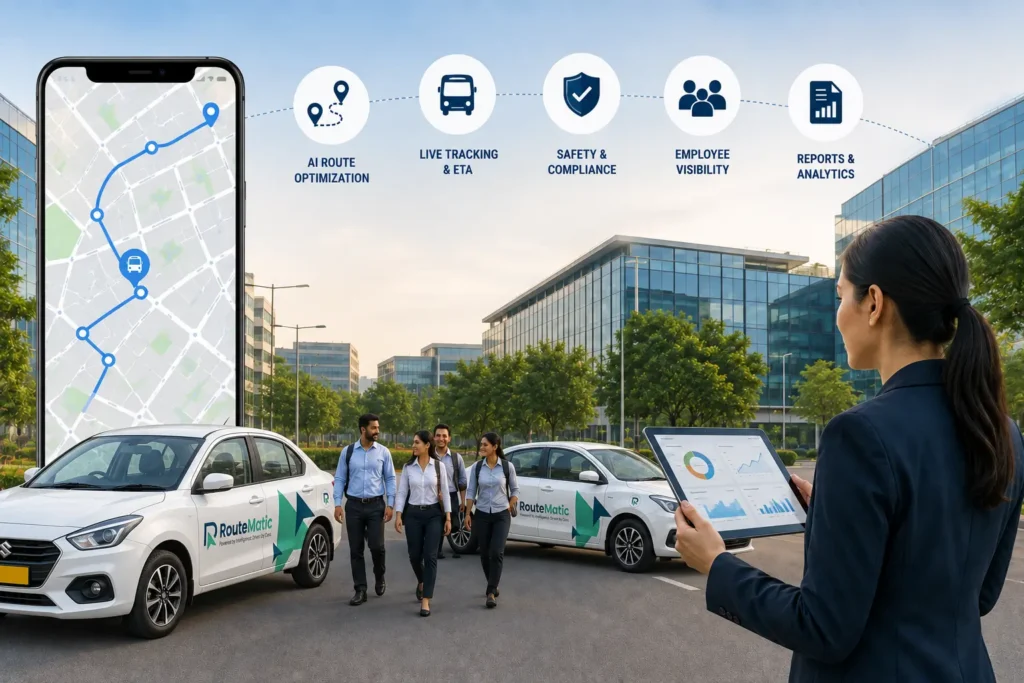
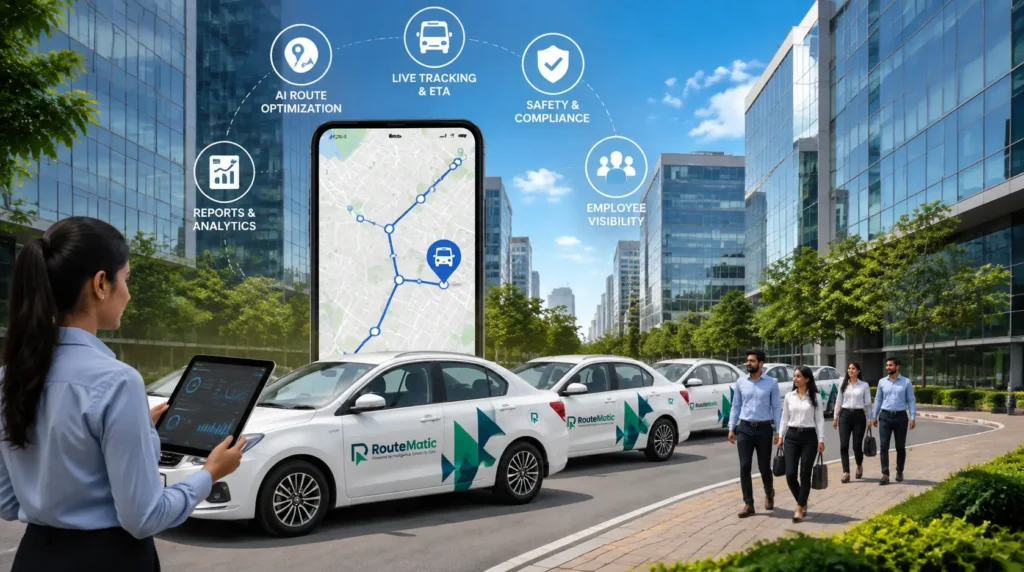
AI analyses shift patterns, employee home zones, and live traffic to build the most efficient routes daily. No manual roster planning. No guesswork.
Compliance Is Non-Negotiable at Fleet Level
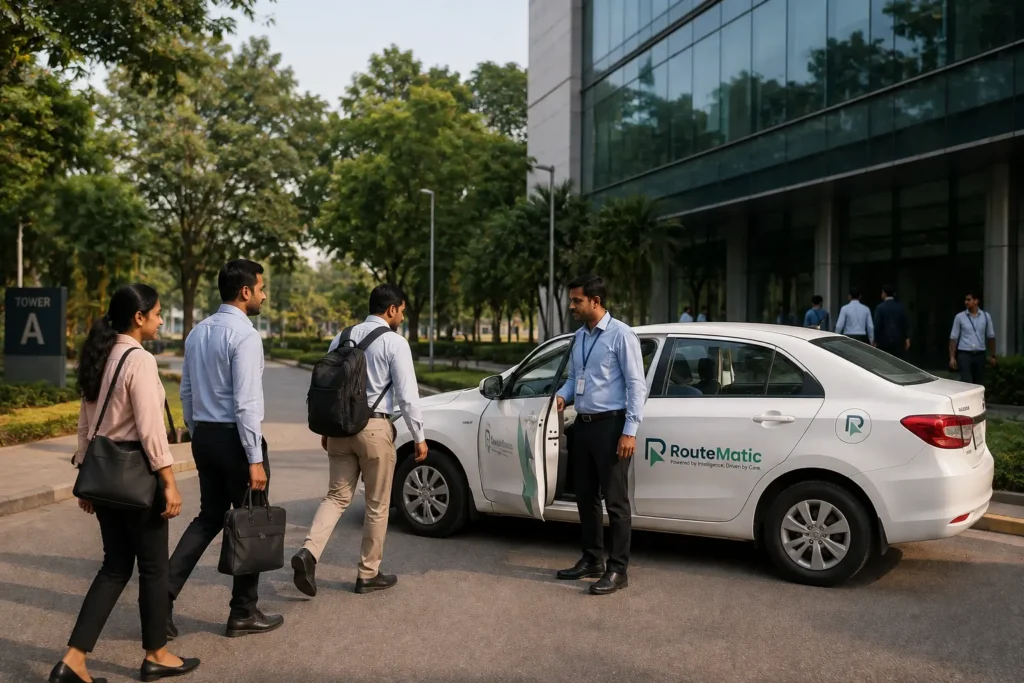
Every driver is verified. Every vehicle document is tracked centrally. Female safe-drop confirmation is logged after every night-shift trip. Process compliance sits at 100% across the fleet.
Billing Closes in Under Five Days
Every trip is GPS-matched and digitally validated before an invoice is generated. Disputes drop sharply. Finance gets clean, auditable records every billing cycle.
A Command Centre Watches the Full Fleet Live
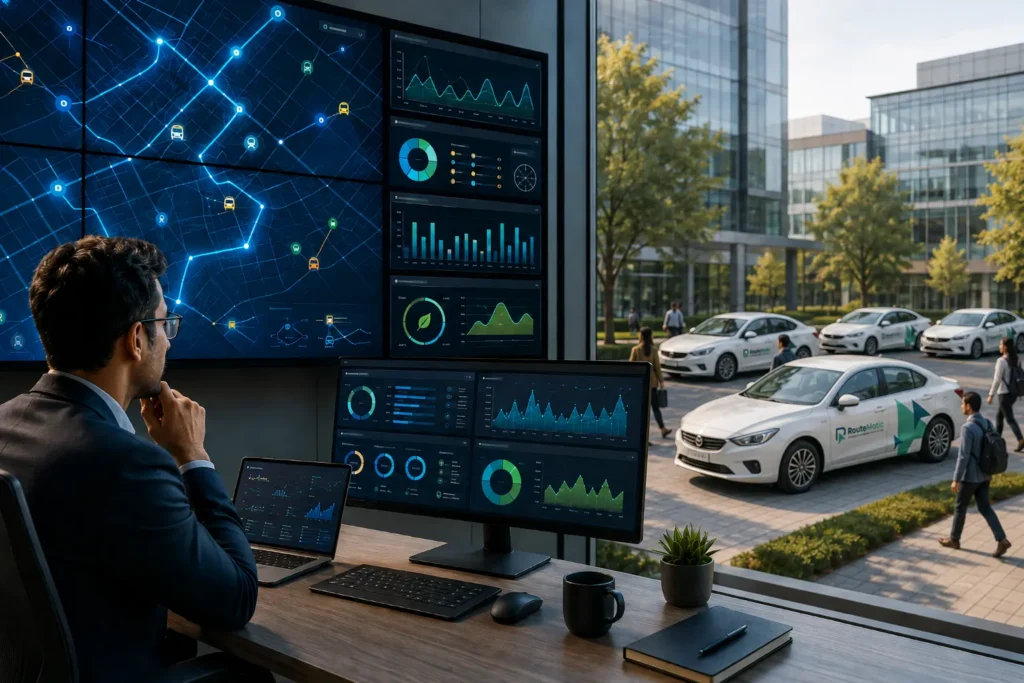
Not a dashboard someone checks in the morning. A live team responding to deviations, delays, and incidents as they happen, across all cities, all shifts.
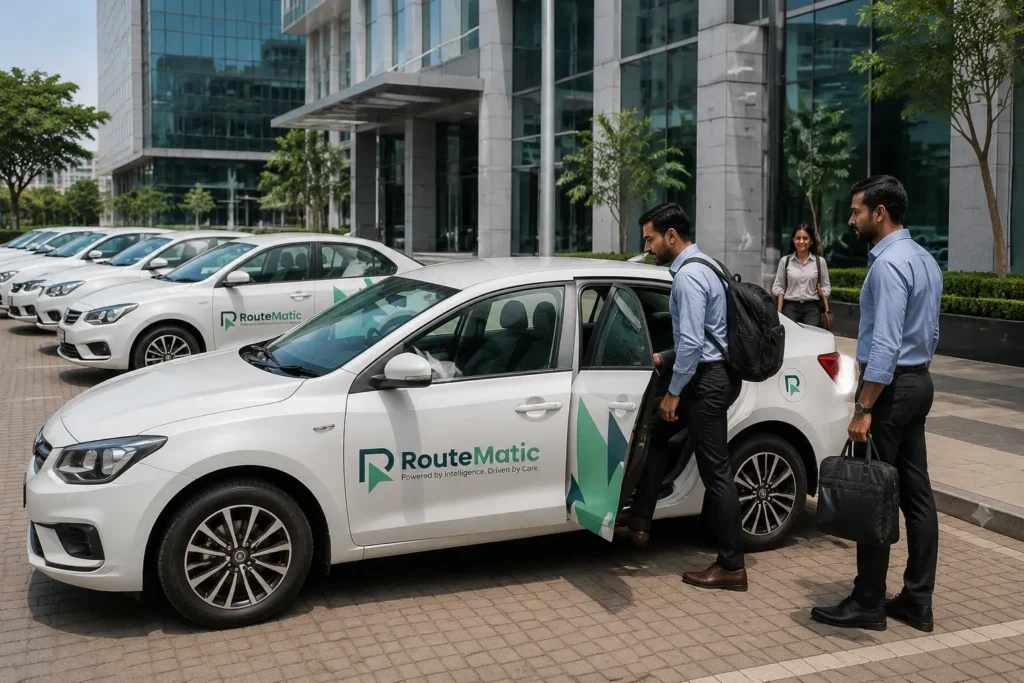
RouteMatic’s TaaS model operates exactly this way across 24 cities, serving 400+ enterprises, including 38 Fortune 500 companies, with a fleet of 4,500 owned vehicles. The owned fleet is what separates genuine operational control from software that tracks someone else’s chaos.
Explore RouteMatic TaaS to see how the full end-to-end model is structured.
Quick Reference: Managing Employee Transport in Metro Cities
Getting This Right Before It Becomes a Crisis
Your transport model is either under control or it is not. There is no middle ground at the metro scale.
Start with an honest assessment of your current model. How many vendors operate without a centralised audit trail? What is your actual vehicle occupancy rate? Can your finance team reconcile last month’s transport bill at the trip level?
RouteMatic works with IT, BFSI, BPO, consulting, and healthcare enterprises running complex employee transport in metro cities across India. Review real client case studies and measurable outcomes from enterprises operating at a similar scale and complexity.
The right transport partner does not just move your people. They give you numbers you can defend in a board meeting and compliance records you can hand to an auditor without panic.
What would it mean for your organisation if your transport programme ran without a single billing dispute next month?
Frequently Asked Questions
What does managing employee transport in metro cities actually involve?
Managing employee transport in metro cities covers route planning, shift-based scheduling, driver and vehicle compliance, real-time fleet monitoring, women’s safety protocols, and billing verification. Metro environments add another layer entirely. Multi-vendor coordination, unpredictable traffic, and night-shift operations across multiple cities. All of it needs to run through one auditable system, not five disconnected ones.
Why is employee transport in metro cities harder to manage than in smaller cities?
Metro cities combine high traffic density, large multi-location workforces, complex shift patterns, and stricter regulatory requirements for driver compliance and women’s safety. Vendor fragmentation makes it worse. You end up with five billing formats, five compliance standards, and no single point of accountability. That does not happen in a smaller single-city operation.
How does AI help with corporate commute management in metro cities?
AI analyses booking patterns, employee home zones, shift timings, and live traffic to build optimised routes every day. Not once a quarter. Not based on last month’s roster. Daily. Your fleet runs at higher occupancy, fewer vehicles cover more ground, and transport costs drop without touching service quality.
What compliance requirements apply to employee transport in metro cities?
Your fleet must meet vehicle fitness standards and driver licensing requirements under the Motor Vehicles Act as administered by state transport departments. Night-shift operations carry additional obligations around female safe-drop confirmation and escort policies. Miss any of these and you are not just looking at a fine. You are looking at an audit finding, a leadership escalation, and a reputational problem that is hard to walk back.
How do you measure whether your metro transport programme is performing well?
Track on-time arrival and departure rates, vehicle occupancy per route, billing reconciliation time, driver and vehicle compliance scores, and employee satisfaction ratings. If your programme is running well, billing closes within 5 days, on-time performance is 97% or above, and your compliance records are ready to hand to an auditor on any given day. If those numbers are not visible to you right now, that is worth investigating. Book a free RouteMatic demo and get a live look at how metro transport operations should actually run.
About the author

Arjun Bhojaraj Manipal
Chief Business Officer, RouteMatic
As Chief Business Officer at RouteMatic, Arjun Bhojaraj Manipal works closely with enterprises to solve complex mobility challenges through technology-led solutions. He shares perspectives on enterprise transportation, digital transformation, AI-powered mobility, customer success, and the trends shaping the future of workplace commuting.