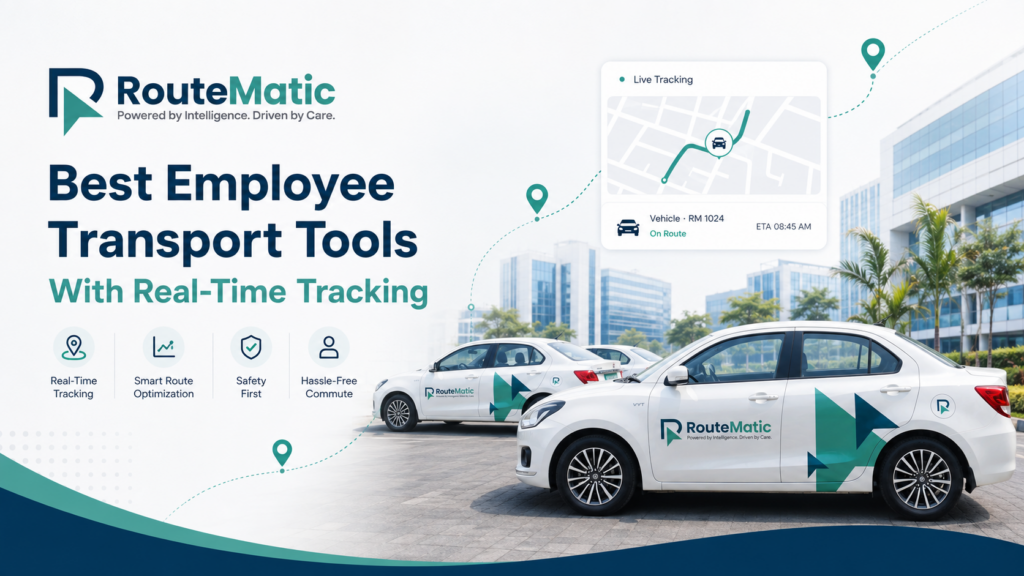
Getting employees to the office should be simple, but in many Indian cities, daily commuting has become a major challenge. Long travel times, unpredictable traffic, and inefficient transport planning affect employee productivity, satisfaction, and punctuality. That is why corporate transportation management has become an important part of business operations.
The TomTom Traffic Index 2025 highlights the scale of the problem. In Bengaluru, average peak hour speeds dropped to 13.9 km/h, commuters took more than 36 minutes to travel just 10 kilometres, and employees lost around 168 hours every year in traffic. These numbers show how poor commute planning can impact both employees and businesses.
This guide explains what corporate transportation management is, why traditional or unstructured approaches often fail, and how businesses can create a transport programme that improves employee safety, reduces costs, and supports future growth.
TL;DR
- Corporate transportation management helps enterprises move beyond manual cab operations with structured, data-driven commute solutions.
- Modern systems improve routing, safety, billing accuracy, and employee experience while reducing operational costs.
- AI-powered platforms enable real-time visibility, better fleet utilisation, compliance tracking, and sustainable mobility.
- A successful transport strategy combines technology, operational control, and continuous optimisation for scalable growth.
What Is Corporate Transportation Management?
Corporate transportation management is the end to end planning, execution, and monitoring of employee commutes by an organisation. It covers routing and scheduling, vendor and fleet coordination, safety and compliance, billing, and the technology layer that ties all of it together, usually a corporate transport management system.
In practice, it answers five questions every day: who needs to travel, from where, at what time, in which vehicle, and at what cost. Companies that answer these questions with spreadsheets and phone calls pay for it in escalations, overtime, and inflated vendor bills. Companies that answer them with a structured corporate transportation service turn the commute into a predictable, measurable operation.
Why Transport Management Has Become a Business Priority in India?
Employee transportation is no longer just a support function. As businesses grow, office attendance increases, and traffic becomes more unpredictable, companies need a smarter way to manage employee travel. Three major trends are driving this change:
1. Growing Workforces and Higher Office Attendance
India is home to more than 2,100 Global Capability Centres (GCCs) employing nearly 2.36 million professionals, mainly in Bengaluru, Hyderabad, Pune, Chennai, and the National Capital Region. As many organisations continue with hybrid work models, employee transport demand changes significantly throughout the week, making route planning more complex.
2. Longer and More Unpredictable Commutes
According to a 2025 MoveInSync report, Bengaluru’s GCC employees spend an average of 50 minutes travelling around 15 kilometres to work. Cab bookings also fluctuate sharply, reaching 82,000 on Wednesdays compared to 61,000 on Fridays. These daily variations are difficult to manage without a structured transportation system.
3. A Rapidly Evolving Transportation Market
The Indian employee transportation services market is projected to grow at a CAGR of 8.2% between 2024 and 2030, driven by rising office occupancy and increasing demand for organised transport solutions. Businesses that continue relying on manual processes or multiple local vendors may struggle with higher costs, operational inefficiencies, and compliance risks.
These challenges highlight why modern corporate transportation management is no longer optional. Routematic’s webinar on the future of corporate mobility in India covers these shifts in more depth, for teams trying to plan beyond the next quarter. But what exactly goes wrong with traditional transport systems? Let’s explore that next.

Where Ad Hoc Transport Models Break Down
If your transport desk still runs on calls, registers, and month-end vendor invoices taken on trust, you will recognise most of these problems:
- Opaque Billing. Without digital trip logs, invoices cannot be verified against actual kilometres run, and leakages hide in plain sight.
- Poor Vehicle Utilisation. Cabs run half empty on some routes and overloaded on others because routing is done by habit, not by data.
- Safety Gaps. No live tracking, no verified drivers, no automated escort or alert protocols for late-night drops, which is a serious concern for women employees.
- Compliance Exposure. Several states mandate safe transport provisions for employees on night shifts, and manual systems make it hard to prove adherence.
- Employee Frustration. Missed pickups and long detours push people towards personal vehicles or resignation letters. Commute pain directly affects retention and productivity.
These issues are exactly why companies move from managing vehicles to managing a system. We have covered the operational side in detail in our guide on how to manage employee transport in a corporate company, and the pillars below summarise what a modern programme must deliver.
The Five Pillars of Effective Corporate Transport Management
Successful corporate transportation management depends on these five core pillars:
1. Intelligent Routing and Scheduling
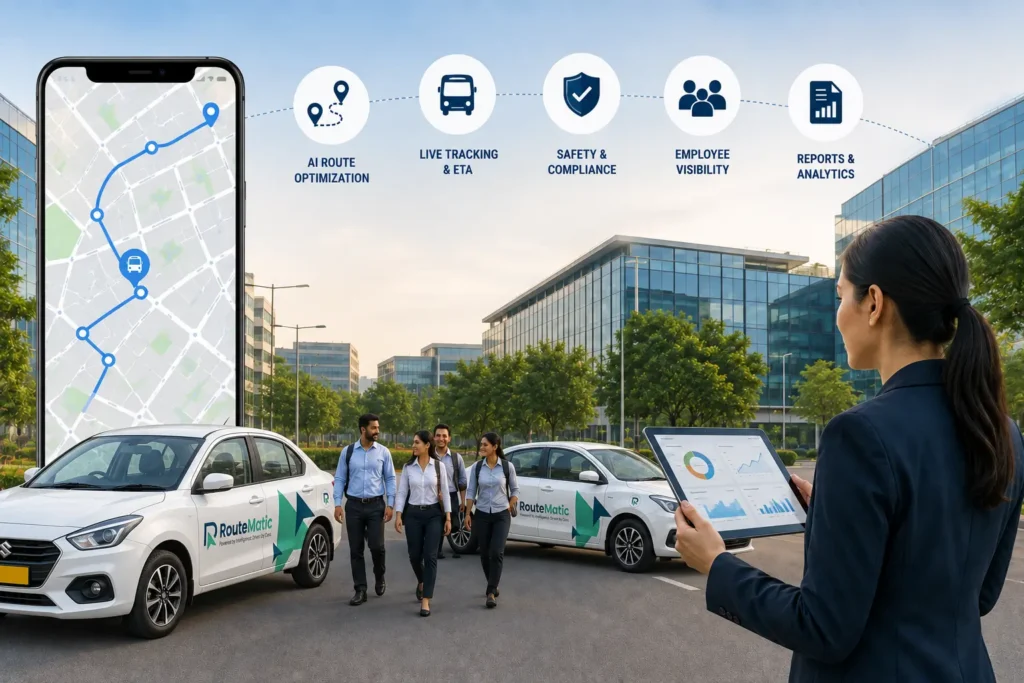
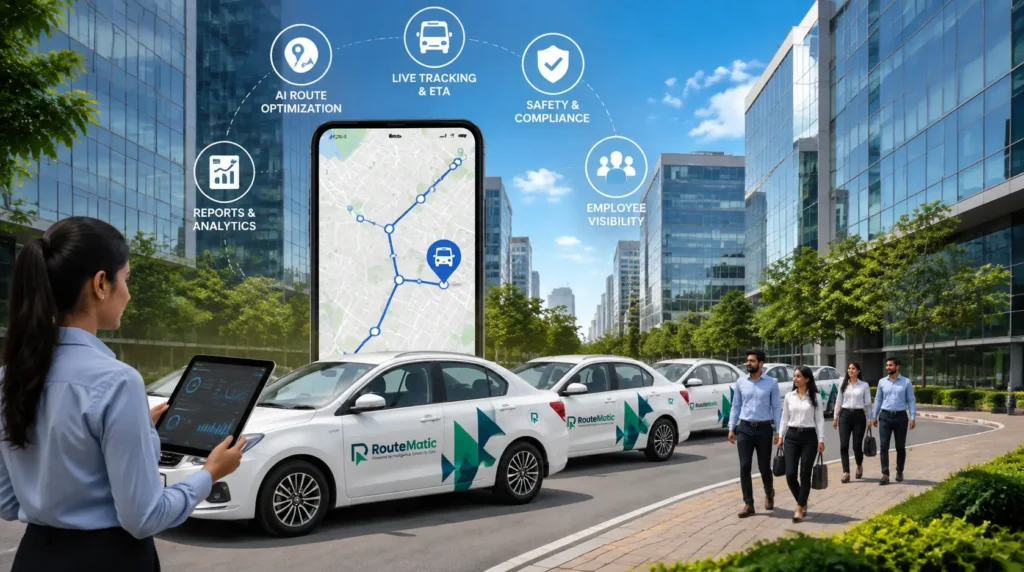
AI-driven routing engines cluster employees by location and shift, generate optimal routes, and rebalance vehicles as rosters change. The payoff is fewer vehicles doing more trips, shorter travel times, and lower per-employee cost.
2. Real-Time Visibility
A proper corporate transport management system gives transport teams a live command centre view of every vehicle, while employees track their cab on an app. Exceptions such as delays, no-shows, and breakdowns surface immediately instead of through angry phone calls.
3. Safety by Design
Verified drivers, live SOS support, geofenced alerts, and confirmation protocols for last-mile drops should be built into the workflow, not bolted on. Structured programmes for late-night travel matter especially for women’s commute safety, where automated safe drop confirmation removes dependence on manual check calls.
4. Automated Billing and Cost Control
When every trip is logged digitally, billing reconciles itself against actual usage. Disputes shrink, hidden costs surface, and finance teams finally get clean data. Practical levers for savings are detailed in our post on reducing employee transportation costs.
5. Sustainability Readiness
With ESG reporting now standard for large enterprises, transport programmes must track emissions per trip and support a phased shift to electric vehicles. A managed platform makes EV induction measurable rather than symbolic.
The difference between the two operating models becomes obvious when you place them side by side.
Traditional Model vs System Driven Model
The difference between a traditional transport model and a modern system-driven approach is clear:
| Dimension | Traditional Vendor Model | Corporate Transport Management System |
| Routing | Manual, fixed routes | AI-optimised, dynamic |
| Tracking | Phone calls to drivers | Live GPS with employee app |
| Billing | Vendor-declared invoices | Auto-reconciled digital trip logs |
| Safety | Reactive, informal | SOS, geofencing, safe drop protocols |
| Scalability | Breaks beyond one site | Multi city, multi shift ready |
| Reporting | Month end spreadsheets | Real time dashboards and analytics |
If your current setup sits mostly in the left column, the next section gives you a practical starting sequence.
How to Set Up Corporate Transportation Management: Six Steps
Setting up an effective corporate transportation programme starts with a clear, structured process:
- Audit Your Current State: Map routes, vehicle counts, occupancy, costs per employee per month, and complaint volumes over the last two quarters.
- Define Service Level:. Fix targets for on time arrival, maximum travel time, occupancy, and safety response before talking to any provider.
- Choose the Technology First, Fleet Second. Evaluate platforms on routing intelligence, tracking, billing automation, and integration with your HRMS. Our transportation management system checklist lists the evaluation criteria in full.
- Consolidate Vendors: Replace fragmented local operators with one accountable partner or a small managed panel operating on your platform.
- Pilot on One Site or Shift: Run four to six weeks, measure against your service levels, and fix gaps before scaling.
- Review Monthly on Data: Track cost per employee, occupancy, on time performance, and safety incidents, and let the numbers drive route and fleet decisions. You can estimate your savings potential upfront using this employee transportation ROI calculator.
The Bottom Line
Corporate transportation management is no longer about hiring cabs. It is about running the commute as a measured business process with defined service levels, live visibility, verified costs, and safety built into every trip. Enterprises that adopt a platform led approach through dedicated employee transport management software consistently see lower costs, cleaner compliance, and happier employees. Start with an audit, fix your service levels, and let data run your fleet.
Frequently Asked Questions
What does a corporate transport management system do?
It automates routing, scheduling, live tracking, safety workflows, and billing for employee commutes. It replaces manual coordination with a single platform that transport teams, employees, and finance all work from.
How much can businesses save with structured corporate transportation management?
Savings vary by scale, but the biggest gains come from higher vehicle occupancy, optimised routing, and verified billing. Many enterprises uncover significant leakage the moment trip-level digital logs replace vendor-declared invoices.
Is managed employee transport mandatory in India?
Requirements vary by state, but several states mandate safe transport for employees, particularly women, working night shifts. A system with digital trip records makes compliance demonstrable during audits.
Should a company own its fleet or outsource?
Most enterprises outsource execution to a managed partner while retaining control through the platform. This keeps capital off the books while dashboards, service level agreements, and verified billing preserve accountability.
How does transport management support sustainability goals?
By measuring emissions per trip, raising occupancy so fewer vehicles run, and enabling phased electric vehicle adoption with utilisation data to justify the investment.
About the author

Kavitha Ramachandragowda
Co-Founder & Executive Director, RouteMatic
As Co-Founder and Executive Director of RouteMatic, Kavitha Ramachandragowda is passionate about shaping the future of employee transportation through innovation and customer-centric solutions. She shares about workplace experience, women's safety, sustainability, enterprise mobility, and the leadership strategies that enable organizations to build smarter commuting programs.