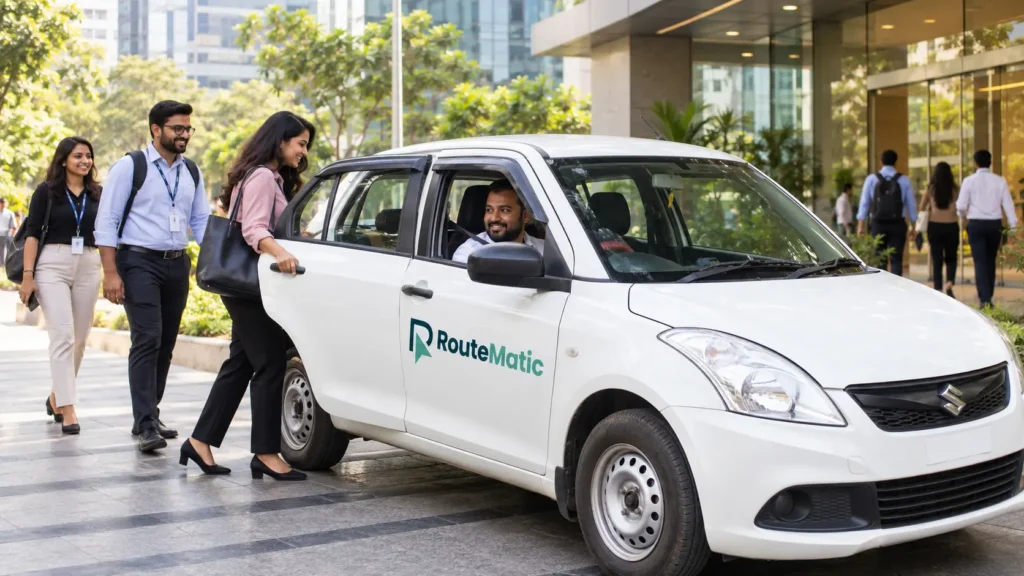
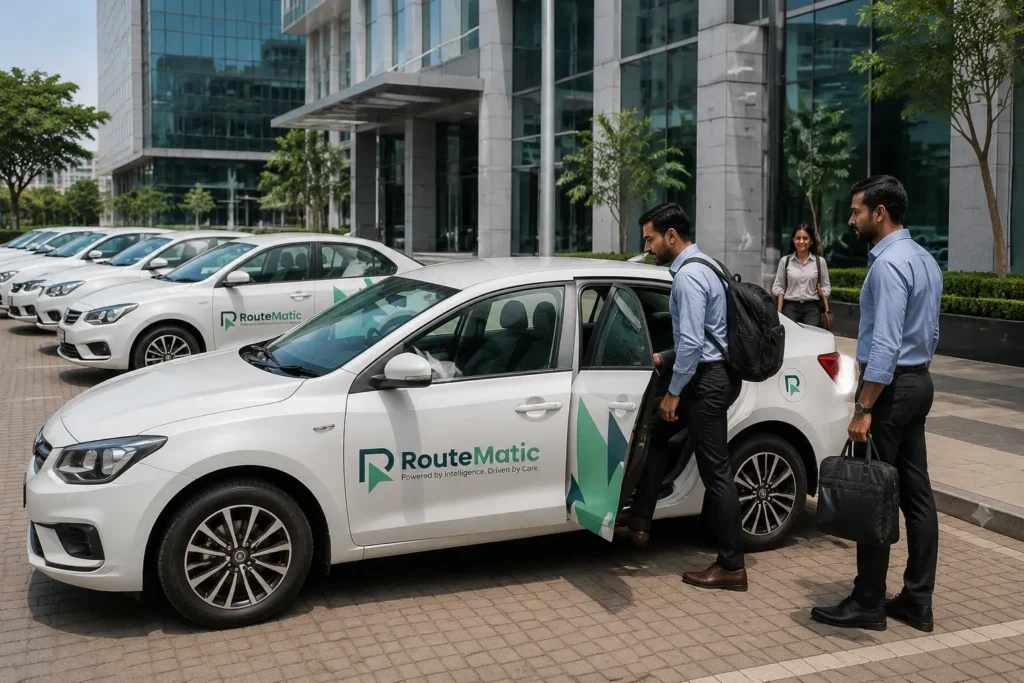
Employee transportation costs include all expenses related to commuting employees to and from work fuel, vehicle leases, driver wages, maintenance, admin overhead, and productivity losses from delays.
Most organisations look at fuel bills and assume they understand transportation costs. That is only the surface. The real cost sits deeper, spread across operations, people, and lost time.
Start with the obvious. Fuel, tolls, per-trip driver payouts, and routine maintenance rise with distance and usage. These are variable costs that fluctuate daily. Then come fixed costs. Vehicle leases or depreciation, insurance, and full-time transport staff salaries continue whether vehicles move or not.
Indirect costs often go unnoticed. Admin hours spent coordinating routes. Software subscriptions. Missed or delayed pickups that escalate into penalties or reroutes. These add up quietly.
There is also the cost of the employee experience. Late arrivals. Fatigue from long commutes. Missed shifts. Over time, poor transport impacts attendance, morale, and retention. That loss reflects directly in productivity metrics.
Why Do Employee Transportation Costs Keep Rising in India?
Employee transportation costs in India rise due to fuel price volatility, low vehicle occupancy, urban congestion, manual planning inefficiencies, and increasing safety and compliance requirements.
Several forces push costs higher. Fuel price volatility. Low vehicle occupancy. Urban congestion. Spreadsheet-based planning. Growing safety and compliance requirements.
To see the true picture, HR and Ops teams need a per-employee view. Total monthly transport spend divided by actual trips, including empty return journeys. Add admin and tech costs. Track occupancy rates closely.
Only then do optimisation strategies make sense. Route optimisation through technology. Right-sizing the fleet with a mix of vehicles. Digital transport management systems. And the gradual adoption of fuel-efficient or electric cars. Facts, not assumptions, drive real savings.
Mistake 1: Focusing Only on Fuel Cost Reduction
Fuel is the easiest cost to see. That is why many cost-cutting conversations stop there. But fuel is rarely the real problem.
When teams focus solely on fuel savings, they ignore depreciation and maintenance costs. Vehicles lose value fast. Reactive maintenance adds another layer of cost through breakdowns and downtime.
Long and stressful commutes don’t just drain energy. They also affect productivity and retention. In 2025, research shows that employees who skip long commutes report a clear boost in productivity, with 26 % of workers crediting reduced travel time as a key factor in better output and focus. Engaged employees, who are less burdened by commute stress, deliver 14 – 18 % higher performance, stay more energised, and contribute more effectively during work hours.
Admin overheads quietly pile up. Manual scheduling, billing errors, and paper-based tracking consume hours every week. Those hours have a cost. So does rework.
Then comes productivity loss. Long, unpredictable commutes drain employees. Late arrivals and fatigue affect output. When a vehicle is off the road, employee work hours are also lost.
According to a 2025 retention report, 74% of employees cite commute length as a major factor in considering leaving a job, making it a significant driver of turnover if not properly addressed.
Low occupancy makes things worse. Empty seats mean a higher cost per employee. Add rising driver wages, insurance premiums, and compliance expenses, and fuel becomes a small slice of the total bill.
Route choices matter as well. A cheaper fuel route that adds thirty minutes costs more in employee time. Without real-time transport technology, these inefficiencies stay invisible.
Mistake 2: Poor Route Planning and Manual Dispatching
Many organisations still rely on static routes and manual dispatching. Spreadsheets. Fixed pickup points. Same routes every day. This approach ignores real-world factors such as traffic congestion, shift changes, absenteeism, and last-minute employee additions.
The result is predictable. Longer routes. Duplicate trips. Vehicles crisscrossing the same areas. Drivers wait idle while employees wait longer. Fuel consumption goes up, but more importantly, time is wasted. In Indian metros like Bengaluru, Mumbai, and Hyderabad, employees spend 90 to 120 minutes per day commuting time that poor route planning can extend by another 20-30%, directly impacting productivity and morale.
Manual dispatching also leaves no room for anticipation. Delays are discovered only after they happen. By then, the damage is done with late arrivals, escalations, and emergency re-routing at a higher cost.
This gap becomes more critical when organisations try to improve safety and sustainability together. As outlined in our guide to reduce employee transportation cost through safer and greener practices, dynamic planning and real-time visibility are foundational.
There is also no visibility. Ops teams cannot easily track route performance, idle time, or detours. Decisions are made reactively, not based on data.
For HR and Operations leaders, this creates daily firefighting instead of control. Costs feel unpredictable. Service quality feels inconsistent.
Efficient transportation today depends on dynamic routing. Routes that adjust daily. Dispatching that responds to demand, traffic, and availability.
Mistake 3: Underutilising Fleet Capacity
Underutilization happens when vehicles run with low occupancy, cabs with two employees, shuttles are half full, and return trips have no passengers. The car moves, the driver gets paid, and the cost stays fixed. The value does not.
This is one of the fastest ways transportation costs creep up. Every empty seat increases the per-employee cost. Yet many organisations never consistently measure occupancy. Without data, underutilization feels normal. Industry best practice targets 75-85% average occupancy; fleets running below 60% can see per-employee costs rise by 30-40% compared to optimized operations.
The problem usually comes from rigid planning. Fixed vehicle types for all routes. No adjustment for demand variations. No consolidation of nearby pickup points. Over time, more vehicles are added to manage complexity, not efficiency.
Underutilised fleets also strain operations teams. More vehicles mean more coordination, more billing entries, and more compliance checks. Risk and effort rise together.
Mistake 4: Ignoring Electric Vehicles as a Cost-Saving Strategy
Many organisations delay adopting electric vehicles, assuming it is the only path to cost savings. In reality, the bigger mistake is ignoring efficiency altogether. EVs highlight what good fleet economics look like. Lower running costs. Fewer breakdowns. Predictable maintenance. Those principles apply even to conventional fleets.
Before or alongside EV adoption, HR and Ops leaders can unlock savings through disciplined cost controls in ICE fleets. Read this guide to know why sustainable transport platforms are better for cost, ESG, and traveller experience.
Practical cost-saving strategies for traditional fleets:
- Fuel management systems: Track real-time fuel usage, control spend limits, prevent misuse, and identify anomalies early.
- Idle reduction: Enforce idling policies or use auto shut-off features to stop fuel burn without movement.
- Driver efficiency programs: Train drivers in eco-driving practices such as smooth acceleration and controlled braking. Telematics can rank and reward efficient driving behaviour.
- Route optimisation technology: Use AI-based tools to plan the shortest, least congested routes based on real-time conditions.
- GPS tracking: Monitor routes to eliminate unauthorised detours and personal usage.
- Predictive maintenance: Use vehicle data to service engines before inefficiencies or failures increase fuel consumption.
- Fleet right-sizing: Review usage data to remove or reassign underutilised vehicles and reduce insurance and maintenance overheads.
Mistake 5: Lack of Centralised Employee Transportation Cost Management and Visibility
Transportation starts breaking down when no one has a single, reliable view of operations. This is common in organisations that rely on spreadsheets, calls, and fragmented vendor coordination.
Without centralised management, visibility disappears. Ops teams do not know where vehicles are in real time. ETAs are guesses. When traffic builds or a route deviates, there is no way to respond quickly. Delays surface only after employees escalate. For organizations operating across Bengaluru’s Electronic City, Pune’s Hinjewadi, or Gurugram’s Cyber City, managing multi-location fleets without a unified platform creates daily operational chaos.
This lack of real-time visibility also limits strategic decision-making, especially when organisations evaluate long-term alternatives like electric fleets, where understanding cost structures, carbon impact, and employee experience is critical, as explained in our detailed guide on EV fleet management ROI.
Manual and disconnected processes make things worse as scale increases. Multiple shifts, changing rosters, and ad-hoc requests lead to errors. Missed pickups. Duplicate routes. Inefficient dispatching. Each mistake adds cost and friction.
Decentralisation also inflates operational expenses. Vehicle capacity cannot be optimised without shared data. Some shuttles run overcrowded, while others run half-empty. Fuel consumption rises. Maintenance becomes reactive.
Safety and compliance risks follow. Without digital records, it is harder to verify drivers, track vehicles during night shifts, or maintain compliance documentation.
Mistake 6: Compromising Safety to Cut Costs
Safety is often treated as a negotiable expense. In reality, it is a fixed cost. When organisations try to save money by lowering safety standards, the bill shows up elsewhere.
Cost-cutting usually starts with maintenance. Routine checks are delayed. Older vehicles stay on the road longer. Breakdowns and failures become frequent. Driver choices follow the same pattern. Unverified drivers, minimal training, and licensing gaps reduce upfront costs but increase risk.
Route pressure adds another layer. Longer routes, tighter schedules, and overloaded vehicles push drivers toward fatigue. Mistakes rise. So do incidents.
Many fleets still operate without real-time monitoring. No GPS tracking. No panic buttons. No visibility during night shifts. For female employees, the absence of defined safety protocols is especially risky. In India, state-level Shops and Establishments Acts mandate safe transport for women employees during night shifts (typically 7 PM to 6 AM), and non-compliance can result in operational penalties and legal exposure.
The hidden costs surface quickly. Accidents lead to legal exposure and regulatory penalties. Employees lose trust in the commute. Stress increases. Attendance drops. Attrition follows.
Reputation damage lasts even longer. Safety incidents travel fast, especially in people-driven industries. What seems like a saving often increases total ownership cost.
How Technology-Driven Fleet Management Helps Reduce Transportation Costs
A technology-driven fleet model replaces manual coordination with predictable systems. Routes are planned dynamically, not fixed for months. Vehicles are deployed based on real demand, not estimates. This alone reduces fuel waste, idle time, and duplicate trips.
Real-time visibility is the biggest lever. GPS tracking shows where every vehicle is, how long it idles, and whether it deviates from the planned route. Ops teams can intervene early rather than react to escalations. Delays are predicted, not discovered at the last minute.
Automation removes human error. Dispatching no longer depends on spreadsheets or calls. Vehicles are allocated based on proximity, availability, and shift requirements. Billing becomes cleaner because trips, distances, and timings are captured automatically.
Safety and compliance also become cost controls. Verified drivers, compliant vehicles, and live monitoring reduce incidents, penalties, and insurance exposure. Predictable operations mean fewer surprises and tighter budgeting.
This is where platforms like RouteMatic stand out. AI-powered dispatch predicts delays hours in advance. Automated deployment improves vehicle utilisation. Centralised dashboards give HR and Ops leaders a single view of cost, safety, and performance.
Employee transportation becomes complex when it is managed in fragments. Different vendors. Multiple tools. No single owner. RouteMatic TaaS solves this by bringing everything under one structured, technology-led model.
How Transport Providers Help Reduce Employee Commute Costs
Working with an experienced employee transportation provider can help organisations reduce commute costs without compromising service quality. Instead of managing vehicles, drivers, routes, scheduling, and billing separately, companies can use a centralised transport partner to improve efficiency across the entire commute operation.
A technology-enabled transport provider can reduce costs in several ways:
- Higher vehicle utilisation: Providers can consolidate employees travelling along similar routes, helping increase occupancy and reduce the number of underutilised vehicles.
- Dynamic route optimisation: Real-time traffic and employee demand data can be used to adjust routes, minimise unnecessary kilometres, and reduce fuel consumption.
- Fleet right-sizing: Transport providers can deploy different vehicle types based on actual demand rather than maintaining excess capacity across every route.
- Lower administrative overhead: Automated scheduling, trip tracking, billing, and reporting reduce the manual effort required to coordinate employee transportation.
- Better cost visibility: Centralised data helps companies monitor cost per trip, cost per employee, occupancy, kilometres travelled, and other KPIs to identify ongoing savings opportunities.
What is RouteMatic TaaS?
RouteMatic TaaS is an end-to-end employee commute management service. It combines a standardised fleet, advanced technology, and a centralised 24/7 command centre. The focus is simple. Predictable operations, controlled costs, and safer commutes at scale. This model works especially well for organisations with dynamic shifts, multiple locations, and compliance-heavy operations.
At the centre of this ecosystem is the RouteMatic Transport SuperApp. Think of it as one control hub for all mobility needs. Daily employee commutes. Visitor and leadership travel. Event logistics. Even office parking. Everything is managed through a single platform, eliminating the need to juggle tools and vendors.
The solution supports multiple use cases. Dynamic shift transport for round-the-clock operations. Corporate car rentals for airport transfers or multi-day travel. Fixed-route buses and inter-office shuttles. Smart parking with booking, access control, and real-time occupancy visibility.
What powers this is technology. AI-driven route optimisation. Cloud-based access from anywhere. Cost-efficient scheduling. Built-in sustainability through eco-friendly fleets. And scalability that grows with the workforce.
For HR and Ops leaders, platforms like RouteMatic turn transportation from an operational burden into a managed system.
FAQs
Regular audits help identify route inefficiencies, underutilised vehicles, billing discrepancies, and compliance gaps before they turn into long-term cost leaks.
Yes. Industries with night shifts, distributed offices, or high attrition, such as IT, BPO, and manufacturing, typically incur higher transportation costs due to safety requirements, dynamic routing, and shift variability.
How can companies reduce employee transportation costs without cutting service quality?
Companies can reduce costs by adopting dynamic route planning, right-sizing vehicle types, using technology platforms for real-time tracking and dispatching, consolidating vendors, and maximizing vehicle occupancy. These strategies lower cost per trip while improving punctuality and employee experience.
Is employee transportation mandatory under Indian labor law?
Employee transportation is not universally mandatory under Indian labor law, but specific state Shops and Establishments Acts and factory laws require employers to provide safe transport for women employees working night shifts (typically 7 PM to 6 AM). Non-compliance can result in penalties and operational restrictions.
What is the ROI of switching to a technology-driven employee transport platform?
Most organizations see 15-30% cost savings within 6-12 months of switching to a technology-driven platform, driven by route optimization, reduced admin overhead, billing accuracy, and higher vehicle utilization. Indirect ROI includes improved employee retention, punctuality, and safety.
Key metrics include cost per km, vehicle occupancy rate, on-time arrival (OTA), incident rate, and on-time departure (OTD). Tracking these consistently enables data-driven decisions.
In many cases, yes. Outsourced, tech-enabled providers can leverage scale, standardised fleets, and automation to reduce administrative overhead and improve cost predictability compared to fragmented in-house setups.
Reliable and safe transportation directly affects employee satisfaction, especially for night-shift and female employees. Poor commute experiences often surface in exit interviews and employer reviews, impacting talent attraction and retention.
About the author

Sandeep Padhi
Chief Operating Officer, RouteMatic
As COO of RouteMatic, Sandeep Padhi brings extensive expertise in transport operations, fleet management, and enterprise mobility. He shares practical insights on scaling transportation programs, operational excellence, compliance, driver ecosystems, and building reliable mobility solutions for modern enterprises.