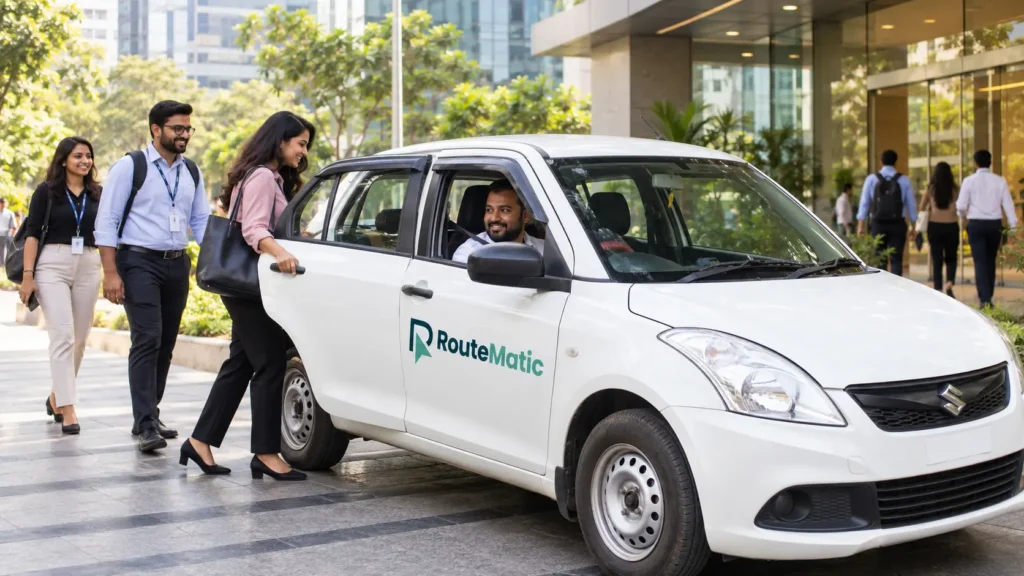
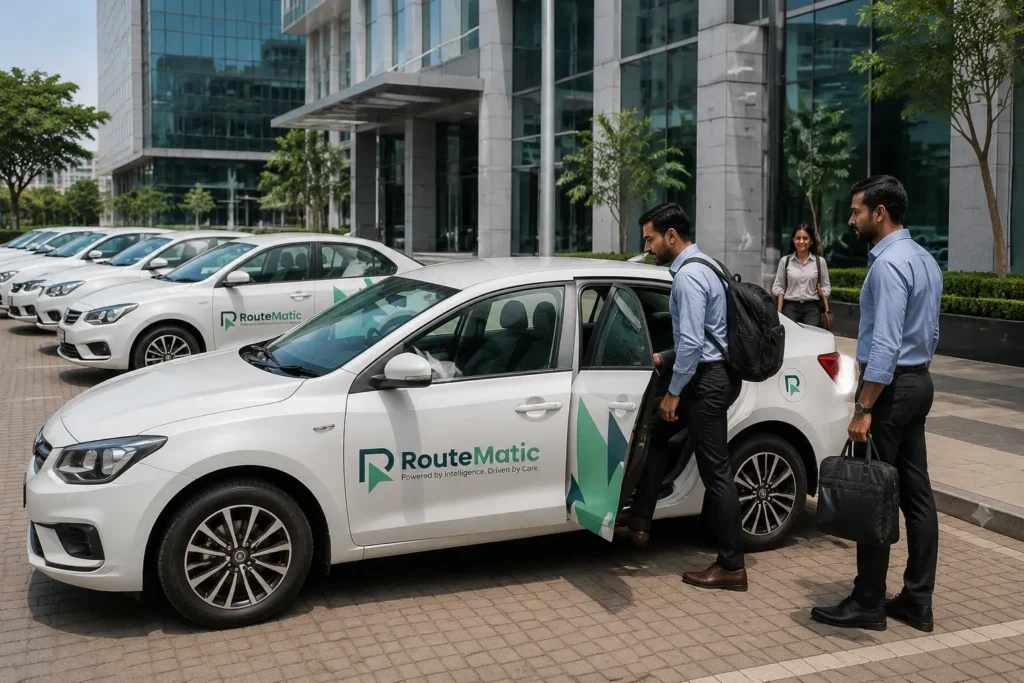
Indian enterprises use many cabs every day, especially for airport transfers and late-night travel. On the surface, booking a taxi from an app looks simple. In reality, it creates unpredictable costs, scattered data, and very little control over safety or emissions.
A managed sustainable transport platform takes the same travel need and runs it through one system with clear rules, live tracking, and audited billing. This article explains why that model works better for cost, ESG goals, and the traveller experience, and how RouteMatic fits into that picture.
Total cost: cabs versus sustainable transport platforms
With ad‑hoc cabs, each ride is a separate transaction. Prices change with time of day, surge, and distance. Admin teams handle dozens or hundreds of receipts. Finance teams struggle to match rides to cost centres. There is very little visibility into cost per passenger or per corridor.
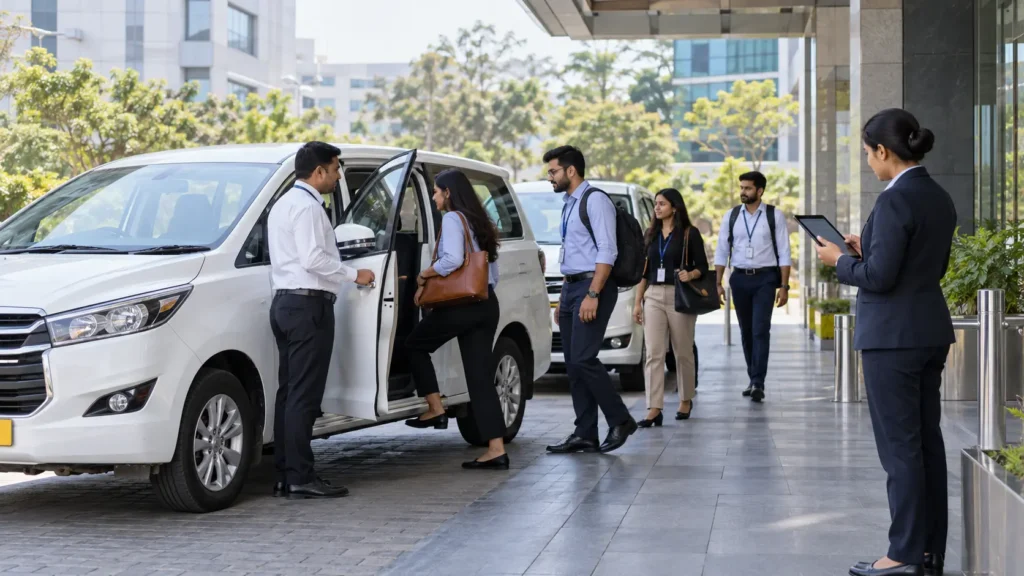
A managed sustainable transport platform works differently. Routes are planned. Seats are pooled. Vehicles are assigned with clear rules. For frequent airport transfers, the system can group travellers on similar flights, from similar locations, into shared routes. This raises occupancy and lowers cost per seat. A single invoice covers all trips with trip logs attached. Finance gets one clean file instead of loose bills.
Over a month, the difference is clear. With pooled routing and planned capacity, you pay for fewer vehicles and fewer empty runs. You see which corridors are expensive and why. That is hard to do when every taxi ride is booked separately.
Carbon impact: how sustainable transport reduces emissions
When every traveller books their own cab, most cars run with one person. Many cars travel to or from the airport almost empty. This is bad for cost and for emissions. For ESG reporting, it also creates a problem. You do not know how many kilometres were run in total or how many people were carried.
In a sustainable transport model, each trip is a data point. The platform knows how many passengers sat on each shuttle, how many kilometres the vehicle ran, and how much fuel or energy was used. For airport transfers, you can move from single‑passenger cars to shared shuttles or larger vehicles. That reduces emissions per passenger kilometre.
If you add EVs to these planned routes, the impact is stronger. Battery‑aware routing ensures vehicles get charged between trips without disrupting ETAs. Over time, you can report how many airport rides used EVs, how many tonnes of CO2 were avoided, and how your carbon per passenger is trending. That level of control is only possible when transport is planned and measured in one system.
Safety and SLA advantages of managed airport transfers
Safety cannot rely on chance. With ad‑hoc cabs, the company has limited say in who the driver is, what route is taken, or how incidents are handled. For late‑night airport transfers, this is a serious gap, especially for women employees. It also makes it hard to prove that the company followed its duty of care.
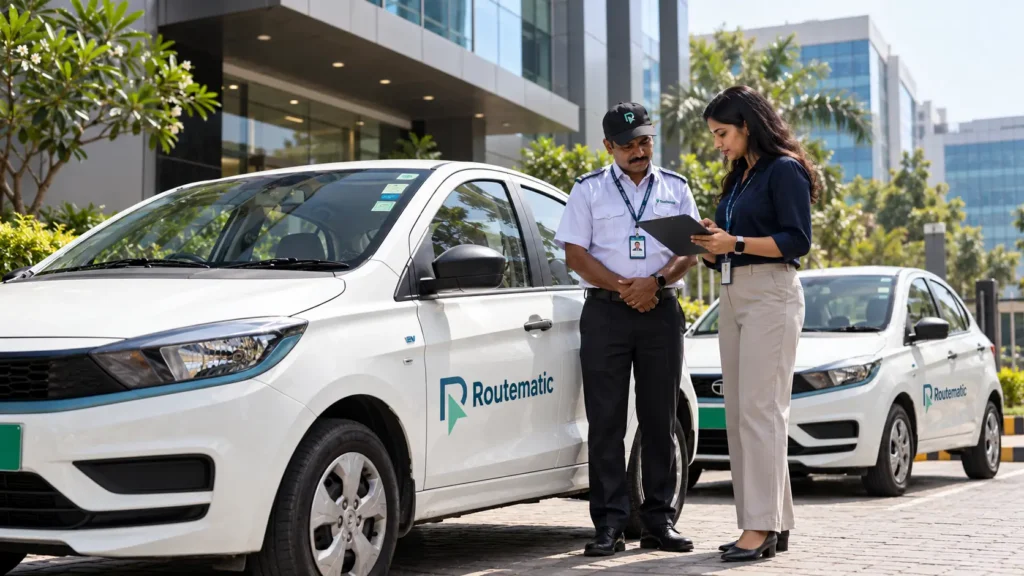
A managed platform puts safety inside the workflow. Drivers are verified. Routes are geofenced. There are clear policies for women’s safe drop, including call‑back confirmation and escalation paths. Every trip generates a trail of events: assignment, pickup, check‑in, route followed, drop. Service level agreements are defined and monitored. For example, maximum ETA variance, maximum waiting time, and response time for an SOS.
If a trip runs late or off route, the control team sees it on a dashboard and can act. If there is an incident, the company can review the full log. This is very different from chasing records across many taxi receipts and separate apps.
Audit, billing, and control in one place
Unmanaged cabs create a mess at month‑end. You get bills from multiple operators. Receipts may be missing or incomplete. Matching a ride to a project code or a cost centre is slow and error‑prone. Internal audit teams do not have a reliable way to check if policies were followed.
With a sustainable transport platform, billing is tied to events. Each airport transfer or shuttle ride has time stamps and GPS data. The system generates invoices from this single ledger. It is clear which business unit, or project should pay for each ride. Disputes fall, and reconciliation is faster.
For audits, the same data serves as proof. You can show which drivers were used, which routes were allowed, how women’s drop policies were enforced, and how exceptions were handled. This gives leadership confidence that transport is both efficient and compliant.
How RouteMatic unifies shift, visitor, and airport travel
Many enterprises treat shift transport, visitor movement, and airport transfers as separate problems. Different vendors. Different tools. Different spreadsheets. That leads to gaps in control and poor use of vehicles.
RouteMatic brings these flows into one AI‑driven SuperApp. The same engine that plans night‑shift routes can plan early‑morning airport shuttles. The same live tracking view lets teams monitor office‑to‑home trips as well as hotel‑to‑airport rides. Routing, tracking, and billing run through one platform.
For operations, this means one control tower and one set of policies. For finance, this means one source of cost and emissions data. For ESG, it means you can treat all corporate travel inside the network as part of one sustainable transport program, not a tangle of small arrangements.
Traveller experience: predictable, safe, and transparent
From the traveller’s point of view, experience matters. They want to know when the vehicle will arrive. They want the route to be predictable. They want to feel safe, especially at odd hours.
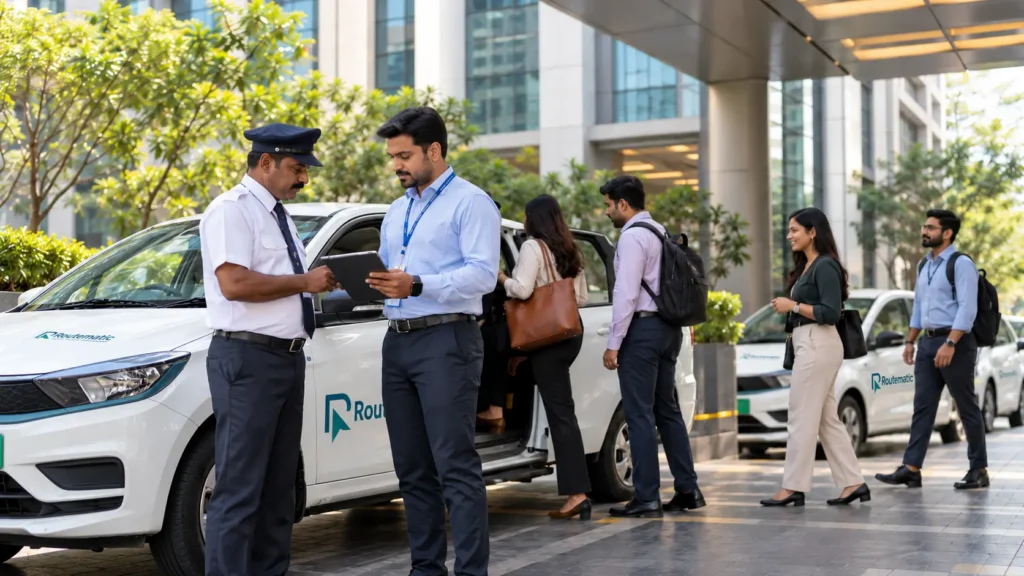
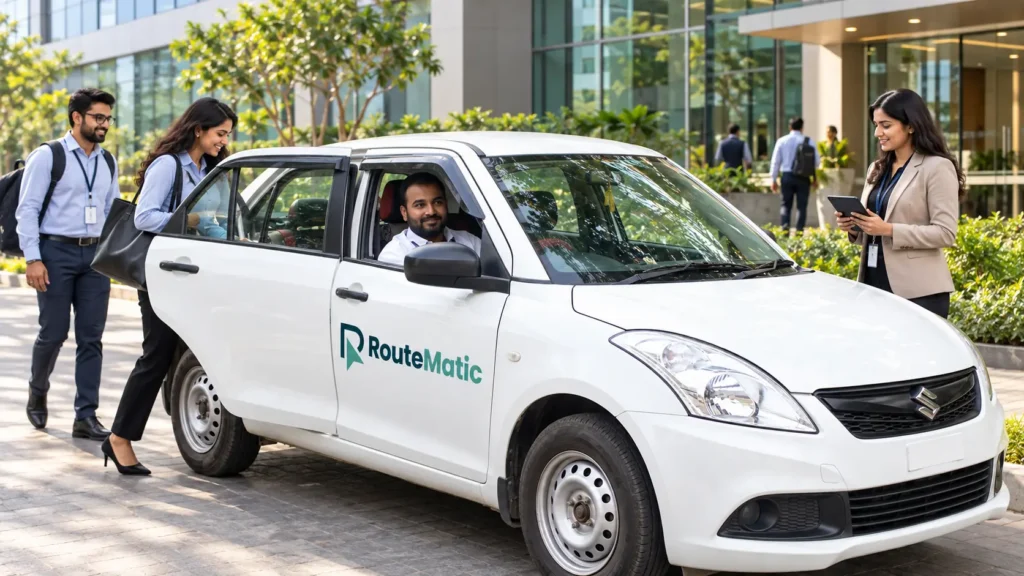
With a managed platform, travellers receive clear ETAs, vehicle details, and driver information. They can track the ride. They know that policies, such as women’s safe drop, are in place. For airport transfers, they get clarity on pickup points, timings, and what to do if their flight is delayed. This reduces stress and improves trust.
When experience improves, adoption goes up. More people are shifting from personal cabs to the planned shuttle or transfer service. That increases occupancy, reduces emissions, and strengthens the overall sustainable transport model.
Conclusion
Ad‑hoc taxi use looks flexible, but it hides real problems in cost, safety, and carbon. A managed sustainable transport platform treats airport transfers and other corporate trips as a single system. Routes are pooled. Emissions are measured. Safety is built into the workflow. Billing is based on verifiable events. Travellers get a more predictable and safer experience.
RouteMatic adds an AI‑driven layer on top of this system. It unifies shift commutes, visitor travel, and airport runs. It gives enterprises one control tower for routing, tracking, safety, and billing. For Indian organisations that want to control costs, meet ESG targets, and keep travellers comfortable and safe, this platform approach is a clear step forward.