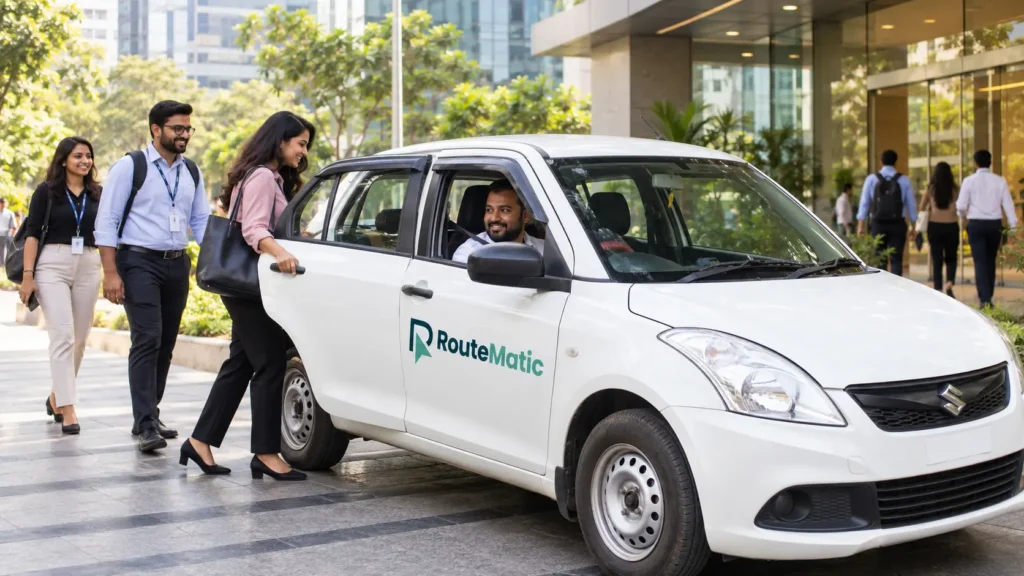
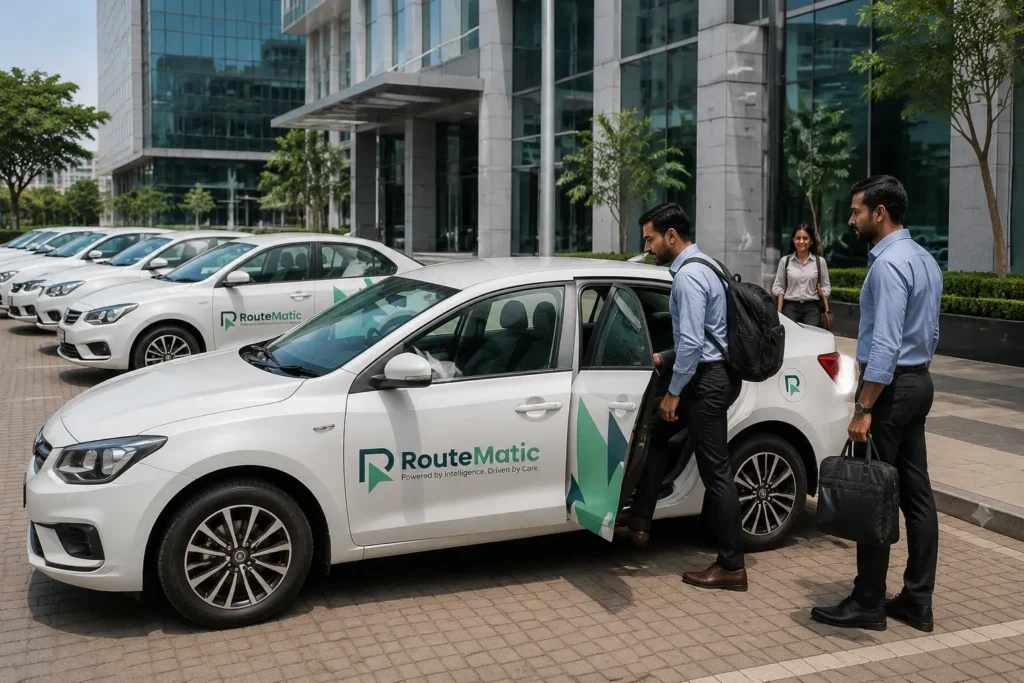
Choosing the right transportation management solution is not a features decision. It is a governance decision. The wrong system does not just underperform. It gives your vendor more control over your operational data.
Your vendor spent weeks preparing the demo. Nobody prepared for what happens when you ask for last month’s compliance audit report, a closed SOS incident log, and trip-level billing data from six weeks ago. No vendor rehearses those three requests.
This checklist to choose the best transportation management system is built around those three requests and everything behind them.
TL;DR
- Employee transportation challenges like inefficient routes, safety gaps, billing leakages, and poor visibility impact business costs and employee experience.
- Modern transport systems use AI, automation, and real-time tracking to improve efficiency, compliance, and safety.
- A unified mobility approach helps enterprises optimise routes, control expenses, and scale operations across cities.
- Solving transport issues transforms employee commute from a daily challenge into a strategic business advantage.
What a Transportation Management Solution Actually Is
Here is what most companies searching for a transportation management solution miss: the problem is rarely the vendor. It is the absence of a governance structure that the vendor was never required to operate within. Technology alone does not close that gap. A SaaS platform surfacing a dashboard over third-party vendors cannot enforce driver standards, mandate vehicle renewals, or guarantee what shows up on your routes at 11 pm. Operational accountability requires owned infrastructure, a trained workforce, and a command centre answerable for outcomes rather than uptime.
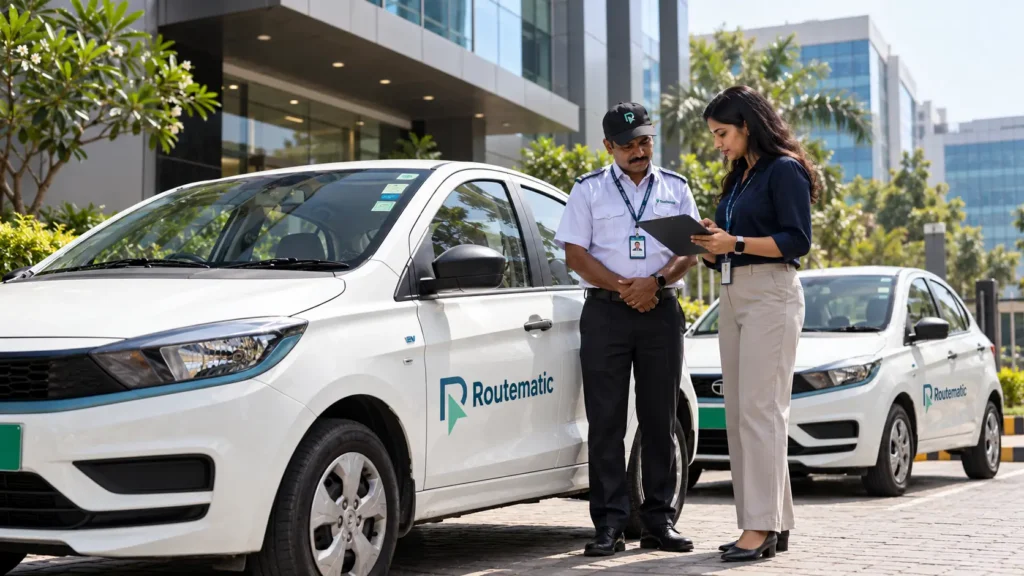
RouteMatic is India’s most trusted employee transportation partner, trusted by 400+ enterprises, including 38 Fortune 500 companies and 125 GCCs, across 24 cities. It operates as a hybrid TaaS platform with an owned fleet, AI-first technology, and a 24/7 command centre.
75,000 daily trips. 4,500 owned vehicles. 100% driver and vehicle compliance enforced. Billing closed against GPS-confirmed data within 5 days.
Compliance and Safety: What Most Contracts Miss
Your vendor contract specifies rates, routes, and response times. It does not specify who independently verifies that the documentation behind those services is current, on which system, and after how many months. Those are the things to consider when choosing a transportation management system that most procurement teams never put in the RFP.
Five things to verify before any transportation management solution makes your shortlist:
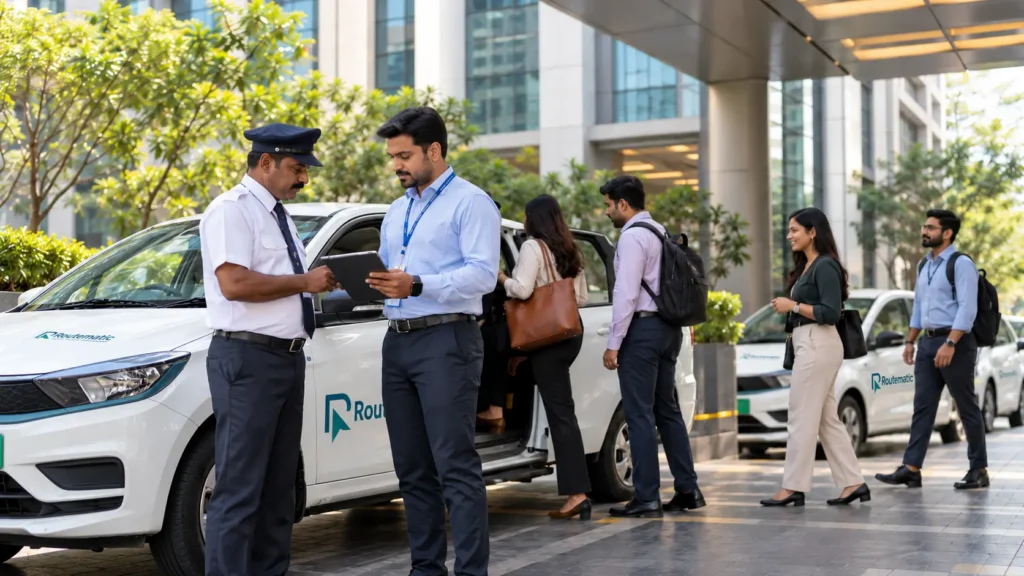
- Driver documentation with tracked renewals: When did the provider last run an expiry audit across their entire fleet? Ask for the date and the output. Your team should access any driver’s documentation status directly, without calling the vendor.
- GPS refresh rate confirmed in writing: Get the exact interval in the contract, not the brochure. At 30 seconds, your command centre is a step behind.
- SOS incident log from the last 30 days: Request a closed incident report before the evaluation goes further. A provider managing safety events through a WhatsApp group will not have this document.
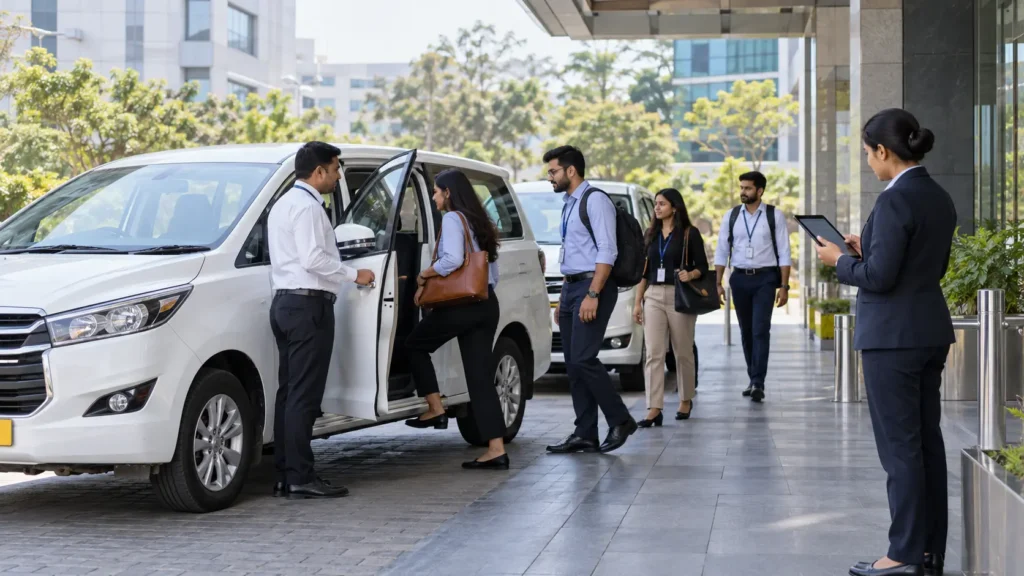
- Women’s safety protocols with verified confirmation: For female employees travelling after hours, Supreme Court guidelines on mandatory tracking, escort confirmation, and verified drop-off are not optional features a provider can enable or disable. RouteMatic’s women’s safety and compliance framework automates female-safe drop confirmation on 98% of trips. The remaining 2% receives a manual follow-up call. Ask any provider you evaluate for that same number.
- Live audit trail queryable in the room: Pick any trip from six weeks ago. Ask to see the full record right now, route, driver, GPS log, and billing entry. If retrieving that data requires a vendor email, what you have is not an audit trail.
Cost Control and Billing: Where the Leakage Hides
The global corporate employee transportation market was valued at USD 38.14 billion in 2024, per Mordor Intelligence. Most enterprises contributing to that number have no trip-level visibility into what they are actually spending.
Transport spend gets approved by Finance and managed by Operations. Nobody owns the reconciliation end-to-end. Vendors submit invoices at the rate card rate. The GPS data that would surface real discrepancies sits in a system the vendor controls access to.
The variance most Finance teams eventually flag is spread across unoptimised routes, unverified boardings, and unchallenged kilometre figures.
Four cost controls worth verifying before any contract gets signed:
- Route optimisation running against live data daily: Ask the provider for their average vehicle occupancy rate across their active fleet. RouteMatic’s AI-led routing sustains occupancy across 5 million monthly rides by recalculating routes based on live shift data. See how enterprises cut employee transportation costs without reducing service levels.
- Trip-level visibility your Finance team accesses directly: Cost per employee per trip for any date in the last 90 days, pulled from your own system without contacting the vendor.
- Billing closed against GPS actuals: RouteMatic closes invoices within 5 days and reconciles them against GPS-confirmed data. Most manual operations take three to four weeks and still carry errors that nobody catches.
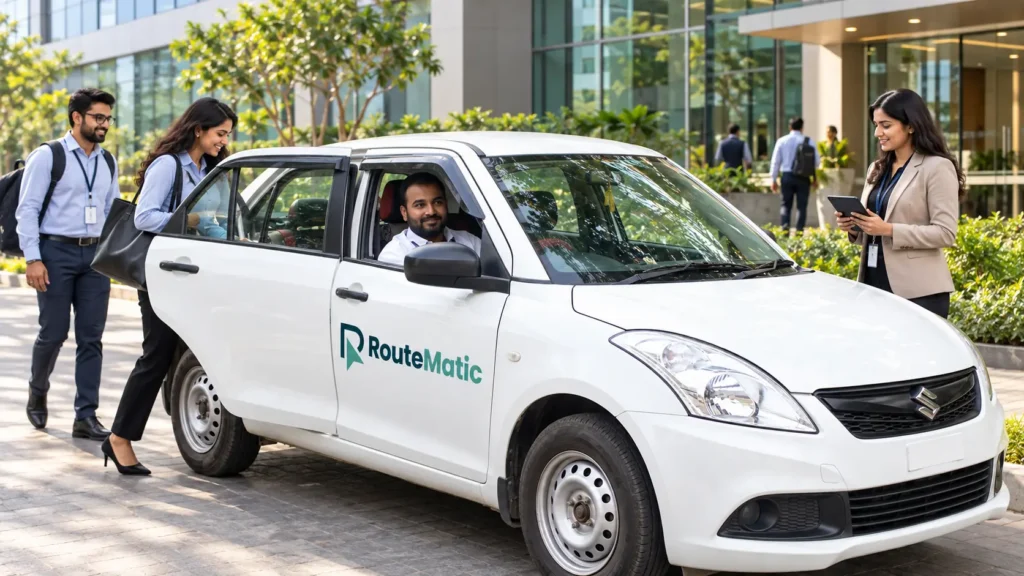
- No-show detection with automatic seat reallocation: Vendors invoice against bookings. Whether the employee actually boarded is a separate data point that lives nowhere in most manual operations. RouteMatic reduces no-show occurrences to under 5% through automated detection and real-time seat reallocation.
Technology and Operations: What the Demo Will Not Show You
Skip the scripted walkthrough. Name a date from the last 30 days and ask what their system logged.
- GPS latency confirmed in the contract: Get the exact refresh rate before signing. Four seconds is the working standard. At 30 seconds, your command centre makes safety decisions based on stale data.
- Dynamic routing under real disruption: Name a date. Any date in the last 30 days. Ask what went wrong and how the system responded. A provider with genuine operational depth has the log.
- Direct HRMS integration with automatic roster sync: The right employee transportation management software connects to your HR system so shift changes update the transport plan without a manual handoff.
- 24/7 command centre with human accountability: RouteMatic’s command centre runs around the clock across all 24 cities. See how this works across IT, BFSI, GCC, and BPO operations before evaluating any provider that offers software without the operations layer.
Scalability and Vendor Evaluation: How to Choose a Transportation Management System for the Long Term
You are not buying a service. You are choosing an operations partner for the next three to five years.
- Single dashboard across all cities: A GCC adding Hyderabad and Pune to an existing Bengaluru operation cannot govern three separate reporting structures. RouteMatic’s 24-city network runs on a single reporting layer with standardised compliance across all locations.
- Owned fleet percentage, not total fleet size: RouteMatic operates 4,500 owned vehicles. An aggregator coordinates third-party vendors and can influence standards. An owner enforces them. Driver fitness certificates, vehicle condition, and behaviour standards are part of the operational model rather than being requested after the fact.
- Surge fulfillment rate from an actual spike: Request data from their last demand surge, fulfillment rate, rerouting response time, and resolution log. Then ask for the contractual penalty when fulfillment falls short. A provider confident in surge capacity produces both without a follow-up email.
- Contract terms before you commit: Before signing, confirm the exit clause, the SLA review cycle, and whether penalty terms are enforceable rather than advisory.
- Transition and cutover ownership: Ask the provider who owns operations during the handover period between your existing vendor and their system going live. See how enterprises structure employee transport governance during transitions before that conversation happens.
Conclusion
The checklist is only useful if you use it before signing, not after an incident forces the conversation.
RouteMatic delivers 97% OTA, a 4.9/5 ESAT score, and 100% driver and vehicle compliance across 400 enterprises in 24 cities. Request a demo and hold every point on this checklist to choose the best transportation management system against what they actually show you.
Frequently Asked Questions
Can a company manage employee transportation manually at enterprise scale?
Technically, yes. Practically, it breaks fast. Once you are coordinating hundreds of employees across multiple shifts and cities, manual systems cannot catch a ghost trip, flag an expired compliance certificate, or reroute a vehicle at 11 pm without a 40-minute phone chain that leaves no documentation. Most transport heads discover this after an audit or a safety incident, not before.
Is a transportation management solution too expensive for mid-sized companies?
The real cost question is not what a transportation management solution charges. It is what your current operation is already losing to billing leakages, empty seats, and unoptimised routes. RouteMatic’s enterprise clients report 12 to 18% in transport cost savings after implementation. Billing closure drops from three to four weeks to under five days. On a two-crore annual transport budget, 15% recovery is 30 lakhs.
What should a company prioritise first when evaluating a transportation management system?
Start with two questions before the demo, before pricing, before anything else. Can the provider confirm the location of every vehicle on your network right now? Can they pull the compliance documentation status for the last 30 days for any 3 drivers? If both answers come from their own live system without a vendor email in between, you are talking to a real operational partner. RouteMatic answers both from a live system across 400 enterprises in 24 cities. That is the standard worth holding every provider to.
What is the difference between a SaaS transport platform and a managed TaaS model?
A SaaS platform gives your operations team a dashboard. What happens outside it depends on vendors that the platform has no authority over. RouteMatic’s TaaS model runs on 4,500 owned vehicles, a 24/7 command centre, and contractual accountability for safety, cost, and compliance outcomes. See how that accountability holds up across IT, GCC, BFSI, and BPO clients in RouteMatic’s case study catalogue.