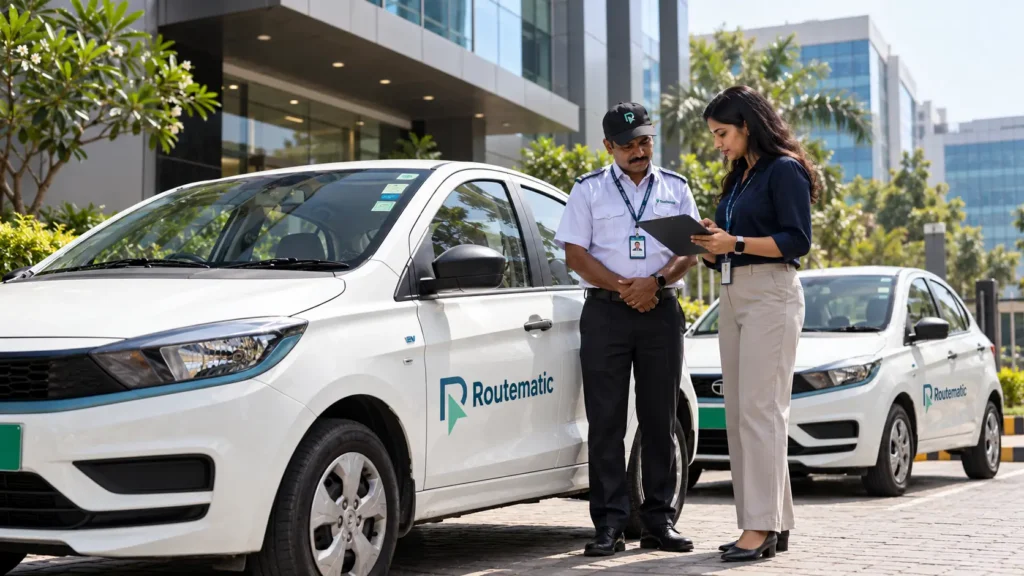
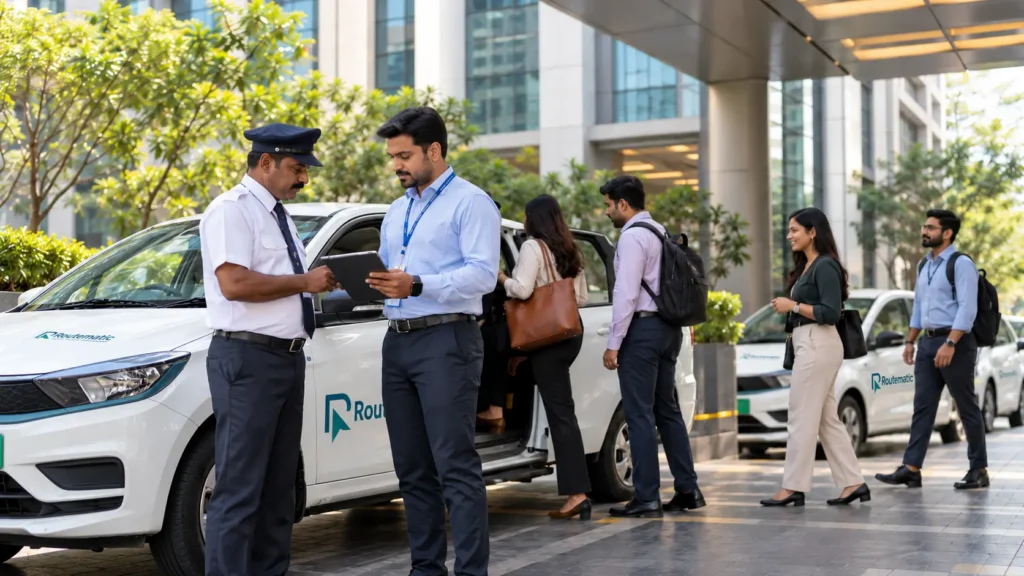
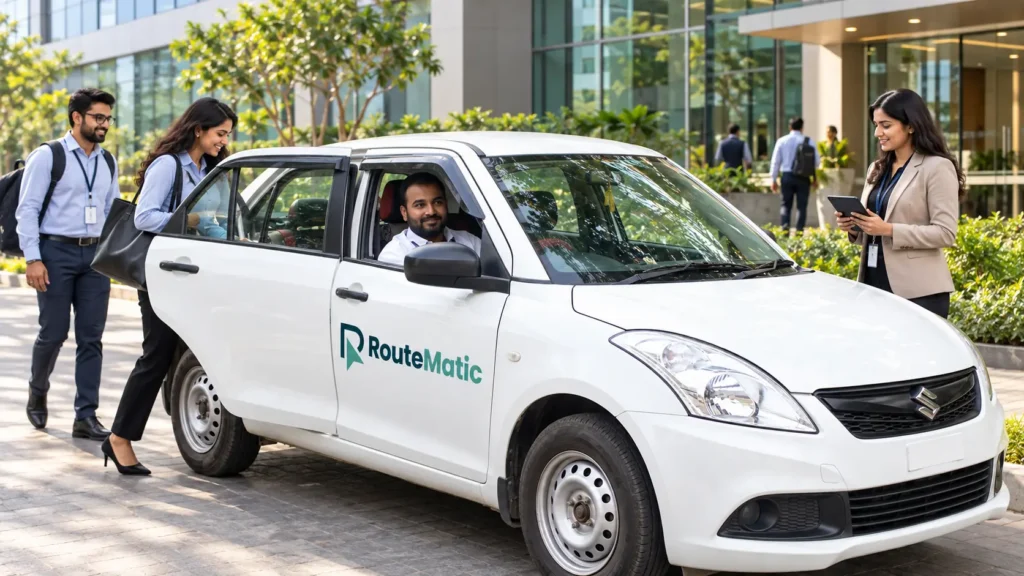
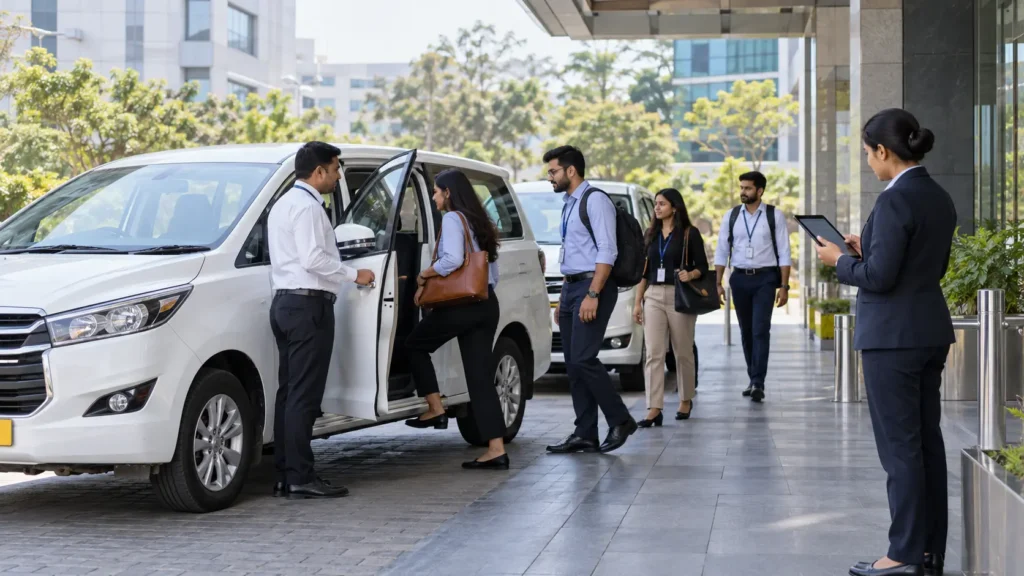
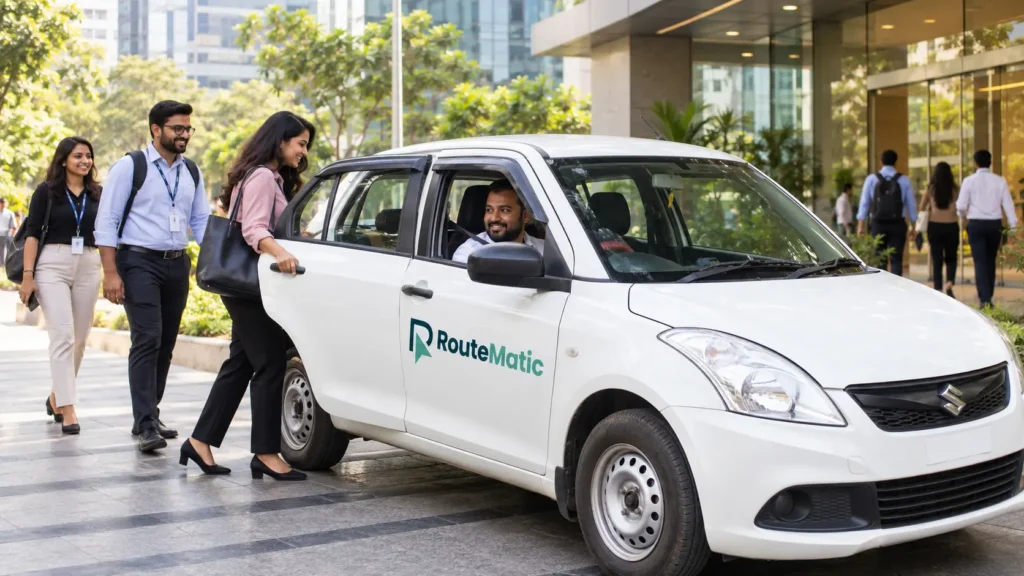
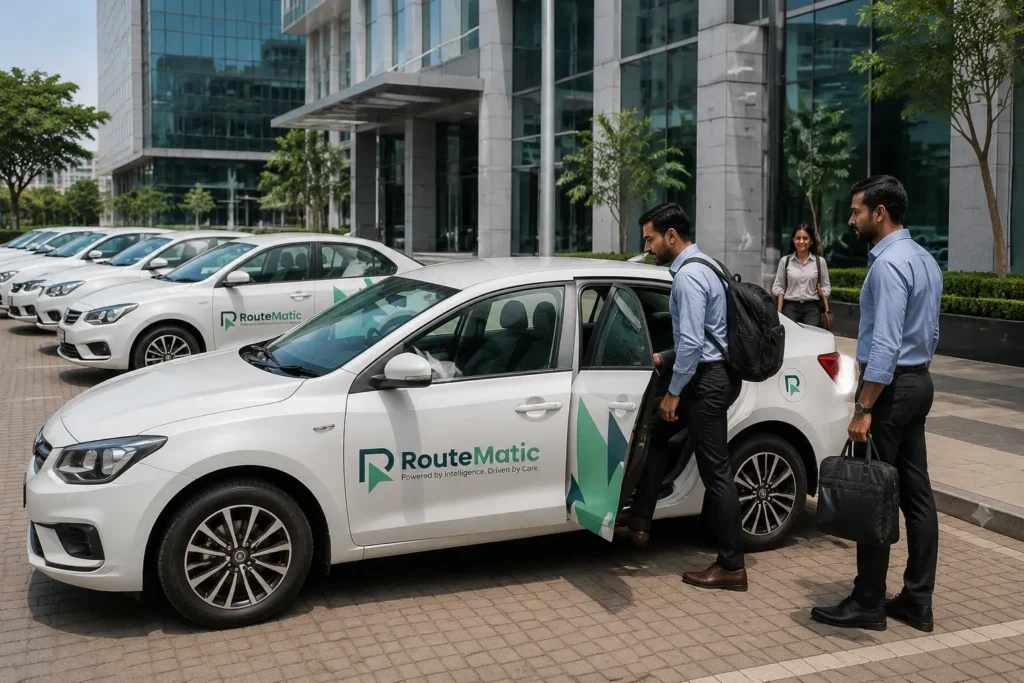
Employee transportation is no longer just a support task. It has become a key factor in business stability, employee retention, safety, and ESG goals. In India’s fast-growing cities, daily commuting is becoming more difficult due to heavy traffic, delays, and rising costs. What was once a routine operation is now a serious business challenge that directly impacts productivity and employee experience.
The numbers clearly show the scale of the problem. As per the TomTom Traffic Index 2025, Bengaluru is now one of the most congested cities in the world, with employees losing around 168 hours every year in traffic. Average speeds in major metros have dropped to about 16.6 kilometres per hour. According to the NITI Aayog Viksit Bharat 2026 Transport Report, road transport accounts for about 90% of passenger traffic in India. This means most employees rely on roads to commute, so time lost in traffic not only reduces productivity but also increases fuel use, costs, and carbon emissions for businesses.
Employee transportation challenges directly impact retention, especially in shift-based industries. Research shows that 15-20% of early resignations in manufacturing, IT, and BPO sectors are attributed to commute difficulties. A study of 1,200 employees across Bengaluru and Pune found that employees with commutes exceeding 90 minutes are 2.3 times more likely to leave within the first year. For companies where the cost of replacing an employee ranges from ₹80,000 to ₹2.5 lakh (depending on role and seniority), transport-related attrition represents a significant hidden cost. Conversely, companies that provide reliable, safe transport report 25-30% lower attrition in shift-based roles.
In this article, we will examine the five most common employee transport issues companies face today. We will also explain why traditional systems are no longer effective and how smarter, technology-led solutions can help businesses manage transport more efficiently and sustainably.
TL;DR
- Employee transportation challenges like inefficient routes, safety gaps, billing leakages, and poor visibility impact business costs and employee experience.
- Modern transport systems use AI, automation, and real-time tracking to improve efficiency, compliance, and safety.
- A unified mobility approach helps enterprises optimise routes, control expenses, and scale operations across cities.
- Solving transport issues transforms employee commute from a daily challenge into a strategic business advantage.
Employee Transportation Challenges Across Indian Cities
The severity of employee transport issues varies significantly across India’s major business hubs. Here’s how the top metros compare:
| City | Average Commute Time | Peak Hour Speed | Annual Hours Lost in Traffic | Primary Challenge |
| Bengaluru | 57 minutes | 16.6 km/h | 168 hours | Severe congestion, tech park concentration |
| Delhi NCR | 52 minutes | 18.2 km/h | 156 hours | Sprawling geography, inadequate last-mile connectivity |
| Mumbai | 64 minutes | 15.8 km/h | 172 hours | Limited road space, high density |
| Pune | 48 minutes | 19.4 km/h | 142 hours | Rapid IT sector growth, infrastructure lag |
| Hyderabad | 51 minutes | 17.9 km/h | 148 hours | Multi-corridor office distribution |
| Chennai | 49 minutes | 18.7 km/h | 145 hours | Industrial zone distance, monsoon disruptions |
Sources: TomTom Traffic Index 2025, NITI Aayog Transport Report 2026
These regional differences mean that a one-size-fits-all transport solution rarely works. Companies operating across multiple cities need flexible, location-aware systems that can adapt to local traffic patterns, infrastructure limitations, and workforce distribution.
5 Common Employee Transport Issues and Simple Solutions for Enterprises
Now that we understand how employee transport affects costs, productivity, and safety, let us look at the most common problems businesses face and how to solve them.
1. Inefficient Route Planning and Long Commute Times
Inefficient route planning occurs when companies use fixed, manually-created transport routes that don’t adapt to real-time demand, traffic conditions, or employee locations. This results in longer commute times, wasted vehicle capacity, and higher operational costs directly impacting employee productivity and satisfaction.
Poor route planning is one of the most common challenges in employee transport. Many companies still rely on fixed routes or manual planning, which fail to match real-time demand. As shift timings, traffic conditions, and employee locations change, this leads to longer commute times, delays, and inconsistent service quality. Over time, this directly impacts employee productivity and overall experience.
At scale, improving routing efficiency can deliver measurable results. For example, RouteMatic’s AI-led platform has shown 12 to 18% cost savings through better route planning and higher vehicle occupancy, along with a First Point On Time Arrival rate of 97%. This highlights how smarter planning can reduce both delays and operational costs.
Solution approach:
- Use dynamic route optimisation instead of fixed routes
- Plan routes based on shift timing and employee locations
- Apply demand forecasting to assign the right number of vehicles
- Reduce travel time by minimising unnecessary stops
A modern Employee Transport Management System helps automate these processes and ensures more reliable and efficient employee journeys.
2. Fragmented Vendor Management and Lack of Visibility
Managing employee transport through multiple uncoordinated vendors is a common challenge in large enterprises. Each vendor follows different processes, documentation standards, and service quality levels, resulting in inconsistent operations and difficult control. This often leads to confusion, delays, and uneven employee experience across locations.
The bigger issue is the lack of centralised visibility. Without a single system, transport teams cannot track vehicles in real time, monitor trip progress, or ensure compliance. This results in duplicated routes, empty seat miles, rising costs, and decisions based on complaints rather than data.
To address this, companies need a unified system that brings all vendors under one structured framework with clear accountability.
Solution approach:
- Use a centralised transport management system
- Standardise driver onboarding and vendor processes
- Ensure uniform service level agreements across vendors
- Enable real-time tracking and monitoring of all trips
This is where platforms like RouteMatic help by combining an owned fleet of 4,500 vehicles with a technology-managed vendor network across 24 cities, giving enterprises a single point of accountability. Learn more about how RouteMatic’s vendor management works.
3. Safety and Compliance Gaps
Safety is a critical concern, especially for women employees and night shift operations. In many cases, driver checks, vehicle compliance, and safety processes are inconsistent, creating legal and reputational risks. A Ministry of Housing and Urban Affairs report shows that over 35% of people in Delhi own bicycles, but only about 6% use them due to safety concerns, even though more than 60% of trips are under 4 km.
For women employees, the lack of safe drop confirmation, escort protocols, and real-time tracking further increases risk and can lead to non-compliance. A strong transport system must ensure safety at every step, not just vehicle availability.
Solution approach:
- Ensure complete driver background verification
- Maintain proper vehicle compliance and documentation
- Monitor trips in real time for safety
- Enable safe drop confirmation and escalation systems
Many organisations now prefer structured employee transport systems over fragmented vendor networks, focusing not just on availability but on full accountability.
4. Uncontrolled Transport Spend and Billing Leakages
Transport costs often go out of control, not because of higher usage, but due to poor billing governance. Many organisations still rely on manual processes, which prevent invoices from being fully verified against actual trips. This leads to hidden inefficiencies that remain unnoticed for long periods.
Hidden transport costs often come from billing inefficiencies, not actual usage. In one enterprise case, automated GPS-based billing uncovered over ₹12 crore in excess spend, including ₹8.28 crore saved through accurate trip-level pricing.
To solve this, companies need a system that connects operations with billing and ensures full transparency.
Solution approach:
- Use automated billing systems with end-to-end trip tracking
- Capture trip data from pickup to drop for validation
- Apply demand forecasting to improve vehicle utilisation
- Reconcile invoices quickly with a digital audit trail
This is where platforms like RouteMatic add value by enabling billing closure in under five days, with every trip backed by a digital record, eliminating disputes and improving financial control.
5. Difficulty in Scaling Across Locations
As companies grow, managing transport across different cities and shifts becomes harder. Without a standard system, service quality becomes inconsistent and difficult to control.
Scaling requires a structured approach that delivers the same level of efficiency across all locations.
Solution approach:
- Use one unified transport system across locations
- Standardise processes and service levels
- Plan for different shifts and workforce sizes
- Ensure consistent service experience in all cities
Employee Transport Issues at a Glance
Here is a quick recap of the key challenges and solutions we discussed above:
| Common issue | What it causes | Practical solution |
| Inefficient route planning | Long commute times, delays, and inconsistent service | AI-led dynamic routing and demand-based planning |
| Fragmented vendor management | Poor visibility, duplicated routes, lack of accountability | Centralised transport system with unified vendor control |
| Safety and compliance gaps | Safety risks, non-compliance, and low employee trust | Verified drivers, real-time tracking, safe drop workflows |
| Billing leakages and cost overruns | Hidden costs, overbilling, and low financial control | Automated GPS-based billing with trip-level validation |
| Scaling challenges | Inconsistent service across cities and shifts | Standardised operations with a unified transport platform |
Conclusion
Employee transport issues are not purely logistical. They represent a governance, financial, and safety challenge that touches HR, Finance, Compliance, and Operations stakeholders simultaneously. For enterprises managing large or distributed workforces across Indian cities, the cost of inaction grows every quarter.
The good news is that each of these challenges has a proven solution. The key is choosing a partner that combines technology, operational accountability, and owned-fleet control, rather than simply layering a software tool over an existing, unmanaged vendor network. Learn more about how employee transportation management software can transform your operations.
Enterprises that address these five employee transport challenges systematically report not only cost savings but also measurable improvements in employee satisfaction, regulatory compliance, and operational resilience.
Frequently Asked Questions
What are the biggest employee transport challenges for companies?
The biggest challenges are route inefficiency, weak trip visibility, safety and compliance gaps, cost leakage, and difficulty scaling transport across shifts and cities. These issues often appear together, which is why companies need a structured system rather than isolated fixes.
How can companies improve employee transportation safety?
Companies can improve safety by verifying drivers, maintaining compliant vehicles, enabling route monitoring, using incident escalation workflows, and confirming employee drop-off completion. Safety improves when every trip is monitored and documented through a centralised system.
How do businesses reduce employee transportation costs?
Businesses reduce costs by improving route efficiency, increasing seat utilisation, preventing duplicate trips, and validating invoices against actual trip data. Automation and demand-based planning usually reveal savings that manual processes miss.
Why is real-time tracking important in employee transportation?
Real-time tracking gives transport teams immediate visibility into active trips. It helps them respond to delays, manage escalations, improve employee communication, and strengthen safety oversight during every ride.
Should companies invest in employee transportation services?
Yes, when commute issues affect punctuality, safety, retention, or cost control, structured employee transportation becomes a business investment rather than an employee perk. The value increases further for shift-based operations, multi-site companies, and enterprises scaling across cities.
What are the legal compliance requirements for employee transportation in India?
Under Indian labor laws, companies must ensure driver background verification, valid vehicle permits, insurance coverage, and adherence to state-specific transport regulations. For women employees working night shifts, many states mandate specific safety protocols including GPS tracking, security personnel, and safe drop confirmation. The Motor Vehicles Act 1988 and subsequent amendments also require proper licensing and vehicle fitness certificates.
Can employee transportation help with ESG and sustainability goals?
Yes. Organized employee transportation significantly reduces carbon emissions compared to individual commuting. A single 40-seater bus can replace up to 30 private vehicles, reducing CO₂ emissions by approximately 60-70%. Many companies now track and report transport-related emissions as part of their ESG commitments, and switching to electric or CNG vehicles further enhances sustainability credentials.
What is the ROI of investing in employee transportation services?
Companies typically see ROI within 6-12 months through multiple channels: reduced attrition (transport issues cause 15-20% of early resignations in shift-based roles), improved punctuality (reducing productivity loss), lower recruitment costs, and direct transport cost savings of 12-18% through optimization. Additionally, companies report 25-35% improvement in employee satisfaction scores related to commute experience.
About the author

Sriram Kannan
Chief Executive Officer, RouteMatic
As CEO of RouteMatic, Sriram Kannan is driving the future of enterprise mobility through technology and innovation. He shares key knowledge about AI, digital transformation, workplace mobility, and the evolving role of intelligent transportation in helping organizations improve operational efficiency, employee experience, and sustainable growth.