Background: Fear in Every Mile
For women employees, the journey home after a late shift is never just a ride. It’s a series of silent negotiations with fear: dimly lit roads, strangers behind the wheel, and families waiting at home who count the minutes until the front door opens.
Employers, too, face a choice:
- Depend on small fleet vendors with minimal safeguards.
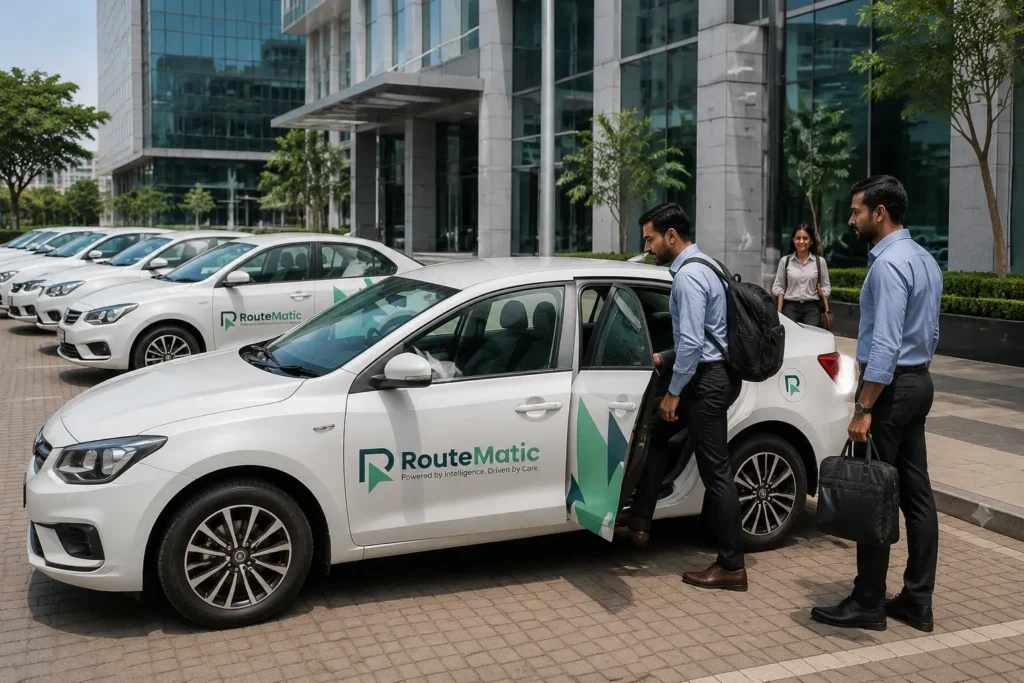
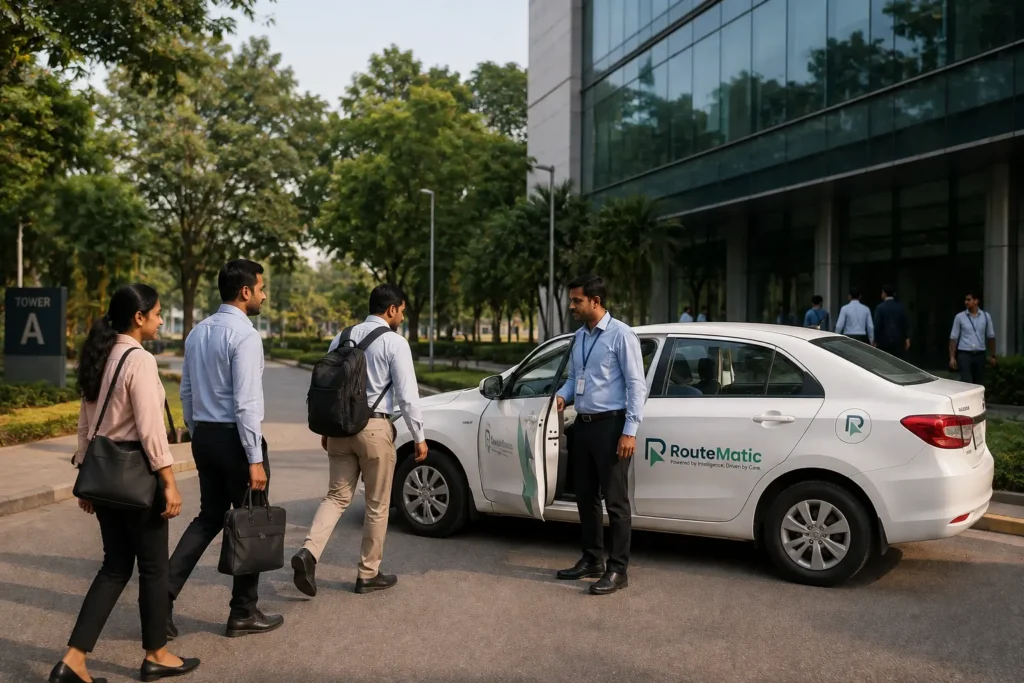
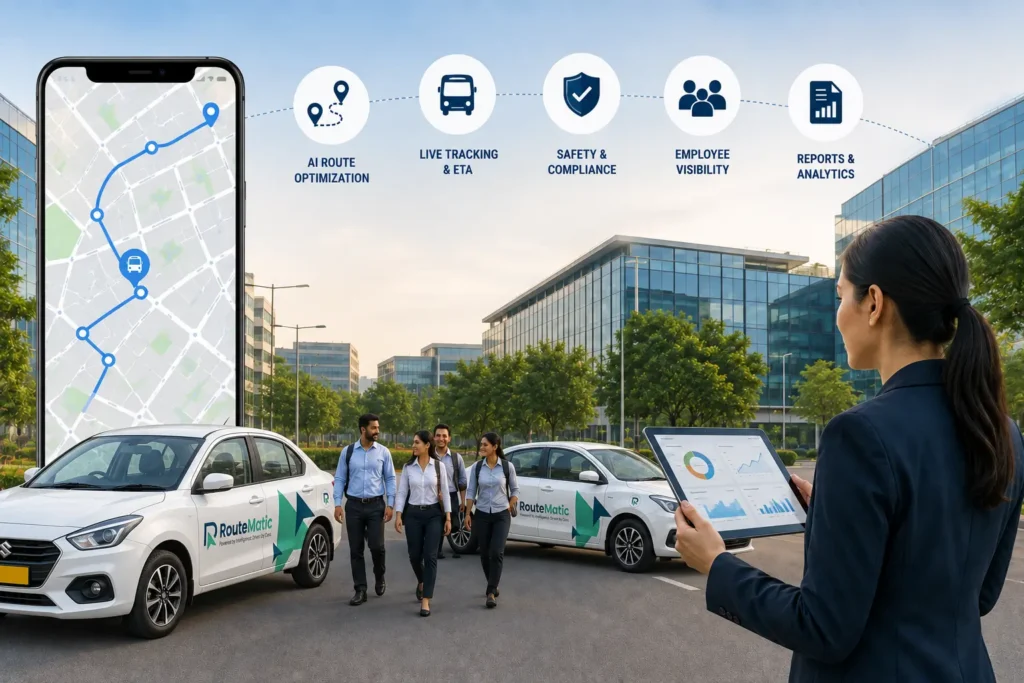
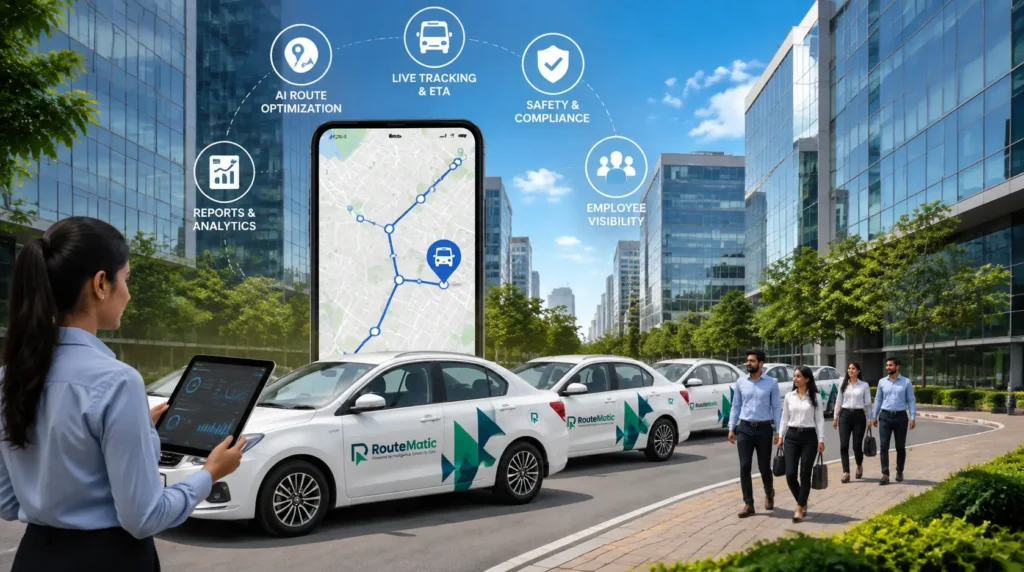
- Or choose a tech-enabled partner like RouteMatic, where female safe-drop protocols and SOS readiness transform rides into journeys of trust.
Scenario 1: Commute with a Local Vendor
It was 11:45 p.m. when Meera stepped into the cab arranged by her employer’s local vendor. The roads outside were quiet, shutters pulled down, only stray dogs breaking the silence.
Inside her apartment, her father sat on the edge of the sofa, phone in hand. His calls began almost as soon as she left the office.
“Where have you reached now?”
“Crossing Domlur… I think. Not sure of the exact road,” she replied, clutching her bag tighter.
The cab slowed, then stopped abruptly. The driver, frowning at his phone, said, “Need to check the route.” The empty street stretched on both sides, no shops, no traffic.
Her father continued, “Is there a problem? Share the driver’s number.”
She quickly forwarded the number, her fingers trembling slightly. The cab still hadn’t moved. The driver muttered something about the GPS not working, tapping his phone while the engine idled. Each minute dragged, the silence outside broken only by the hum of the streetlight above.
Her father’s voice edged with urgency. “Stay on the line till the car starts moving.” Meera’s eyes stayed fixed on the windshield, counting the seconds until the vehicle finally lurched forward.
She disconnected the call, reassuring her father that all was fine, gently insisting that he didn’t need to stay awake for her.
The rest of the ride passed in a blur of half-lit streets and restless glances at her phone. At home, her mother had already unlocked the door, standing in the glow of the porch light.
By the time the cab pulled up past midnight, relief washed over the household – but beneath it, exhaustion lingered, the kind that comes not from distance, but from fear.
By the time the cab pulled up at 12:50 a.m., her parents had already called her five times. Relief flooded the apartment when she walked in, but her father’s face betrayed the hours of tension.
The drop was complete. Yet the ride had drained everyone: Meera of her calm, her family of their peace.
Scenario 2: Commute with RouteMatic Female Safe Drop
A week later, another late-night shift. Same time, same city, but a very different experience. This time, her employer had switched to RouteMatic.
At 11:45 p.m., Meera opened her RouteMatic app before getting into the cab. The driver and vehicle details were already verified, and an OTP-based authentication ensured she was stepping into the right car with the legitimate driver assigned to her.
The route was visible on her screen, and if needed, she could check her live location at any point: a quiet reassurance that this ride was both safe and trusted.
Inside the cab, Meera leaned back, earbuds in, watching familiar landmarks pass by. She knew her ride was accessible in real time to RouteMatic’s Operations Command Centre. The SOS feature on her app was just a tap away: not that she needed it, but knowing it was there gave her quiet confidence.
It was 12:30 a.m. when she reached her apartment gate. Within seconds, her phone buzzed: an IVR check-in ensuring she had reached home safely.
Her father finally leaned back on the sofa, setting his phone down without a single frantic call that night. For the first time in months, the house was quiet: not with fear, but with peace.
Because Getting Home Safe Shouldn’t Be a Question
The difference is not measured in kilometers. It is measured in the distance between fear and peace of mind: for women employees and the families who wait for them at home.
RouteMatic doesn’t just move people. It moves worry out of the journey.