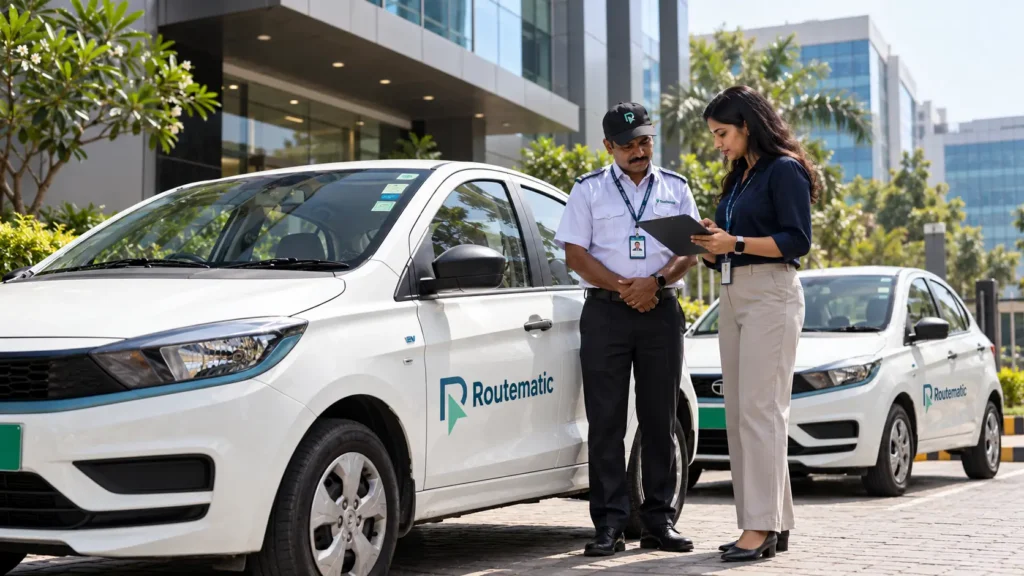
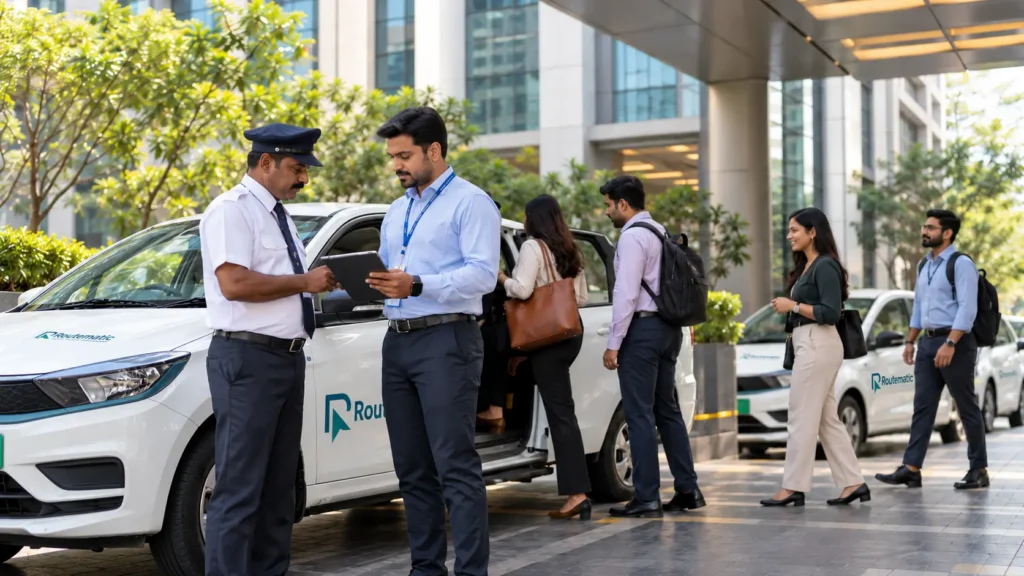
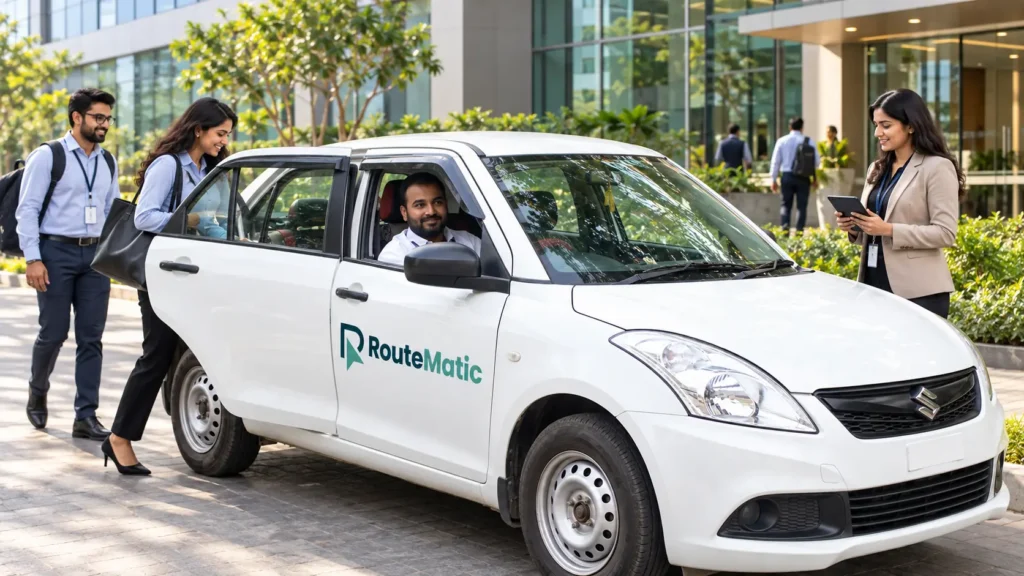
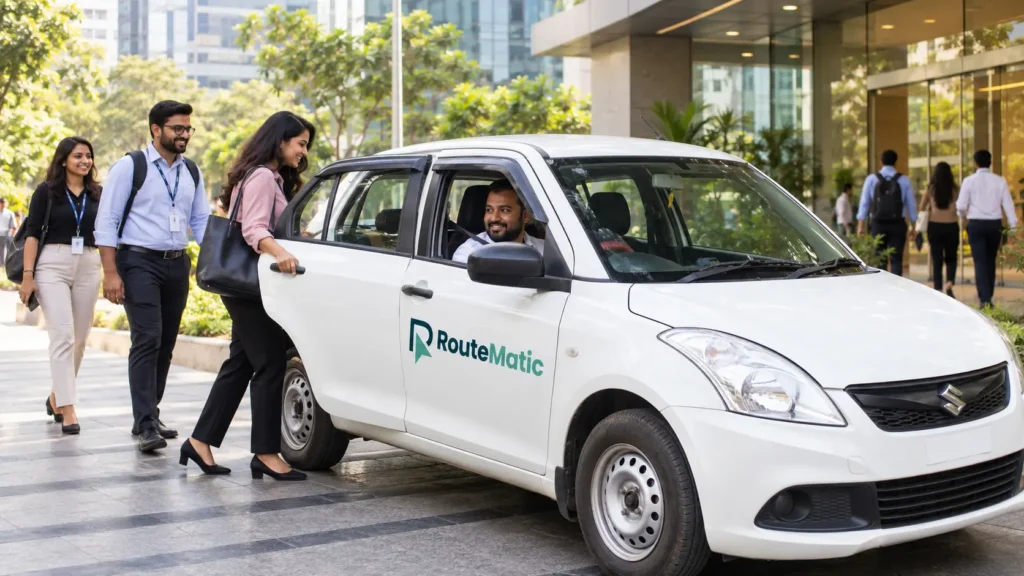
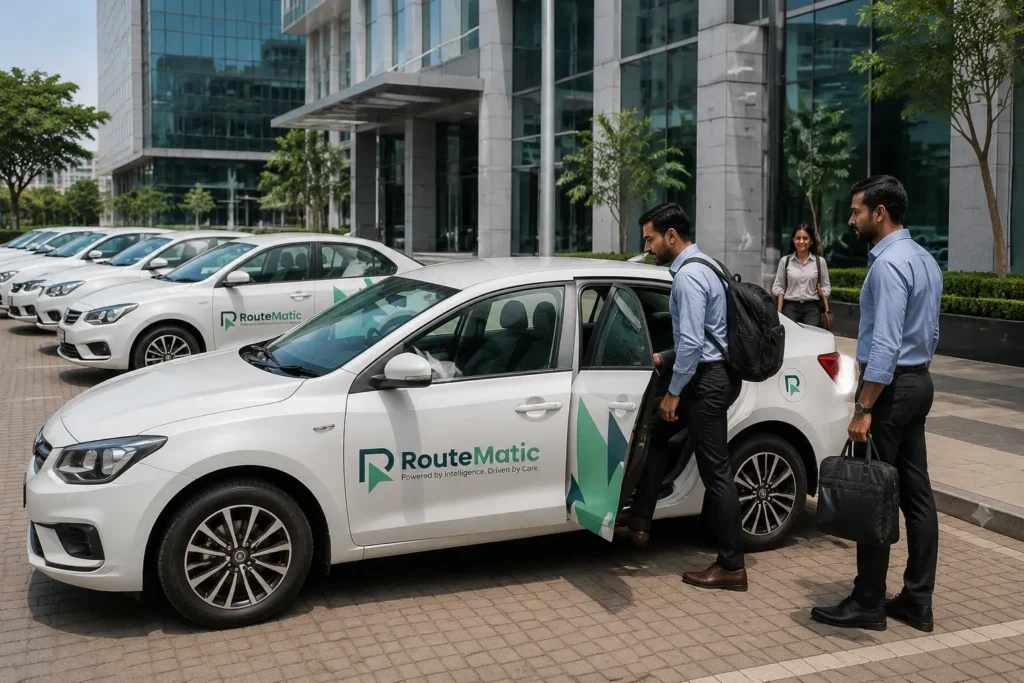
In India, the concept of employee transportation does not mean arranging cabs for employees; it also directly affects safety, compliance, and business costs. Many companies realise this only after facing issues such as safety incidents, audit observations, or rising transport costs.
As per the Ministry of Road Transport and Highways, road accidents in India have claimed about 1.73 million lives and have left 4.63 lakh people injured. This shows how important structured and safe transport systems are for employees.
It is therefore necessary to have a clear understanding of the company transport policy and transport policy for employees in India. It helps organisations to manage risk, improve employee safety, and maintain full compliance with laws.
A well-defined corporate transport policy in India also ensures better control over costs and operations. Businesses in India are now moving towards a more structured corporate mobility policy, which helps in combining safety, technology, and accountability.
TL;DR
- A corporate transport policy in India helps organisations manage employee safety, compliance, costs, and daily commute operations effectively.
- A structured policy reduces risks through verified drivers, GPS tracking, digital records, and standardised transport processes.
- Technology-driven mobility solutions improve transparency, route efficiency, billing control, and audit readiness.
- A well-managed transport framework supports employee satisfaction, ESG goals, and scalable business growth.
Why a Transport Policy for Employees in India Matters?
A transport policy for employees in India is a structured framework that defines how companies manage employee commutes, covering safety protocols, compliance requirements, cost control, and operational standards. Without a formal policy, transport operations become fragmented, leading to safety risks, regulatory penalties, billing fraud, and poor employee experience. A well-defined corporate transport policy in India also called a corporate transportation policy or company transport policy ensures legal compliance, protects employee safety (especially for night shifts), reduces operational costs by 10-20%, and creates a consistent, audit-ready system across all locations.
Here is why businesses need a proper corporate transport policy in India:
- It ensures employee safety, especially during night shifts
- It ensures that government compliance requirements are met properly
- It aims to reduce fraud and billing errors
- It improves route planning as well as vehicle usage
- It creates a standard process irrespective of the location
Employee transportation is even more important in the IT and BPO sectors.
According to reports, about 70% of employees rely on company transport for their daily commute, especially in cities with heavy traffic and long commutes. With hybrid work models and return-to-office mandates reshaping workplace expectations, a reliable transport system has become a key factor in employee satisfaction and attendance.
The Business Case: ROI of a Structured Transport Policy
Companies that implement a formal corporate transport policy in India see measurable financial and operational benefits:
- 10–20% reduction in transport costs through route optimization, automated billing, and elimination of ghost trips (Source: Industry benchmarks, 2024)
- 15–25% improvement in employee retention for night-shift roles, as reliable transport is a top-3 factor in job satisfaction (Source: NASSCOM HR Survey, 2023)
- 8–12% productivity gain from reduced commute stress and on-time arrivals, translating to 30–45 additional productive hours per employee annually
- Zero safety incidents in companies with GPS tracking and panic buttons, compared to 2–5 incidents per year in unstructured systems
Transport as an HR Retention Tool
Employee transportation is no longer just a logistics function it is a core HR policy lever. In metro markets with long commutes and hybrid work expectations, reliable transport directly influences job satisfaction, attendance, and retention. Companies that integrate transport into their HR mobility strategy see it reflected in employer branding, reduced attrition (especially for night-shift roles), and improved punctuality.
Key Compliance Requirements Businesses Must Follow
Every employee transportation service provider in India is required to follow defined legal and safety standards. These rules are not just for documentation, it directly protects employees and reduces business risk. A well-structured corporate transport policy in India ensures that safety, compliance, and accountability are maintained at all times.
1. Safety Rules for Female Employees
When it comes to operations during the night shift, companies must prioritise safety:
- GPS tracking in all vehicles for real-time monitoring
- Panic button or SOS system for emergencies
- A female employee should not be the first pickup or last drop-off alone
- Drivers must be verified through strict background checks
- Emergency response systems should be available
For a deeper dive into ensuring women’s safety during night shifts, read our guide on Safe Drop: A New Chapter in Women’s Commute Safety. Additionally, learn how to build a fully compliant system in our Masterclass: How to Build an Audit-Ready Transport System.
2. Motor Vehicles Act Compliance
Under the Motor Vehicles Act, businesses need to ensure:
- All vehicles are operating with valid permits and insurance
- Fitness checks are being carried out at regular intervals
- All operating vehicles are registered commercially
- Seating capacity rules are taken care of
3. Driver Verification
Driver compliance is a key safety layer when it comes to corporate transport policy in India:
- Police verification is mandatory
- Valid driving licence and transport badge
- Training on behaviour as well as safety protocols
- Basic health and fitness checks
4. State-Level Guidelines
Companies must align their transport policy for employees in India with local laws, especially for IT and BPO operations. Different states, such as Maharashtra, Karnataka or Tamil Nadu, have specific rules for employee transport, so it is important that companies are compliant with state policies.
5. Audit and Data Tracking
Regular audit and data tracking are important as they help to ensure that the corporate mobility policy in India is transparent, traceable, and fully audit-ready. Modern compliance requires strong data systems, such as:
- Digital trip records for every journey
- GPS-based tracking logs
- Incident reporting mechanisms
- Automated billing validation
Checks Before Hiring an Employee Transport Provider
Selecting the right employee transport provider is critical to the success of your company transport policy. Before finalizing a vendor, ensure you verify the following:
- Compliance documentation: Valid commercial permits, insurance certificates, vehicle fitness reports, and driver police verification records
- Technology platform: Real-time GPS tracking, automated billing, trip validation, panic button/SOS integration, and mobile app for employees
- Fleet quality and maintenance: Age of vehicles, maintenance schedules, cleanliness standards, and backup vehicle availability
- Driver standards: Background checks, valid transport badges, safety training programs, and behavior monitoring systems
- SLA commitments: On-time performance guarantees, response time for breakdowns, escalation protocols, and penalty clauses
- Past performance: Client references, case studies, safety incident records, and audit trail documentation
- Scalability: Ability to handle peak demand, multi-city operations, and seasonal workforce changes
A thorough pre-hiring audit reduces risk, ensures compliance, and sets clear expectations for service quality.
How to Build a Strong Transport Policy for Employees in India?
Creating a strong transport policy for employees in India requires a clear and structured approach. It is not just about setting rules. It is about building a transport system that ensures safety, compliance, cost control, and smooth daily operations. A well-designed corporate transport policy in India should be practical, scalable, and easy to monitor.
Step 1: Review Current Setup
This step helps you identify what is working and what needs improvement. So, first start by understanding your existing transport operations in the following manner:
- Review current vendors and their performance
- Analyse total transport costs and identify leakages
- Check for safety and compliance gaps
Step 2: Define Clear Goals
Clear goals guide all future decisions. Hence, it is important to set clear objectives for your corporate mobility policy in India, such as:
- Improve women employee safety, especially for night shifts
- Reduce operational and transport costs
- Ensure full legal and regulatory compliance
- Enhance the overall employee commute experience
Step 3: Use Technology
A tech-enabled corporate transport policy in India is highly important for improving efficiency and reducing manual errors. Technology that plays a major role in modern transport systems:
- GPS-based tracking systems
- Automated billing and trip validation
- Real-time visibility for trips and routes
Step 4: Standardise Operations
Consistency is key to a strong transport policy for employees in India:
- Create uniform rules across all locations
- Define clear Service Level Agreements (SLAs)
- Establish standard audit and compliance processes
This reduces confusion and also helps in improving accountability.
Step 5: Monitor and Improve
Monitoring ensures that your corporate mobility policy in India stays relevant as your organisation grows. Continuous improvement keeps the system effective. Here is what businesses need to do:
- Track performance metrics regularly
- Conduct periodic audits
- Use data insights to improve routes, safety, and costs
How a Company Transport Policy Supports ESG and Sustainability Goals
A structured company transport policy is increasingly recognized as a lever for achieving Environmental, Social, and Governance (ESG) objectives. Employee commutes contribute significantly to Scope 3 emissions, and companies are now integrating transport into their sustainability frameworks.
Environmental impact: Route optimization, trip pooling, and fleet electrification reduce CO₂ emissions and fuel consumption. A 500-employee organization can cut transport-related emissions by 15-30% through centralized, tech-enabled mobility.
Social value: Reliable, safe transport improves employee well-being, inclusivity (especially for women in night shifts), and work-life balance. It is a top-3 retention driver in IT and BPO sectors.
Governance and transparency: Audit-ready systems with trip data, emissions metrics, and compliance logs ensure accountability and regulatory alignment.
Forward-looking companies are embedding transport into ESG reporting, demonstrating corporate responsibility while achieving measurable cost and carbon savings.
Why Companies Are Choosing End-to-End Transport Partners?
Many organisations are moving away from managing multiple local vendors and shifting towards integrated transport solutions. The reason is simple. Traditional models often lack control, consistency, and accountability. A modern approach supports a stronger corporate mobility policy in India, leading to better outcomes.
End-to-end transport partners are often considered, as they unify everything under one system:
- A single platform manages vehicles, routes, and trips, reducing the dependency on multiple vendors.
- Standard checks for vehicles and drivers ensure that safety and legal requirements are always met.
- Real-time tracking and command centres can aid in managing trips, responding to issues, and maintaining overall control.
- Clear metrics are tracked on a timely basis. The metrics include on-time arrivals, safety compliance, and cost efficiency.
It is great for growing enterprises to rely on a structured partner, as it can strengthen the corporate transport policy in India. It provides better visibility into daily operations and ensures that transport is managed as a controlled, data-driven function rather than a fragmented service.
Conclusion
A well-defined transport policy for employees in India is just not optional anymore. It has, in fact, become a key part of business operations that affects safety, compliance, and cost.
Companies that rely on outdated systems or multiple vendors often face challenges such as compliance gaps, financial leakages, and poor employee experience. A structured corporate transport policy in India helps solve these issues by creating clear rules, improving visibility, and ensuring accountability.
As businesses grow and expand across cities, the need for a strong corporate mobility policy in India becomes inevitable. Businesses that decide to invest in a structured transport system, supported by technology and proper governance, are known to achieve better safety, cost efficiency, and operational control.
In essence, employee transport is not only about moving people from one place to another. It also tends to include several other important aspects like managing risk, ensuring compliance, and building a highly reliable system that supports business growth.
Frequently Asked Questions
What is a transport policy for employees in India?
A transport policy for employees in India includes a set of rules that help to define how companies manage employee travel, including safety, routing, compliance, and cost control.
What are the key elements of a corporate mobility policy in India?
The key elements of corporate mobility policy in India include safety rules, mandatory compliance checks, routing systems, vendor management, billing processes, and timely tracking performance.
What is the role of technology in corporate mobility policy in India?
Technology helps with real-time tracking, route optimisation, automated billing and compliance monitoring. The aim is to make operations more efficient and transparent.
How often should a transport policy be updated?
A corporate mobility policy in India should be reviewed at least once a year or whenever there are changes in laws, workforce size, or operations.
What factors should be considered before choosing a transport partner?
Companies should evaluate compliance standards, technology capabilities, fleet quality, scalability, and past performance.
What are the legal requirements for employee transport in India?
Employee transport in India must comply with the Motor Vehicles Act, 1988, which mandates valid commercial permits, insurance, and regular fitness checks for all vehicles. State-specific laws add further requirements: Maharashtra and Karnataka require GPS tracking and panic buttons for night shifts, Tamil Nadu mandates transport for SEZ workers, and Delhi NCR enforces strict driver verification through local police. Employers must also ensure driver background checks, emergency response systems, and digital trip records for audits. Non-compliance can result in fines ranging from ₹10,000 to ₹50,000 and potential criminal liability in case of safety incidents.
What should I check before hiring an employee transport provider?
Before hiring an employee transport provider, verify: (1) valid commercial permits, insurance, and vehicle fitness certificates; (2) driver police verification and transport badges; (3) GPS tracking, panic buttons, and real-time trip monitoring; (4) automated billing and audit trail systems; (5) SLA commitments for on-time performance and escalation; (6) client references and safety incident records; and (7) scalability for multi-city or peak-demand operations.
How does a transport policy reduce costs?
A structured transport policy reduces costs by: (1) optimizing routes to eliminate redundant trips and reduce fuel consumption; (2) automating billing to prevent overbilling and ghost trips; (3) consolidating vendors to improve negotiating power and reduce administrative overhead; (4) using real-time tracking to monitor vehicle utilization and reduce idle time; and (5) preventing fraud through digital trip validation and audit trails. Companies typically see 10–20% cost savings within the first year.
About the author

Sandeep Padhi
Chief Operating Officer, RouteMatic
As COO of RouteMatic, Sandeep Padhi brings extensive expertise in transport operations, fleet management, and enterprise mobility. He shares practical insights on scaling transportation programs, operational excellence, compliance, driver ecosystems, and building reliable mobility solutions for modern enterprises.