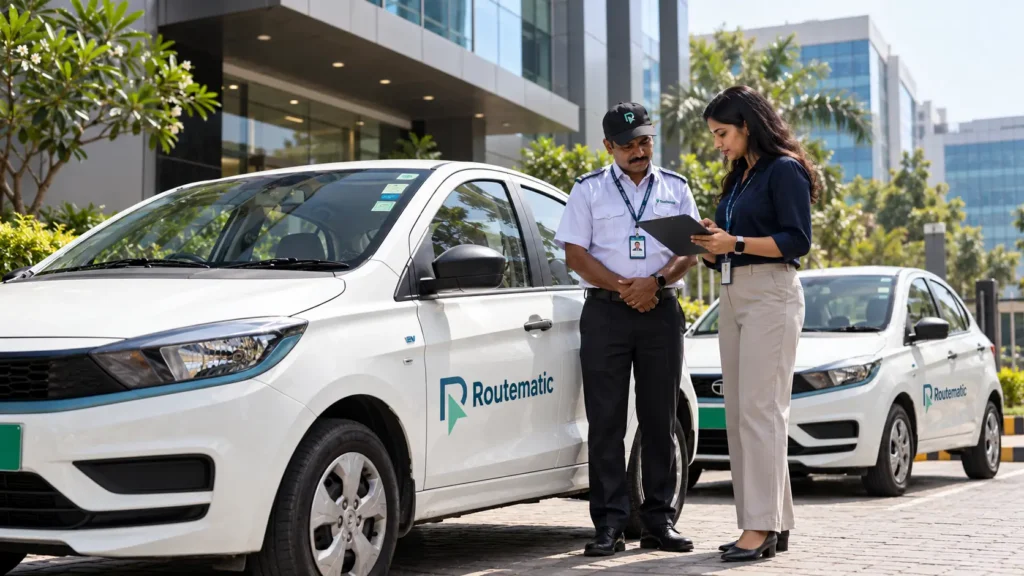
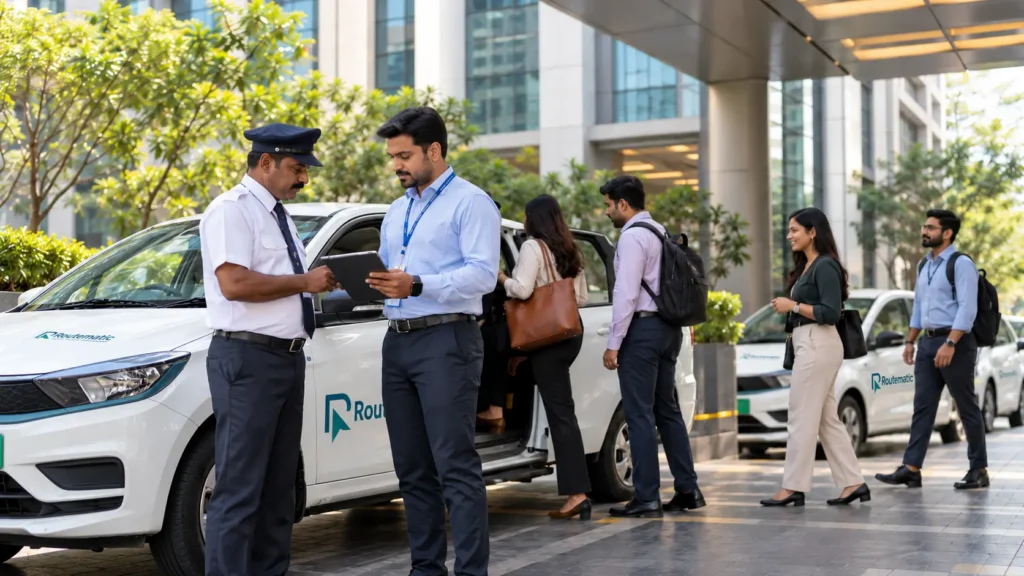
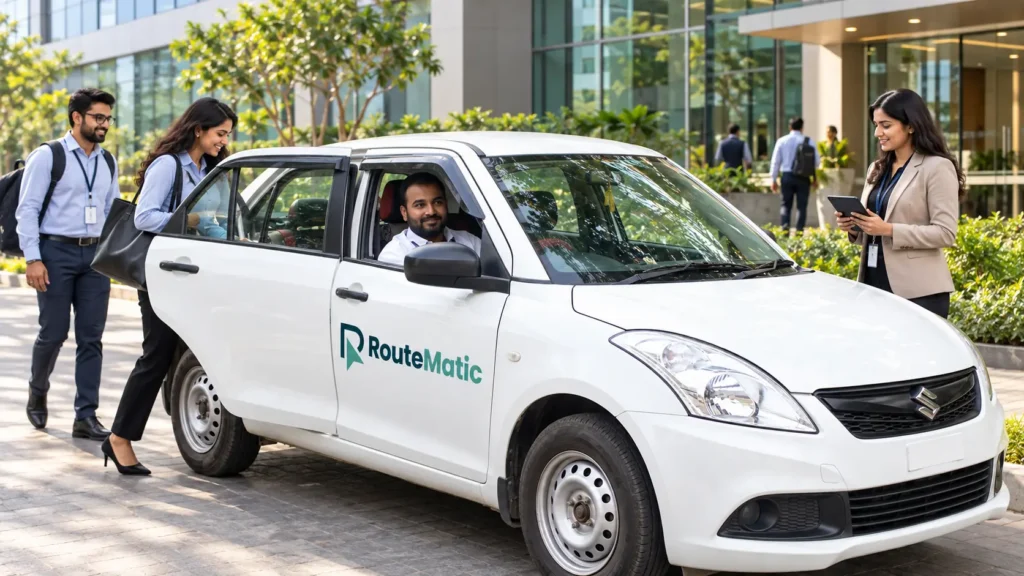
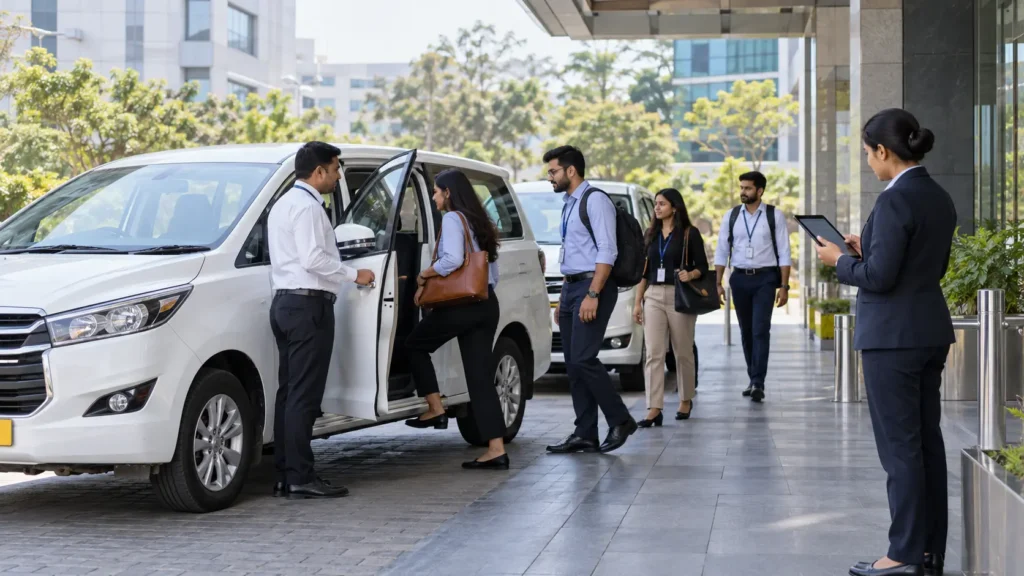
Enterprises in India need employee transportation services that are predictable, auditable, and safe. When deciding how to choose an employee transport company, buyers are not looking for generic promises. They want a feature matrix that links capabilities to outcomes like lower cost per seat, tighter ETA variance, and fewer billing disputes.
This guide lays out a practical checklist that procurement, HR, and operations teams can use to shortlist vendors, evaluate proposals, and select a partner. Where execution strength is required, RouteMatic can be considered for unified planning, live operations, and event-led billing.
Must-have features that affect total cost per seat and compliance
Must-have features in employee transportation services include AI routing, real-time tracking, event-led billing, and safety workflows each directly tied to lower cost per seat, tighter ETA variance, and compliance.
The core of any evaluation is a clear line from features to cost and compliance. Prioritise capabilities that measurably reduce waste, lift occupancy, and create a defensible audit trail.
- AI routing and pooling thresholds: Demand automated clustering by locality and shift windows, with enforceable pooling rules before dispatch to increase seat fill without hurting ETAs. This directly lowers cost per seat and stabilises service quality.
- No-show rebalancing and nearest-vehicle logic: Spare capacity should be redeployed in real time and vehicles assigned to reduce dead kilometres. These controls tackle hidden costs that inflate monthly invoices.
- Live tracking with exception alerts: Operations must see delays, detours, and choke points as they happen. Alerts and escalation paths prevent small issues from becoming SLA breaches.
- Event-led billing and chargebacks: Every billed line must map to verifiable events like check-ins, OTPs, and GPS traces. This is the backbone of accurate chargebacks and faster reconciliation.
- Safety-by-design workflows: Verified drivers, geofenced routes, SOS readiness, and women’s safe drop with call-back are non-negotiable under India’s Motor Vehicles Act guidelines. Audit trails should store evidence for every step.
Vendors that implement these features inside a single platform reduce manual intervention, prevent disputed charges, and deliver a cleaner, defensible financial picture.
SLA governance essentials: escalation ladders, breach handling, vendor scorecards
SLA governance ensures promises to translate into daily performance. Evaluate how the provider measures, escalates, and improves service.
- Defined SLA bands for ETA variance: Assess corridor-wise and shift-wise targets, plus breach thresholds. The matrix should state response times and owner roles for each breach tier.
- Escalation ladders and incident workflows: Check the path from alert to resolution. Strong programs assign clear owners, time-bound actions, and documented closures.
- Vendor scorecards tied to outcomes: Score on on-time arrival, occupancy lift, dead-kilometre reduction, safety adherence, and dispute-free invoice rate. Monthly business reviews should drive corrective actions.
- Control tower visibility: A single dashboard for planning, operations, safety, and finance reduces silos. Teams align faster when they share metrics and evidence.
For multi-city operations, including employee transportation services in Pune, demand consistent SLA governance across sites and the ability to compare corridors fairly on one scorecard.
Proof to demand in proposals: trip evidence samples, dispute metrics, reconciliation timelines
Evidence separates marketing from capability. Ask for artefacts that mirror real operations and billing.
Trip evidence pack
Sample GPS traces, OTP logs, check-in screenshots, safe-drop confirmations, and escalation trails. Confirm time stamps and data integrity.
Dispute and reconciliation metrics
Historical dispute volume, average dispute value, and days-to-close. Ask for before and after figures where event-led billing was introduced.
Occupancy and dead-kilometre reporting
Corridor-wise reports that show pooling performance and empty-run reduction. These reveal the provider’s routing discipline.
Safety compliance proofs
Driver verification rates, periodic document checks, and women’s safe drop adherence. Insist on audit-ready log samples.
If a vendor cannot provide production-quality artefacts up front, it will be difficult to trust the month-end data later.
How does the matrix impact employee productivity and experience?
A strong feature matrix does more than cut costs. It improves predictability, which lifts attendance and readiness. Reliable ETAs reduce pre-shift stress; studies show that commute unpredictability can lower productivity by up to 12%. Clear notifications and simple check-ins improve adoption.
Safe-drop protocols and SOS readiness build trust for late and early shifts. Over time, dependable service supports employee productivity by reducing commute friction and uncertainty.
Why does RouteMatic fit this evaluation approach?
RouteMatic’s unified platform enforces pooling thresholds, applies routing intelligence to cut dead kilometres, and benchmarks on-time performance by corridor and time band. Safety workflows are built in with verified drivers, geofenced routes, SOS, and women’s safe drop with call-back confirmation.
Billing is event-led, attaching trip evidence to each invoice line to shorten month-end closure and reduce disputes. For complex rollouts, such as employee transportation services in Pune and other multi-site hubs, this integration accelerates time to value and keeps finance, HR, and operations aligned.
How to apply the matrix in two weeks?
- Run a single-site, two-shift pilot with varied corridors.
- Track ETA variance, cost per seat, occupancy, dead-kilometre ratio, safety adherence, and dispute-free invoice rate for one billing cycle.
- Conduct a mock reconciliation using trip evidence.
- Review SLA breaches, escalation responsiveness, and vendor scores in a joint meeting with operations, HR, and finance.
Conclusion
Selecting employee transportation services is a commercial decision with operational and compliance consequences. Use a feature matrix that ties capabilities to cost per seat, ETA stability, safety evidence, and billing accuracy. Demand event-level proof and SLA governance that is visible and enforceable.
Where a partner can deliver unified routing, live operations, and event-led billing, the result is lower cost, fewer disputes, and better employee productivity. RouteMatic aligns to this model, making it a strong option for enterprises that need verifiable performance across cities and shifts.
Frequently Asked Questions
How do I choose an employee transport company in India?
Choose an employee transport company by evaluating AI routing capabilities, event-led billing with trip evidence, live SLA tracking, safety workflows (verified drivers, SOS, women’s safe drop), and vendor scorecards tied to cost per seat and ETA variance. Run a two-week pilot across varied corridors and shifts to validate performance.
What is the average employee transport cost per seat in India?
Employee transport cost per seat in India typically depends on city, corridor length, occupancy rates, and pooling efficiency. AI routing and no-show rebalancing can reduce cost per seat by 15-25%.
How does SLA tracking improve transportation operations?
SLA tracking for transportation operations sets corridor-wise ETA variance targets, breach thresholds, and escalation ladders. Real-time alerts and vendor scorecards ensure accountability, reduce delays, and enable data-driven corrective actions in monthly business reviews.
What safety features are non-negotiable in employee transportation services?
Non-negotiable safety features include verified driver backgrounds, geofenced routes, live GPS tracking, SOS buttons, women’s safe drop with call-back confirmation, and audit-ready logs for every trip.
How long does it take to pilot an employee transportation vendor?
A meaningful pilot runs for one billing cycle (typically two weeks) across a single site with two shifts and varied corridors. Track ETA variance, cost per seat, occupancy, dead-kilometre ratio, safety adherence, and dispute-free invoice rate, then conduct a mock reconciliation with trip evidence.