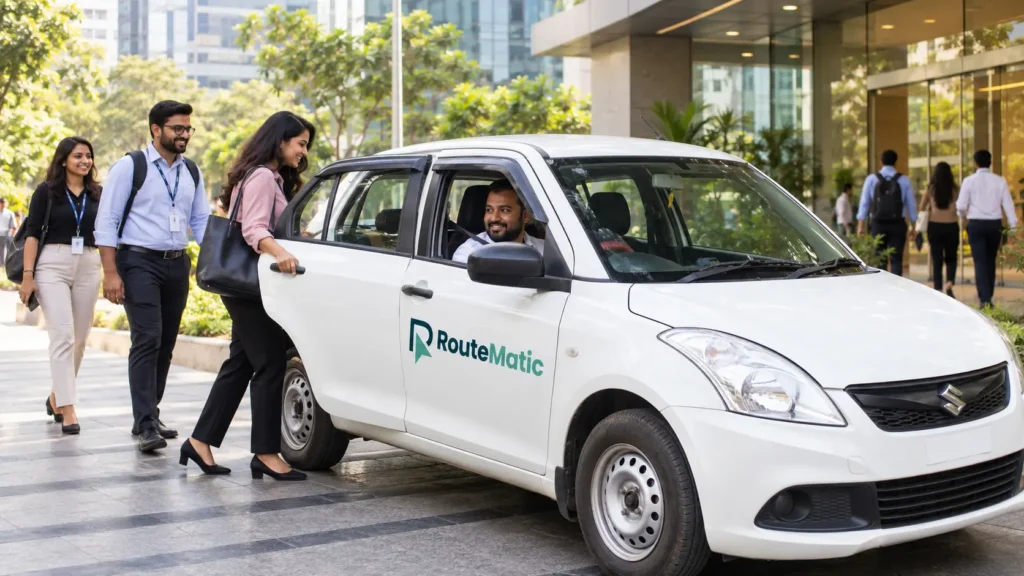
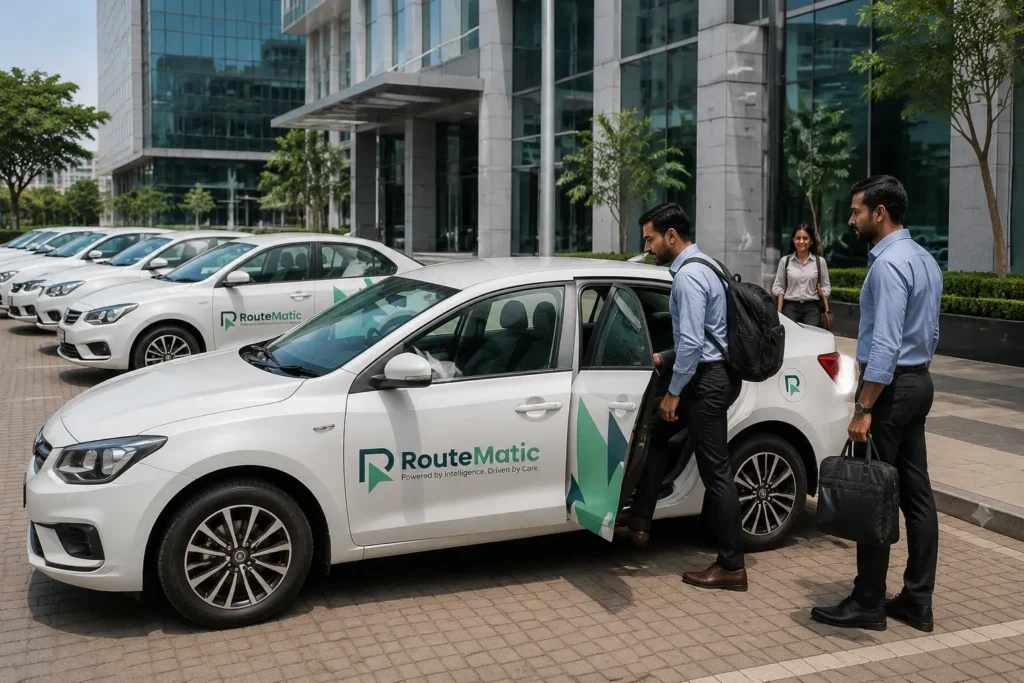
The way many companies manage employee transportation has not kept pace with today’s workplace. Fixed routes and manual planning no longer work well in a world of hybrid schedules and changing office attendance. In fact, around 90% of Indian organisations now expect employees to work from the office at least three days a week, increasing the need for flexible and efficient transport planning.
Corporate transport transformation means replacing outdated processes with technology, automation, and data-driven decision-making. This guide explains what that transformation involves, why it matters, and how to build a modern transportation programme that reduces costs, improves employee experience, and supports future growth.
Key Takeaways
- Modern corporate transport goes beyond employee pick-up and drop-off. It focuses on efficiency, safety, cost control, and sustainability.
- Hybrid work and changing office attendance require flexible, data-driven transport planning instead of fixed routes.
- AI-powered routing, live tracking, and automated billing improve vehicle utilisation and reduce operational costs.
- Employee safety can be strengthened with GPS tracking, SOS features, geofencing, and safe drop confirmation.
- A phased implementation approach helps organisations modernise transportation without disrupting daily operations.
- Regular performance reviews and transportation audits help identify cost leakages and improve service quality.
Understanding Corporate Transport Transformation
Transformation is not buying a tracking app for an old process. It is changing the operating model itself across four layers: how demand is predicted, how vehicles are deployed, how the programme is governed, and what the fleet runs on. Enterprises that have gone through it typically move from vendor chaos to total transport control, replacing fragmented local operators and manual coordination with a single accountable platform.
The reason to act now is that the gap between legacy and modern operations is widening every year, and it shows up in four places.
4 Pillars of Corporate Transportation Modernisation
1. From Manual Planning to AI-Driven Deployment
Modern platforms predict attendance, cluster employees dynamically, and deploy vehicles where algorithms, not habit, determine the most efficient routes. The impact is measurable. As highlighted in our AI-powered employee transportation report, one documented implementation increased EV utilisation to 78% for a leading IT services company, significantly improving fleet efficiency and reducing idle vehicle time.
2. From Phone Calls to a Command Centre
Transformation replaces reactive coordination with a live operations view: every vehicle on a map, every exception flagged, every employee able to track a cab on an app. Escalations shrink because problems are caught while trips are in progress, not reported afterwards.
3. From Trusted Invoices to Verified Billing
In a modernised operation, billing is generated from GPS-logged trips, not vendor declarations. Reconciliation becomes automatic, disputes collapse, and finance receives clean, auditable data every month. Routematic’s webinar on how transport leaders control costs by unifying fragmented systems looks at exactly this shift, from vendor declared invoices to a single verified billing layer.

4. From Diesel Habit to Sustainable Fleets
A successful corporate transport strategy also focuses on sustainability. As EV adoption grows across India, businesses have more opportunities to reduce fuel costs and support their ESG goals. India recorded over 2.3 million electric vehicle sales in 2025, while the country had more than 29,000 public charging stations by the end of the year, making EV adoption more practical than ever.
Companies that gradually introduce electric vehicles on high-usage routes can achieve long-term cost savings and lower emissions. Learn more in our sustainable transport report.
What Transformation Looks Like: Before and After
The table below shows how corporate transportation changes as organisations move from traditional operations to a modern, technology-driven model:
| Operational Area | Legacy Operation | Transformed Operation |
| Demand planning | Static rosters | Predictive, hybrid aware scheduling |
| Deployment | Fixed vendor routes | AI-optimised dynamic routing |
| Visibility | Driver phone calls | Live command centre and employee app |
| Billing | Vendor declared invoices | Auto-reconciled trip-level billing |
| Safety | Reactive escalations | SOS, geofencing, safe drop protocols |
| Fleet | Diesel dominant | Phased EV adoption with utilisation targets |
| Governance | Annual vendor reviews | Monthly data-driven performance reviews |
Moving from the left column to the right column does not require a big bang. It requires sequence.
Corporate Transport Transformation Strategies: A Four Phase Roadmap
Transforming employee transportation does not have to happen all at once. A phased approach helps businesses improve operations while minimising disruption.
Phase 1: Assess Your Current Operations (Months 1 to 2)
Review your current transportation programme, including routes, costs, vehicle occupancy, vendor performance, and compliance. If you work with multiple vendors, consolidate operations under a single management framework for better control.
Phase 2: Digitise Transportation Management (Months 2 to 4)
Implement a transportation management platform that supports employee rostering, route planning, live tracking, automated billing, and employee communication. Choose a solution that integrates with your HRMS for smoother operations.
Phase 3: Optimise Using Data (Months 4 to 8)
Use transportation data to improve route planning, increase vehicle occupancy, and monitor key metrics such as cost per employee and on-time performance. Regular reviews help identify new opportunities for improvement.
Phase 4: Build a Sustainable Transport Programme (Month 8 Onwards)
Gradually introduce electric vehicles on suitable routes, set annual sustainability goals, and use monthly performance reviews to drive continuous improvement. For a faster implementation plan, explore our 30-day blueprint for a cost-controlled, SLA backed commute programme.
Conclusion
Corporate transport transformation has become essential for businesses looking to reduce costs, improve employee safety, and deliver a better commuting experience. By adopting technology, using data to optimise operations, and introducing sustainable transport solutions, organisations can build a more efficient and reliable transportation programme.
The best results come from taking a phased approach. Start by understanding your current operations, digitise key processes, optimise using real time data, and gradually adopt cleaner transport options. Businesses that invest in modern transportation management today will be better prepared to support future growth while keeping costs under control.
Frequently Asked Questions
What is corporate transport transformation?
It is the structural modernisation of employee transport operations: replacing manual planning, fragmented vendors, and trusted invoices with AI driven deployment, live visibility, verified billing, and progressively electrified fleets.
How long does corporate transportation modernisation take?
Foundations can be laid in 30 to 60 days, meaningful optimisation appears within two quarters, and fleet electrification proceeds in phases over one to three years depending on route economics.
Does transformation require owning a fleet?
No. Most enterprises transform through a platform-led model where execution stays outsourced, but control, data, and accountability sit with the organisation.
Where should electrification start?
On the highest utilisation routes, where daily kilometres are large enough for the lower running cost of electric vehicles to overcome acquisition premiums quickly.
What is the biggest transformation mistake?
Digitising a broken process. Consolidate vendors and fix the operating model first; technology amplifies whatever structure it is laid upon.
About the author

Sriram Kannan
Chief Executive Officer, RouteMatic
As CEO of RouteMatic, Sriram Kannan is driving the future of enterprise mobility through technology and innovation. He shares key knowledge about AI, digital transformation, workplace mobility, and the evolving role of intelligent transportation in helping organizations improve operational efficiency, employee experience, and sustainable growth.