Employee commuting is becoming a strategic priority for Indian organisations as they work to reduce transport costs, improve employee experience, and meet ESG goals. Rather than viewing corporate transport as a routine operational expense, businesses are now using sustainable commuting incentives to encourage greener travel choices, improve vehicle occupancy, and reduce carbon emissions.
As per the International Centre for Environment Audit and Sustainable Development, the transport sector contributes around 12% of India’s Co2 emissions, impacting the environment in a significant way. This highlights the need for more sustainable mobility solutions.
For enterprise leaders, the right incentive programme is not just about rewarding employees. It is about building a safer, smarter, and more efficient commuting ecosystem that delivers measurable business and sustainability outcomes.
Why Sustainable Commuting Incentives Matter More Than Ever?
Many organisations still view employee transportation as a logistics function. In reality, commuting directly influences employee productivity, operational costs, compliance, and environmental performance.
The right employee commuting incentives encourage employees to shift from single-occupancy vehicles towards shared corporate transport, public transport, electric vehicles, and organised mobility solutions. This creates measurable benefits for both employers and employees.
Some of the biggest business challenges that sustainable commuting incentives help solve include:
- Rising employee transport costs
- Increasing traffic congestion in metro cities
- Higher fuel expenses
- Carbon reduction targets
- Employee safety concerns
- Parking space limitations
- Poor vehicle occupancy
- Difficulty managing multiple transport vendors
Rather than relying on manual transport planning, organisations are increasingly introducing structured employee commute rewards program initiatives that encourage sustainable transportation behaviour.
Examples include:
- Rewards for using company shuttle services
- Incentives for public transport usage
- Recognition programmes for carpooling
- EV-friendly commuting benefits
- Flexible transport allowances linked to sustainable travel
- Digital reward points for green commuting
These programmes not only improve employee participation but also increase occupancy rates and reduce unnecessary transport expenses. For companies operating across multiple cities, sustainable commuting incentives also support standardised mobility policies while improving employee satisfaction.
How to Encourage Sustainable Employee Commuting Through Practical Incentives?
One of the most common questions organisations ask is how to encourage sustainable employee commuting without increasing operational costs.
The answer lies in combining employee motivation with intelligent transport planning. An effective corporate commute incentive program should focus on measurable outcomes rather than one-time rewards.
Here are some practical solutions:
1. Reward Shared Mobility
Corporate shuttle services remain one of the most sustainable commuting options for large enterprises. Instead of reimbursing private vehicle usage, companies can encourage employees to choose organised transport by offering:
- Monthly reward points
- Wellness incentives
- Recognition programmes
- Additional leave benefits
- Corporate loyalty programmes
This improves vehicle occupancy while reducing the number of cars on the road.
2. Introduce Public Transport Incentives for Employees
Many organisations are expanding their public transport incentives for employees by reimbursing metro cards, bus passes, or multimodal travel expenses.
In cities like Bengaluru, Hyderabad, Pune, Chennai, Delhi NCR, and Mumbai, combining public transport with first-mile and last-mile connectivity can significantly reduce dependence on personal vehicles.
Examples include:
- Metro travel reimbursement
- Bus pass allowances
- Integrated shuttle services from metro stations
- Digital mobility wallets
- Flexible transport credits
These public transport incentives for employees improve affordability while supporting city-wide sustainability goals.
3. Create Sustainable Travel Rewards for Employees
Employees are likely to adopt sustainable habits positively when they receive consistent recognition. Popular sustainable travel rewards for employees include:
- Green commuter leaderboards
- Sustainability certificates
- Monthly recognition awards
- Carbon reduction achievements
- Gift vouchers
- Wellness points
Many organisations also integrate these rewards with employee engagement platforms, making sustainable commuting part of workplace culture.
4. Support Hybrid Work with Smart Mobility
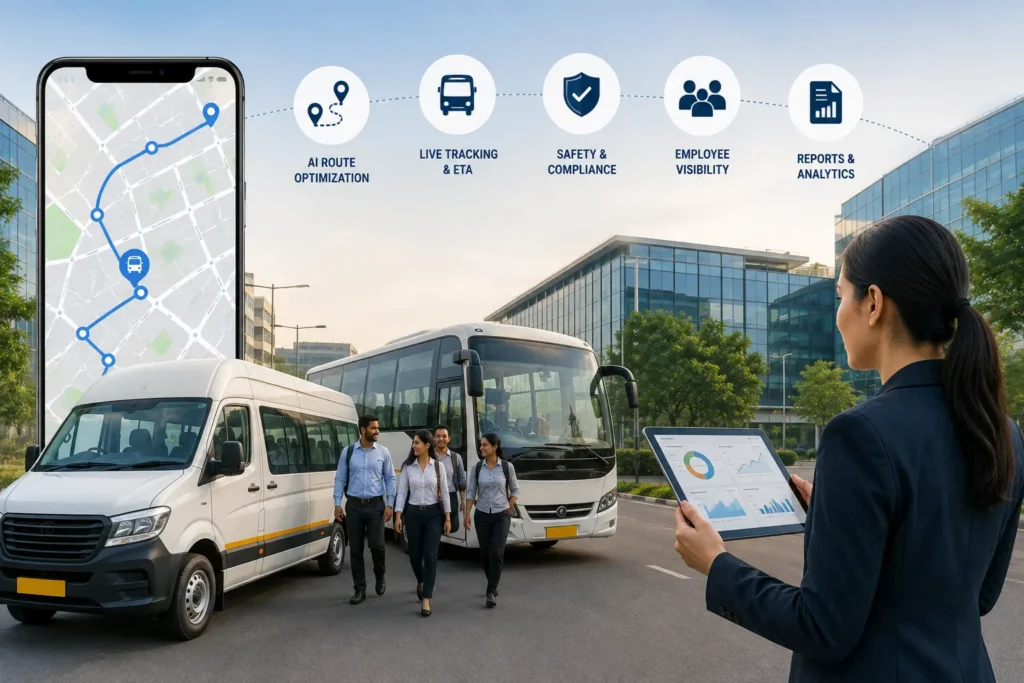
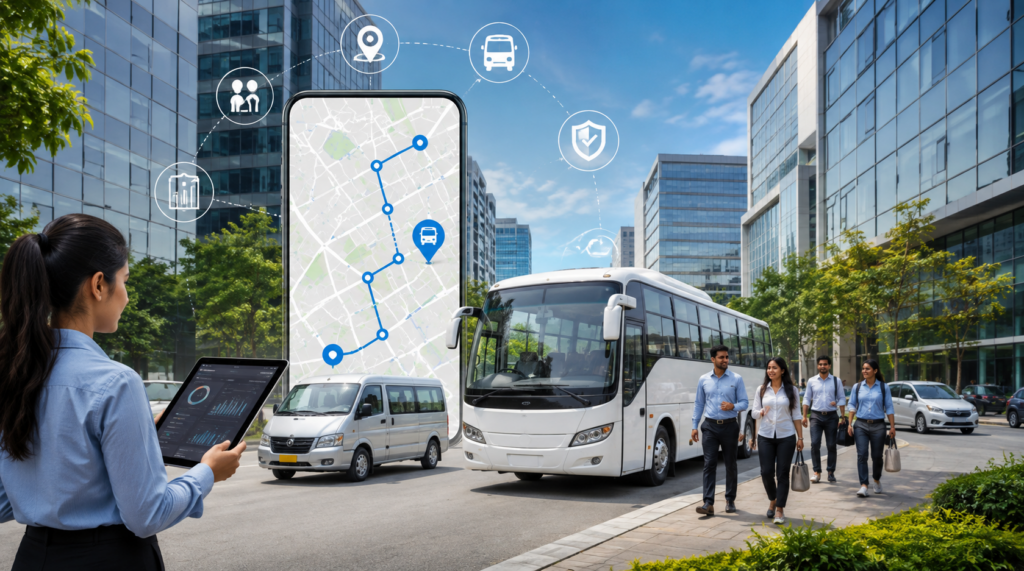
Hybrid work has fundamentally changed commuting patterns across India. Rather than assigning fixed transport routes, enterprises are increasingly using AI-driven routing systems that optimise vehicle allocation based on daily employee demand.
According to JLL’s Survey, 90% of organisations in India now mandate employees to work from the office at least three days a week, highlighting the growing need for flexible and efficient employee transport solutions that can adapt to fluctuating attendance patterns.
This ensures:
- Better seat utilisation
- Lower fuel consumption
- Reduced empty vehicle movement
- Improved transport efficiency
As part of a modern corporate commute incentive program, dynamic routing enables organisations to reward employees who choose shared transport on office days.
5. Use AI and Data to Optimise Corporate Transport
Incentives alone cannot deliver long-term results if transport operations remain inefficient. Modern enterprises are increasingly relying on AI-powered transport platforms to improve route planning and fleet utilisation.
In fact, NITI Aayog’s AI for Urban Vigilance report explained that AI-enabled traffic control systems can help manage mobility more effectively. Similarly, using AI can help make employee transportation more efficient and reliable.
A technology-driven corporate commute incentive program can support:
- Dynamic route optimisation
- Demand forecasting
- Real-time vehicle tracking
- Occupancy analysis
- Automated trip allocation
- Digital reporting for transport teams
This enables organisations to reward sustainable commuting while simultaneously reducing empty seat miles and unnecessary transport costs.
6. Make Sustainability Part of Workplace Culture
Employees are more likely to embrace sustainable travel when leadership actively supports it. Organisations should communicate the environmental and operational benefits of sustainable commuting through regular awareness campaigns, internal communication, and leadership initiatives.
Some effective practices include:
- Sharing monthly sustainability achievements
- Publishing carbon savings generated through shared mobility
- Celebrating Green Mobility Days
- Encouraging department-level participation
- Including commuting goals within ESG initiatives
When sustainability becomes part of organisational culture, sustainable commuting incentives evolve from a transport initiative into a long-term business strategy that benefits employees, employers, and the environment alike.
Building a Sustainable Corporate Mobility Strategy with the Right Transport Partner
While incentives encourage behavioural change, they are only effective when supported by dependable transport operations.
Many enterprises still depend on fragmented transport vendors with limited visibility into compliance, billing, safety, and service quality. This creates operational risks, inconsistent employee experiences, and rising transport costs.
The most successful corporate commute incentive program combines technology with operational accountability. A mature enterprise mobility solution should include:
- AI-powered route optimisation
- Real-time fleet visibility
- Occupancy analytics
- Driver and vehicle compliance
- Digital audit trails
- Automated billing validation
- Demand forecasting
- EV integration
- 24/7 command centre monitoring
This ensures that sustainable commuting incentives translate into measurable business outcomes rather than isolated employee engagement initiatives.
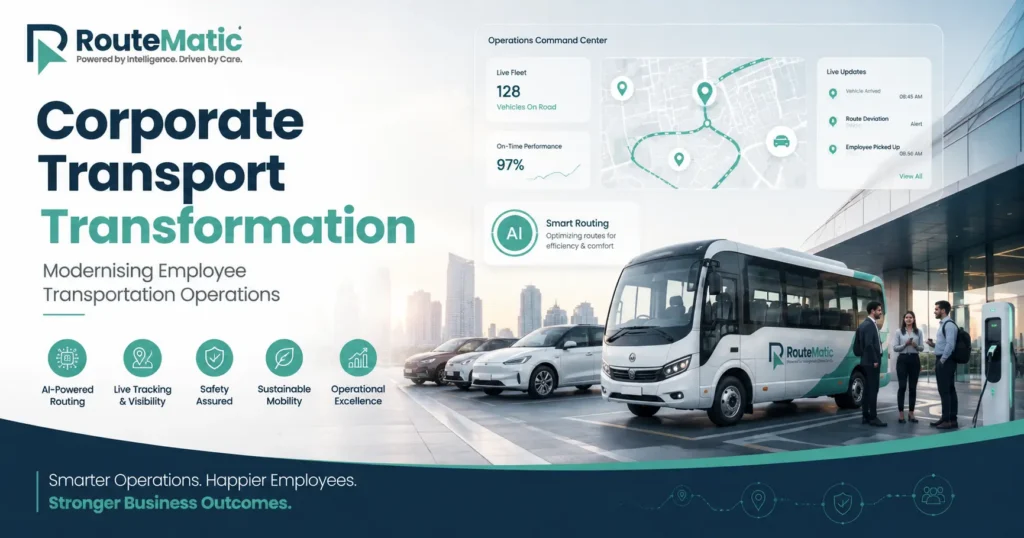
Routematic delivers this through its AI-first Transport-as-a-Service (TaaS) model, combining intelligent technology with owned fleet operations, trained personnel, and centralised command centre governance.
Unlike SaaS-only platforms or traditional transport vendors, Routematic provides enterprises with quantified control across safety, compliance, cost optimisation, and service reliability.
Conclusion
As Indian businesses continue to expand across cities and adopt more flexible work models, employee commuting will play a significantly important role in operational efficiency, sustainability, and employee experience. Implementing sustainable commuting incentives is no longer limited to supporting environmental goals.
It also helps organisations optimise transport costs, improve vehicle utilisation, strengthen compliance, and encourage safer travel choices. A well-designed corporate commute incentive program combines meaningful employee rewards with data-driven transport planning to deliver measurable outcomes for both the business and its workforce.
However, long-term success depends on consistent execution, reliable transport operations, and continuous performance monitoring.
Frequently Asked Questions
What are sustainable commuting incentives?
Sustainable commuting incentives are benefits or rewards that encourage employees to choose environmentally friendly travel options such as corporate shuttles, public transport, carpooling, cycling, or electric vehicles instead of driving alone.
How does an employee commute rewards program reduce transport costs?
A structured employee commute rewards program encourages shared mobility, leading to higher vehicle occupancy, fewer empty trips, lower fuel consumption, and better route efficiency.
How can organisations encourage employees to adopt sustainable commuting habits?
Organisations can encourage adoption by offering meaningful rewards, providing reliable transport options, communicating sustainability goals, and using AI-powered route optimisation to improve convenience.
How do sustainable travel rewards for employees improve ESG performance?
Sustainable travel rewards for employees encourage greener commuting choices, helping organisations reduce transport-related emissions and strengthen ESG reporting and environmental commitments.
What metrics should organisations track for a corporate commute incentive program?
Key metrics include employee participation rates, vehicle occupancy, transport costs, carbon emissions, on-time performance, employee satisfaction, and public transport adoption.
How can enterprises build a successful sustainable commuting strategy?
A successful strategy combines sustainable commuting incentives, reliable transport operations, AI-driven optimisation, compliance-focused fleet management, employee engagement, and continuous performance monitoring to create long-term business and sustainability value.