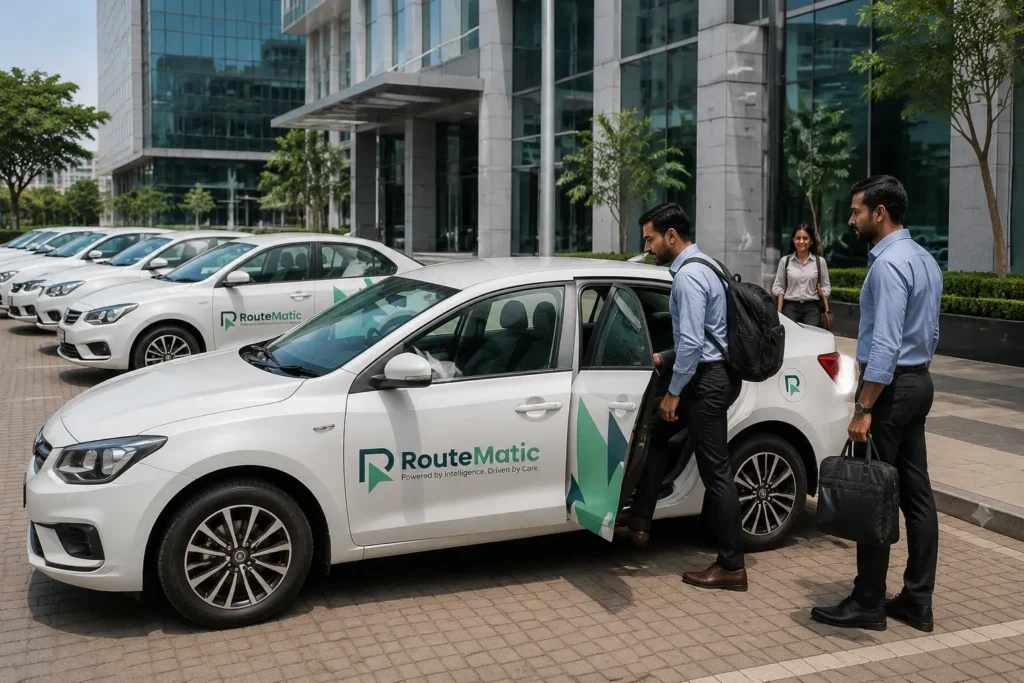
The role of corporate transport in employee retention is bigger than most companies realize. A long, unpredictable, or unsafe commute is one of the quietest reasons people quit, and it rarely shows up in exit interviews by name. Reliable employer-provided transport directly reduces commute fatigue, late-night safety anxiety, and daily frustration, all of which feed attrition. When transport works well, people stay longer. When it does not, they leave for reasons leadership often never connects back to the cab.
Key Takeaways
- The commute is one of the quietest drivers of attrition. It rarely gets named in exit interviews, yet a long, unsafe, or unreliable journey wears people down over months until a closer offer wins.
- Attrition is expensive. India’s attrition rate was 16.9% in 2024, per Aon, and replacing a single employee can cost 50% to 200% of their annual salary.
- For women on night shifts, safe transport decides whether they take the role at all. Fewer than 10% of Indian urban women feel safe on public transport, and half have skipped a work opportunity due to commute safety concerns, per the Ola Mobility Institute.
- Bad transport is worse than none. Late arrivals, unsafe drops, and poor service create negative daily touchpoints that actively damage employees’ view of the company.
- Reliable, structured transport measurably supports retention. Routematic delivers a 97% on-time arrival rate, 100% Female Safe Drop, and a 4.9 out of 5 employee satisfaction score across 24 cities.
Why Does the Commute Matter So Much for Retention?
Here is the thing about the commute. It is the first thing your employee does for work every morning and the last thing they do every night. If that experience is stressful, unsafe, or unpredictable, it colors how they feel about the whole job.
And the numbers back this up. According to Aon’s Annual Salary Increase and Turnover Survey, India’s attrition rate sat at 16.9% in 2024, down from 21.4% in 2022 but still high enough to keep HR leaders awake. Every percentage point of attrition carries a real cost, and replacing a single employee can cost anywhere from 50% to 200% of their annual salary.
Now layer the commute on top. In Bengaluru, commuters lose around 117 hours a year just sitting in rush-hour delays. The average one-way commute across urban India is close to 59 minutes. That is not a minor inconvenience. That is roughly two hours of a person’s day, every working day, spent getting to and from a desk.
When someone is spending that much energy just reaching the office, a competing offer 20 minutes closer to home starts to look very appealing. The commute does not show up in the resignation letter. But it is often sitting right underneath it.
What Are the Hidden Ways a Bad Commute Pushes People Out?
The transport impact on employee retention works through a few specific mechanisms, not one vague “happiness” factor. Here is how it actually plays out.
| What the commute creates | How it drives attrition |
| Daily fatigue from long, unpredictable travel | Lower energy, reduced focus, faster burnout |
| Safety anxiety, especially on night shifts | Reluctance to take late shifts, eventual exit |
| Unreliable arrivals and missed handovers | Friction with managers, performance pressure |
| High personal commute cost | A closer or transport-providing employer wins |
| Time lost that feels unpaid | Resentment that builds quietly over months |
Notice that none of these surfaces is clean in an exit interview. People say they left for “growth” or “a better opportunity.” What they often mean is that the daily grind wore them down, and a chunk of that grind was the journey itself.
This is why the impact of transport on employee retention is so easy for leadership to miss. The cause and the symptom are separated by months, and the connection rarely gets made explicit.
There is also a gendered dimension worth naming. For women working night shifts, safe and trackable transport is not a perk. It is the deciding factor in whether they can take the role at all. The Ola Mobility Institute’s survey of 9,935 women across 11 Indian cities found that fewer than 10% felt safe traveling on public transport, and half had skipped a work or educational opportunity due to commute-safety concerns. If your transport does not solve for this, you are losing women from your talent pool before they even join.
Does Providing Transport Actually Reduce Attrition, or Is It Just a Nice Perk?
It reduces attrition, and there is a rationale for it. Engagement and retention are closely linked, and the commute directly affects engagement.
Gallup’s State of the Global Workplace 2025 report found that global employee engagement fell to 21% in 2024, costing the world economy an estimated $438 billion in lost productivity. Engagement is shaped by daily experience, and few daily experiences are as repetitive and unavoidable as the commute.
When you remove the commute as a source of friction, a few things happen:
- People arrive less fatigued and more focused, which improves their actual experience of the work.
- Late shifts stop feeling like a safety risk, so shift coverage stabilizes.
- The employee reads the transport benefit as the company investing in them, which builds loyalty.
- Punctuality improves, which reduces the manager friction that quietly pushes people out.
That last point matters more than it seems. A lot of attrition is really accumulated friction with a manager, and a chunk of that friction is late logins and missed handovers that trace back to an unreliable commute.
What Makes Corporate Transport Actually Build Loyalty?
This is where most companies get it wrong. They provide transport, but they do so poorly, through a fragmented mix of vendors with no real oversight. Then they wonder why the benefit is not moving the retention needle.
Bad transport can be worse than no transport. A cab that shows up late, a rude driver, a dirty vehicle, a night drop with no safe-arrival confirmation. Each of these creates a negative daily touchpoint that actively damages the employee’s perception of the company.
For corporate transport solutions for employee retention to genuinely work, the experience has to be consistently good. That means:
- Reliability you can count on. On-time arrivals, every day, not most days. Routematic maintains a 97% on-time arrival rate across its operations, which is the difference between transport that builds trust and transport that erodes it.
- Safety that is real and visible. Verified drivers, GPS tracking, in-trip monitoring, and a documented safe-drop process. Routematic ensures 100% driver and vehicle compliance and 100% Female Safe Drop, with 98% of safe drops automatically confirmed.
- A genuinely good employee experience. A clean vehicle, a professional driver, and an app that actually works. Routematic’s employee satisfaction score is 4.9 out of 5, which correlates with retention.
- Consistency across every city. If you operate in multiple locations, the experience has to feel the same everywhere. This is where fragmented local vendors fall apart, and a standardized model holds.
How Corporate Transportation Services Boost Retention at Scale
When you move from fragmented vendors to a structured, AI-driven model, the retention benefit compounds. Here is how corporate transportation services boost retention once the system is actually working.
Routematic operates a hybrid model with its own fleet of 4,500 vehicles and integrated technology, serving 400+ enterprises, including 125 GCCs and 38 Fortune 500 companies across 24 cities. That scale matters for retention in a specific way. AI-led routing and demand forecasting mean vehicles arrive when they should and routes stay efficient, so the employee experience stays reliable even as headcount grows.
The contrast with unmanaged transport is sharp:
| Fragmented vendor model | Structured TaaS model |
| Inconsistent arrivals, frequent delays | 97% on-time arrival |
| No standardized safety checks | 100% driver and vehicle compliance |
| Patchy or no night-drop confirmation | 100% Female Safe Drop |
| Experience varies city to city | Standardized across 24 cities |
| No reliable satisfaction signal | 4.9/5 employee satisfaction |
The retention math follows from this. When the commute stops being a daily source of stress and starts being something employees do not have to think about, one of the quietest drivers of attrition simply goes away. You are not just saving on transport costs. You are protecting the trained, experienced people you have already invested in.
If your attrition data has blind spots around shifts, routes, or night-shift safety, your commute may be costing you people you cannot afford to lose. Talk to Routematic about a transport model built for retention, with the compliance, reliability, and city-wide consistency that actually keeps people around.
FAQs
How do we measure whether our transport program is helping retention?
Track shift-level metrics that fragmented systems usually ignore: night-shift acceptance rates among women, on-time arrival percentage, transport-related complaints per month, and no-show rates. Then cross-reference attrition data by location and shift. If turnover is concentrated in night shifts or specific routes, the commute is likely a hidden factor. Stay interviews, not just exit interviews, surface commuting frustration before it leads to a resignation.
Is Corporate Transport More Important for Retention in Some Industries Than Others?
Yes. It matters most in IT, BPO, KPO, BFSI, and GCC operations where night and rotational shifts are common and where the talent market is competitive. In these sectors, safe night transport is often a baseline expectation rather than a differentiator, so getting it wrong creates outsized attrition risk. In single-shift, daytime-only operations, the retention impact is real but smaller.
Does Offering Transport Help With Hiring, or Only With Retaining Existing Staff?
Both. Commute experience increasingly shapes whether a candidate accepts an offer, particularly for roles involving late shifts or located in congested corridors. A reliable, safe transport benefit widens your candidate pool, especially among women and people living further from the office, and it strengthens employer branding in a market where managed transport is still offered by a minority of enterprises.
Will Switching Transport Providers Disrupt Our Operations and Hurt Retention Short-Term?
A poorly managed transition can occur, which is exactly why the transition itself needs to be structured. A provider with multi-city standardization and a 24/7 command center can phase the changeover route by route rather than all at once, keeping the daily experience stable for employees while the backend shifts. The fear of disruption is valid, but it is a reason to choose a provider with transition experience, not a reason to stay with an underperforming setup.
About the author

Kavitha Ramachandragowda
Co-Founder & Executive Director, RouteMatic
As Co-Founder and Executive Director of RouteMatic, Kavitha Ramachandragowda is passionate about shaping the future of employee transportation through innovation and customer-centric solutions. She shares about workplace experience, women's safety, sustainability, enterprise mobility, and the leadership strategies that enable organizations to build smarter commuting programs.