When we talk about employee commutes, the conversation almost always circles around cost, efficiency, or punctuality. But let me ask you this: what happens when something goes wrong? The fact that I rarely get a definite answer is what concerns me the most.
Because when leaders ignore incident management, they don’t just put employees at risk. They chip away at trust, culture, and accountability. And trust, once broken, is far harder and more expensive to rebuild than building safety into the system from the start.
The Everyday Risks We Overlook
I recently came across a report that said 46% of working women in India worry about their safety during commutes. In Bengaluru alone, the police reported more than 8,000 SOS calls from women commuters in 2022, showing how real and widespread this concern is.
Here are some first-hand incidents that took place in recent years:
Scary Incident in Office Cab Near a Dark Stretch (Bengaluru, ~2024)
A user recounted how she was alone in an office cab around 10:30 PM near Hebbal, just 100 m from home, in a pitch-dark, undeveloped area. Seeing two men who appeared suspiciously intoxicated, the driver stopped and reversed slowly. When the men began running and giggling toward the cab, the driver quickly reversed, switched route, and safely dropped her home (Reddit)
Genpact Employee Chased During Night Commute (Delhi)
A Genpact employee, traveling back from Shastri Park (East Delhi) to Faridabad around 3:30 AM, was chased by an unknown vehicle for approximately 5 km on a lonely road. Fortunately, her office transport system linked via walkie-talkie to nearby cabs sent help. Within 25 minutes, surrounding cabs came to her rescue and the pursuers fled. (Mint)
Let’s be honest, every commute carries risks. These scenarios happen more often than we care to admit, and each one carries the risk of an incident.
The Real Impact of Ignoring Commute Incidents
SHRM research shows that replacing an employee costs 6–9 months of their salary. At the same time, surveys reveal that 90% of job seekers check Glassdoor reviews before applying. When commute incidents go unmanaged, the costs add up quickly not just financially, but culturally and reputationally as well.
1. Employee Attrition
When safety is overlooked, employees begin to lose trust. Over time, that distrust can push them to leave. Replacing talent is not only expensive but also disrupts team stability and business continuity.
2. Absenteeism and Disengagement
Even if employees don’t resign immediately, a single ignored incident can weigh heavily on their minds. This often shows up as frequent absences, reduced focus, and a lack of enthusiasm at work.
3. Employee Experience and Culture
Unsafe commutes signal to employees that their well-being is not a priority. This erodes company culture, makes employees feel undervalued, and damages overall morale.
4. Employer Brand and Market Perception
If employees share negative commute experiences online, it can quickly damage the company’s reputation. With most job seekers researching companies before applying, unsafe commutes become a powerful deterrent to attracting talent.
What Proactive Action Really Looks Like
Now, let’s flip the lens. What if incident management wasn’t just a fire drill but a well-practiced system?
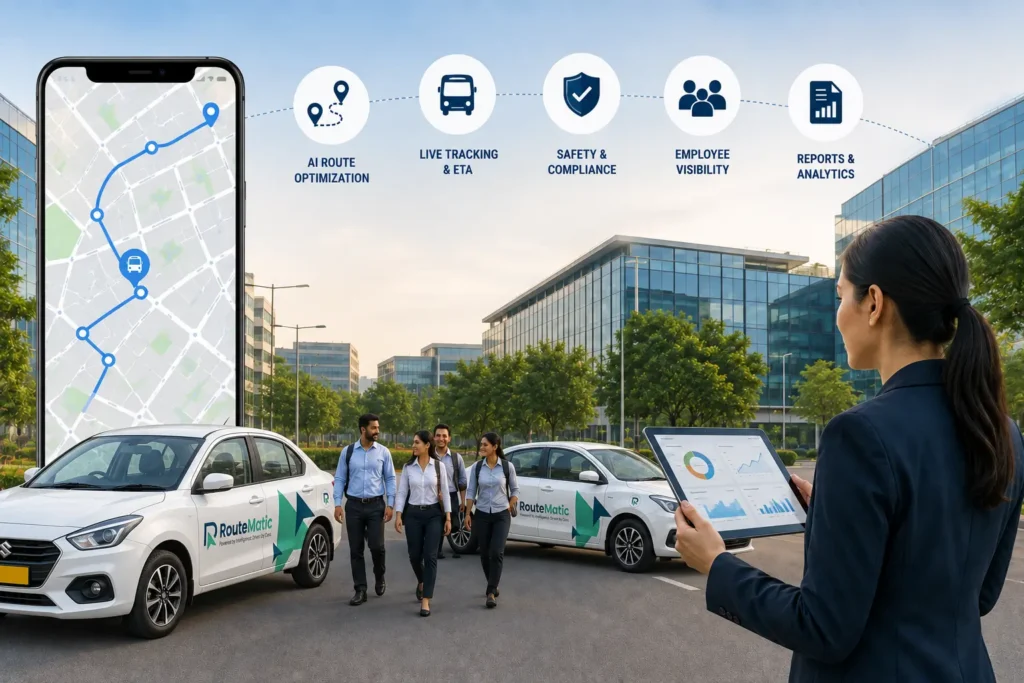
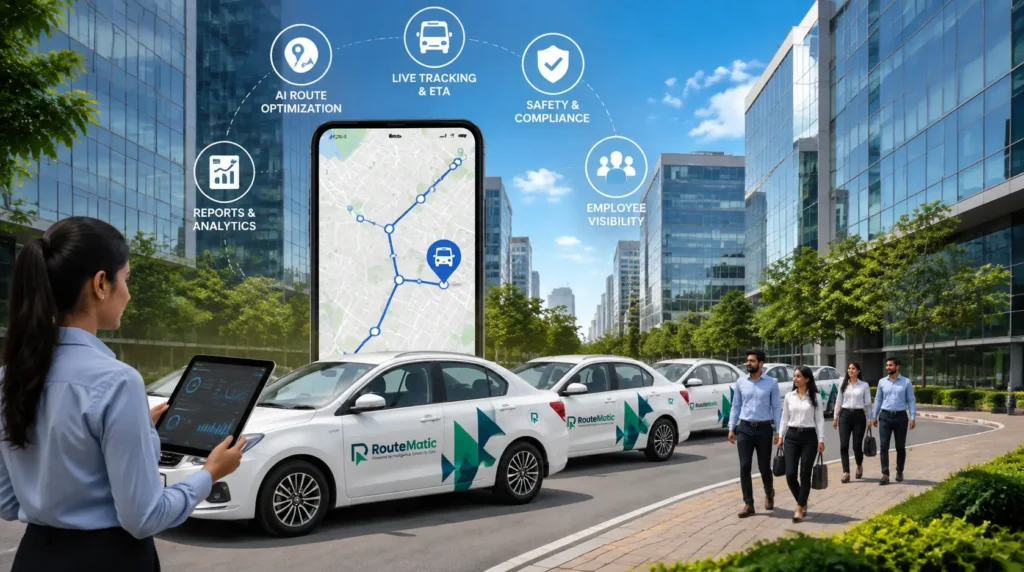
At RouteMatic, we’ve seen how AI, live tracking, and geofencing can transform safety. If a cab deviates into an unsafe area, an alert is triggered. If an employee presses SOS, escalation happens in minutes, not hours. And importantly, the system learns with every incident.
And this isn’t just me saying it. In Deloitte’s 2023 Gen Z and Millennial survey, 64% said workplace safety strongly influences their loyalty to an employer. Safety has to sit at the same table as finance, growth, and strategy because it’s central to accountability.
How to Use Technology for Incident Management the Right Way
Technology alone can’t solve everything, but it gives us powerful tools we can’t overlook.
SOS Alerts
If an employee or cab driver reports an incident, the system should instantly trigger SOS alerts. These real-time notifications reach the command center and response teams without delay.
Rapid Assessment
Once an alert is raised, technology should help quickly assess the situation, pinpointing the exact location, identifying the people involved, and determining the right level of response.
Medical Action: IRT Vehicle
In case of injuries, an Incident Response Team (IRT) vehicle should be dispatched immediately to provide first aid and transport employees safely if needed.
On-Site and Hospital Coordination
The platform should support seamless coordination between on-ground responders, hospitals, and company representatives, ensuring employees receive timely care and families are kept informed.
Formal Closure
Every incident must be properly closed in the system. This includes logging it on the dashboard, following the SOP workflow, conducting a root cause analysis, and implementing corrective measures to prevent recurrence.
My Message to Leaders
So here’s my request: stop treating incident management as a minor operational line item. It must be a leadership priority.
The cost of ignoring it isn’t measured only in rupees. It’s measured in lost trust, compromised dignity, and the daily lived experiences of employees who simply want to reach home safely.
True leadership is not just about asking, “Did we get people to the office on time?” but also, “Did we get them there with peace of mind?”
Because that’s what real leadership looks like.