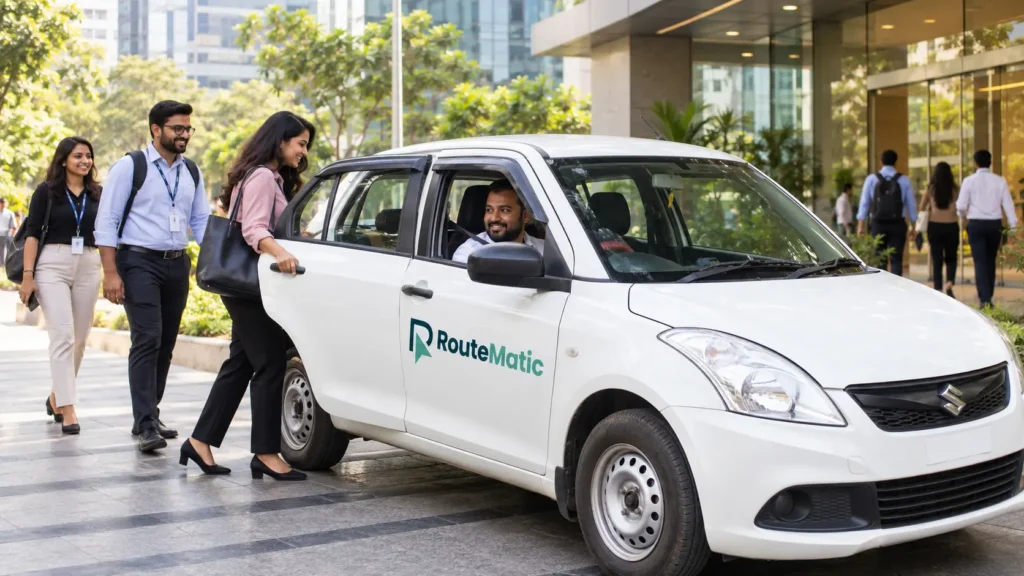
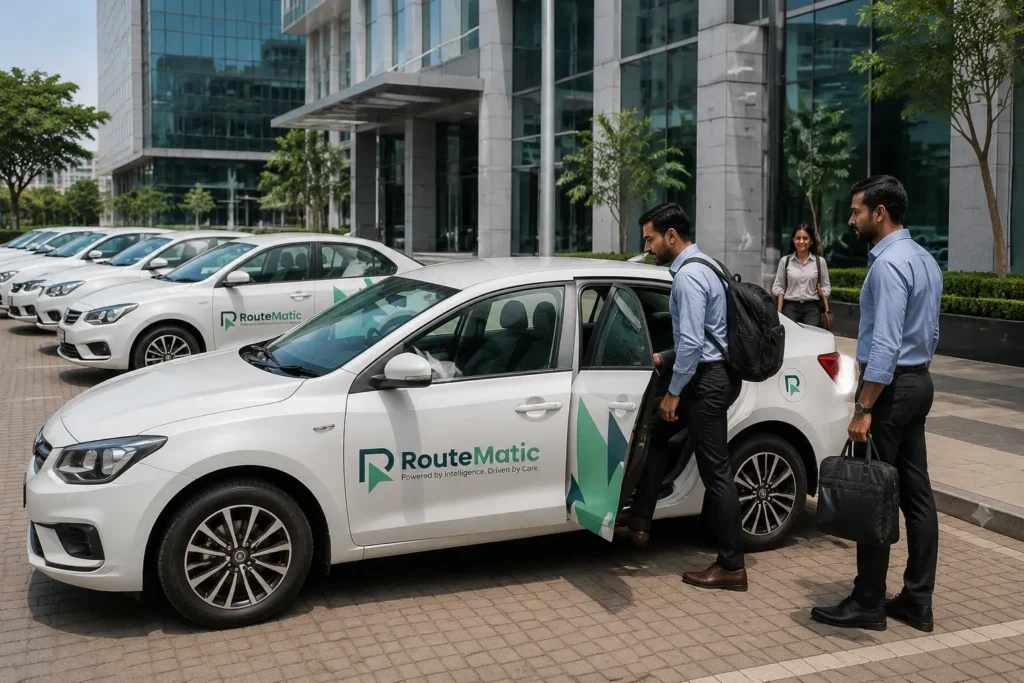
Let’s face it, corporate employee transport has long been a cost centre that nobody really wanted to talk about unless something went wrong.
But in 2025, it’s suddenly got everyone’s attention.
Why? Because sustainable transport is no longer a nice-to-have, it’s a boardroom-level priority. ESG mandates, carbon audits, Scope 3 emissions, and sustainability-linked financing have made how your employees commute part of your climate footprint.
And if you’re still relying on patchy vendors, spreadsheets, and a fleet of diesel vehicles, you’re not just behind the times. You’re hurting your own sustainability goals.
What Does Sustainable Transport Actually Mean for Corporate Commutes?
It’s more than electric cars and recycled seat covers.
Sustainable transport, in the enterprise context, means reducing the environmental impact of employee commutes while improving cost-efficiency, compliance, and employee satisfaction.
That includes:
- Pooling rides to cut per-capita emissions
- Using tech to reduce dead mileage and idle time
- Incorporating EVs or CNG into the fleet mix
- Tracking Scope 3 carbon output from trips
- Offering safer, smarter alternatives to private vehicles
Sustainable transport isn’t just good for the planet, it’s good business.
Why Traditional Employee Transport Management No Longer Supports Sustainability Goals
You can’t cut carbon emissions with paper rosters and gut-feel routing.
Most traditional corporate transport models are built for operational convenience, not environmental efficiency. Here’s what’s broken:
- Excess vehicles running half-full trips
- Diesel-dominant fleets with high emissions
- No tracking of fuel usage or distance waste
- No data to feed into ESG or CSR reporting
- Manual routing that ignores efficiency or pooling
In short, Traditional systems aren’t just inefficient, they’re carbon-heavy, opaque, and non-compliant with where Indian enterprise mobility needs to be in 2025.
How Smart Transport Platforms Enable Sustainable Mobility at Scale
Now we’re talking solutions.
Platforms like RouteMatic are redefining how enterprises approach employee mobility by infusing sustainability into the system design itself.
Here’s what a sustainable transport stack looks like:
- AI-powered dynamic routing to reduce redundant trips
- Fleet pooling logic to optimise capacity and emissions per head
- EV integration support and fleet readiness insights
- Carbon emission tracking dashboards for Scope 3 reporting
- Geo-fencing and shift-based cab assignment to reduce idle run-time
- Integration with HRMS for accurate, usage-based planning
This isn’t just smart tech, it’s a carbon-conscious control tower for your daily commute operations.
How Sustainable Transport Reduces Costs While Improving ESG Metrics
Contrary to popular belief, sustainable doesn’t mean expensive.
In fact, automation and pooling reduce:
- Fuel spend by up to 25–30%
- Vehicle requirement by ~20% through intelligent trip merging
- Manual overhead for HR/Admin teams
- Compliance risk around duty hours and safety
Meanwhile, the carbon footprint per employee drops, which directly supports:
- ESG-linked financing thresholds
- SBTi and GHG Protocol reporting
- CSR metrics and green reporting requirements
- Sustainability awards and certifications
So yes, going green also makes your CFO smile.
Why Employee Experience Improves with Sustainable Transport Practices
Happy commutes = happy employees. It’s that simple.
And sustainable transport contributes directly to a better experience in ways most companies don’t expect:
- Reliable schedules mean less stress and more punctuality
- Cleaner fleets improve perception of safety and hygiene
- Smarter apps give real-time ETAs, ratings, and safer rides
- Reduced wait time thanks to efficient vehicle allocation
- Eco-conscious commuting improves employer brand
In a world where your employer’s reputation is increasingly linked to sustainability, your corporate policy says more about you than your mission statement.
What to Look for in a Sustainable Employee Transport Management Software
Not all office transport software is built equal. If your goal is true environmental impact alongside ops efficiency, here’s your checklist:
| Feature | Sustainability Impact |
| Route Optimisation | Reduces kilometres and fuel burned |
| Ride Pooling Logic | Lowers emissions per employee |
| EV Compatibility | Future-proofs fleet shift |
| Carbon Emissions Tracking | Supports ESG, Scope 3 reports |
| Mobile Booking with Trip Logic | Reduces no-shows and idle rides |
| Safety + Compliance Protocols | Meets labour laws, especially for women night shifts |
Platforms like RouteMatic offer all the above, along with ISO-certified data security, 300+ enterprise deployments, and patented routing logic designed with sustainability in mind.
How to Transition to a Sustainable Transport Model Without Disrupting Operations
Worried about making the switch? Don’t be.
Sustainable transport doesn’t mean burning down your current model, it means evolving it. A strong partner will help you:
- Audit existing operations for carbon hotspots
- Set realistic emission baselines and goals
- Roll out city by city or shift by shift
- Train ops/admin teams with smart dashboards
- Offer employee-facing apps for better adoption
The best part? You’ll probably hit ROI in under 6 months. And your ESG report will finally have something to show in the mobility section.
Final Take: Sustainable Transport Isn’t Just a Trend, It’s a Transformation
Sustainability is no longer just marketing. It’s a measurement. It’s mandate. It’s part of your company’s value.
And sustainable employee transport is where those values meet real-world action.
With the right platform, enterprises can move beyond outdated systems into a world where commuting is efficient, ethical, and emission-conscious.
So, let’s stop treating employee mobility as a headache and start treating it like the strategic sustainability lever it truly is.
Ready to reduce your transport emissions while improving cost, compliance, and employee happiness?
Explore how RouteMatic delivers sustainable transport solutions for over 300 enterprise clients.