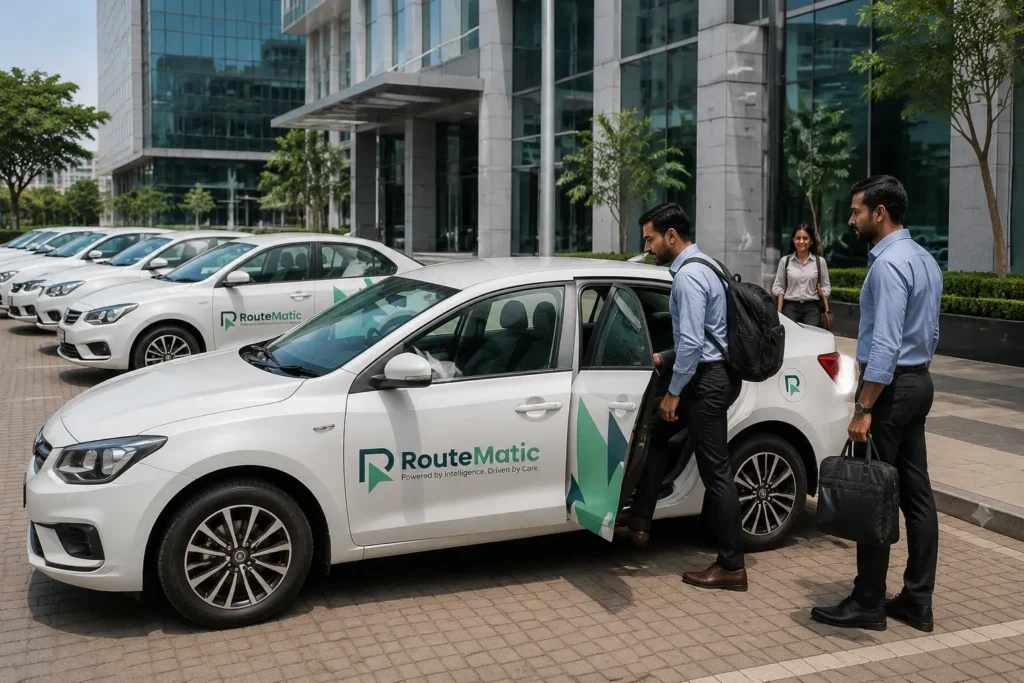
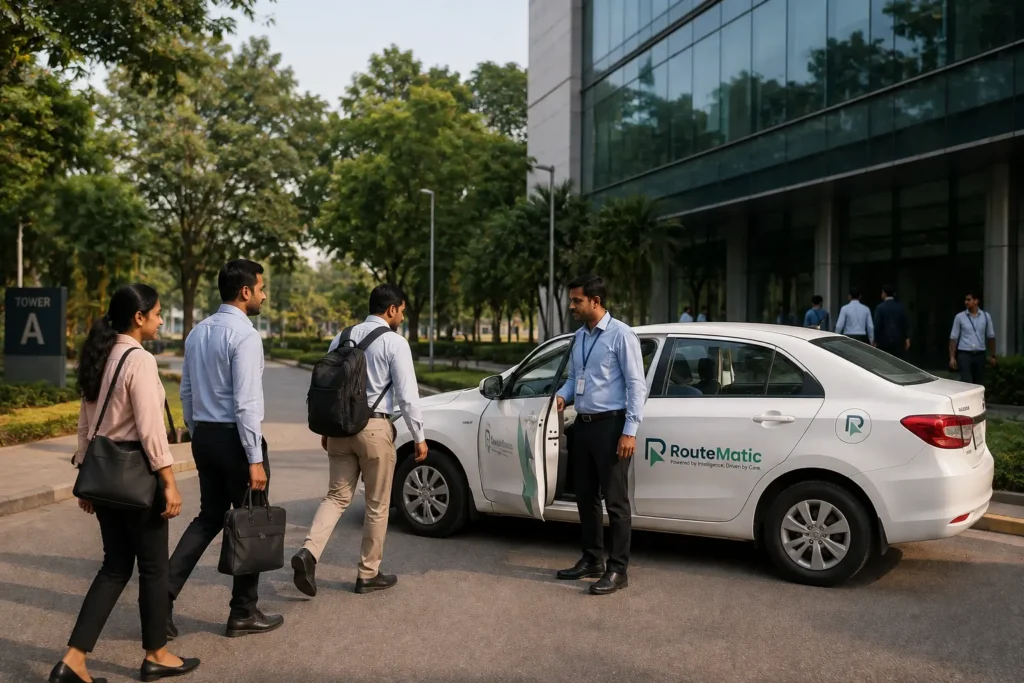
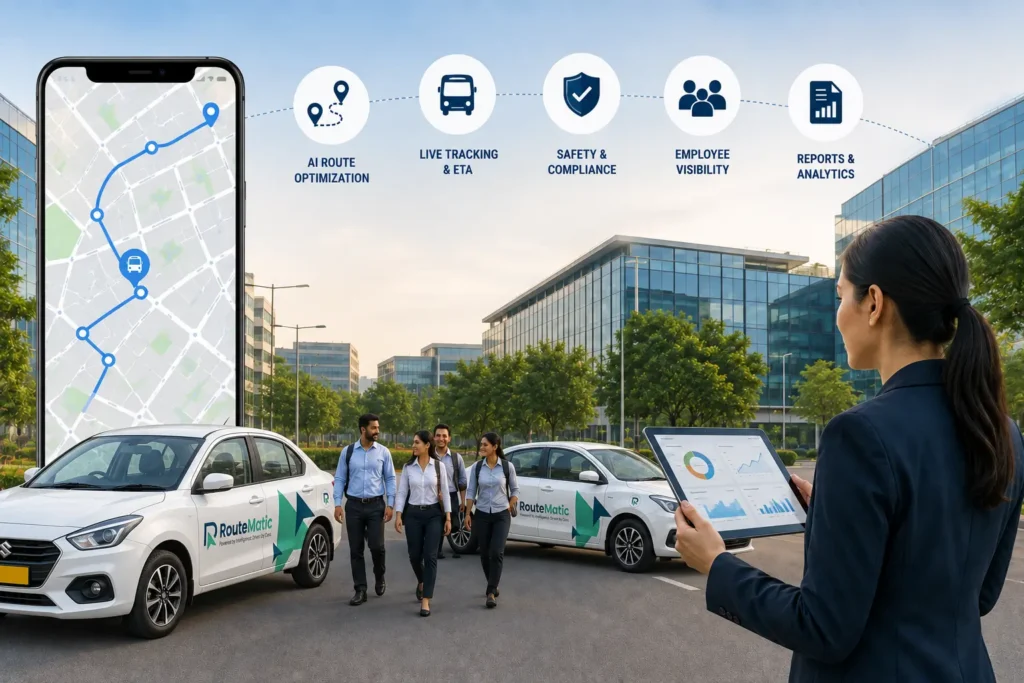
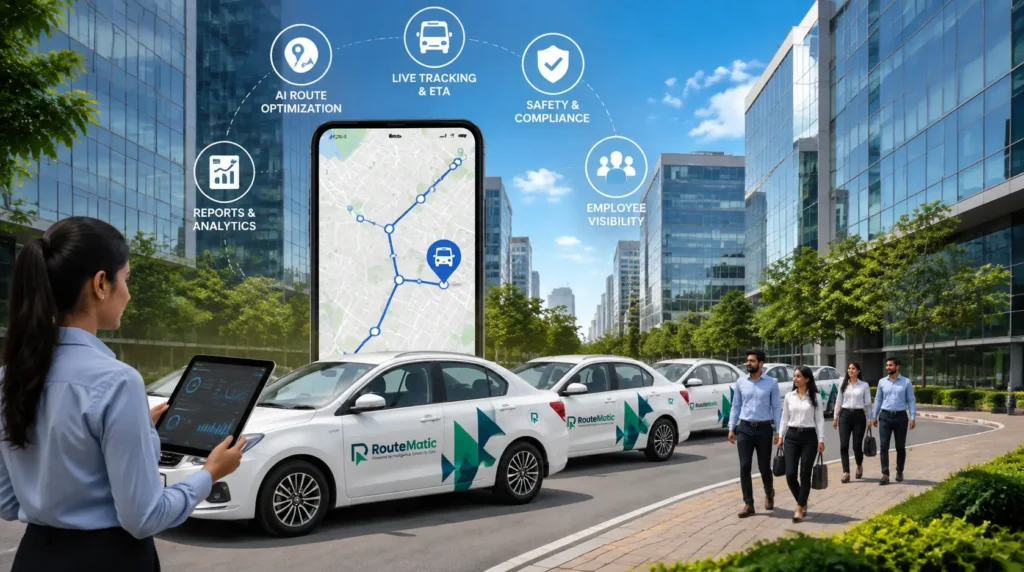
Women safety in corporate transportation in India means replacing unmonitored public commutes with verified drivers, GPS-tracked vehicles, masked personal data, and a 24/7 command center on every trip. Employers in Karnataka, Maharashtra, Tamil Nadu, and Telangana are legally required to provide this. Companies that do it right report a 100% Female Safe Drop rate and 97% on-time arrival.
Women in India face real safety risks every time they commute to work. Corporate transportation changes that.
Corporate transportation for women’s safety means employer-managed commute programs that protect female employees from the moment they leave home until they return safely. For companies running night shifts, multi-city operations, or large female workforces, getting this right is both a legal requirement and a direct business advantage. Learn how employee transportation benefits your entire workforce before diving into the specifics of women’s safety.
Key Takeaways
- Women safety in employee transportation removes the risks that public transport cannot address: unverified drivers, unsafe drop points, no emergency backup, and zero accountability.
- How corporate transportation can improve women’s safety starts with GPS-tracked vehicles, background-verified drivers, masked employee data, and a 24/7 command center on every trip.
- Karnataka, Maharashtra, Tamil Nadu, and Telangana legally require employers to provide free, secure, door-to-door transport for women working after 8 pm.
- RouteMatic, India’s most trusted employee transport partner, delivers a 100% Female Safe Drop rate, 97% on-time arrival, and 98% automated safe drop confirmation across 400+ enterprises in 24 cities as of 2025.In Indian cities, 56% of women using public transport reported being sexually harassed, according to the World Bank.
Why Does Public Transport Fail Women in India?
Public transport in India was not built with women’s safety in mind.
According to the World Bank, 56% of women using public transport in Indian cities reported being sexually harassed.
Overcrowded buses. Poorly lit stops. No way to verify who is driving. Nobody is accountable if something goes wrong. Corporate transportation for women’s safety directly addresses what public transport cannot: full accountability at every step of the journey.
1. What Does a Safe Office Commute for Women Employees Actually Look Like?
Not all corporate cab arrangements are equal.
A vendor sending an unmonitored cab at 10 pm is not a safety solution. A properly managed program looks very different. Here is what genuine corporate transportation for women’s safety requires:
- Verified drivers with completed background checks before their first trip, not after an incident
- GPS-tracked vehicles with live monitoring from a command center throughout every journey
- Masked contact details so drivers and vendors never access a woman’s personal number or home address
- Route rules prevent women from being picked up first or dropped off last, unless a security escort accompanies the vehicle
- Dedicated monitoring for women-only trips with automated flagging of any ride needing additional security support
Each protection matters individually. Together, they create a system where both the employee and the employer know exactly what is happening at every point of the journey.
Karnataka, Maharashtra, Tamil Nadu, and Telangana legally require employers to provide free, GPS-tracked, door-to-door transport for women working between 8 pm and 6 am.
2. What Are the Legal Requirements for Women’s Safety in Corporate Transport?
Most HR and admin teams underestimate how specific India’s transport compliance rules actually are.
Karnataka’s Shops and Establishments Act requires employers to provide free, GPS-tracked, door-to-door transport for women working between 8 pm and 6 am. Failure to deploy a security escort when a woman travels alone on a first-pick or last-drop route is a direct compliance breach, not an operational oversight. Drivers must be background-verified, and personal contact details of female employees cannot be shared with any driver or vendor.
Maharashtra, Tamil Nadu, and Telangana have near-identical requirements. The Occupational Safety, Health and Working Conditions Code, 2020, also mandates safe transport for women working outside standard hours at the national level.
Non-compliance can result in the withdrawal of a company’s operating license and, in serious cases, criminal liability for management. If your company employs women on night shifts without a compliant transport policy, you are already exposed.
Understanding how to manage employee transport in a corporate company and ensuring safety and compliance in employee transportation is the first step toward closing that gap.
3. What Is the Business Case for Corporate Transportation for Women’s Safety?
Investing in women safety in workplace transportation does more than meet legal requirements. It keeps women in the workforce.
When a woman knows her commute home is monitored and her driver is verified, she is far more likely to accept a night shift, take a role farther from home, or stay with your company long-term.
Companies running structured corporate transportation for women’s safety see stronger uptake of rotational shift roles and lower attrition among female employees. Climate KIC found that 52% of women in India have declined job opportunities because the commute felt too dangerous. Safe transport directly fixes that.
RouteMatic clients report 12-18% cost savings on transport spend, an employee satisfaction score of 4.9 out of 5, and no-show rates under 5%. Those numbers come from real operational data across IT, BPO, BFSI, and GCC clients, not projections.
Every billing leakage, ghost trip, and unmonitored night route is a financial and legal exposure waiting to surface. See how corporate mobility platforms reduce employee transportation costs while strengthening compliance.
4. How Do Technology and Operations Work Together to Improve Women’s Safety in Shared Mobility?
Technology without operational accountability is not a safety system.
A SaaS platform that gives you a dashboard but leaves vendor management, driver verification, and incident response entirely in your hands has real gaps. Those gaps are exactly where women’s safety in shared mobility breaks down.
Improving women’s safety in shared mobility requires a hybrid model combining AI-driven technology with fleet control, a trained workforce, and a live command center that acts on data in real time.
RouteMatic is the only employee transport platform in India that combines its own fleet with fully integrated AI technology, giving enterprises quantified control over safety, cost, and compliance from a single system.
Its Transport SuperApp delivers this across four integrated modules:
- RM Shift Transport handles dynamic shift-based cab operations with AI route optimization and real-time compliance tracking
- RM Shuttle manages fixed-route buses and inter-office shuttles with seat booking and live vehicle tracking
- RM Rental / Travel Desk covers corporate car rentals and airport transfers for senior employees or visitors traveling outside standard hours
- RM Parking Solution enables advanced slot booking and barrier integration, removing the risk of women waiting alone in poorly monitored parking areas after late shifts
Behind all four modules sits the RouteMatic Operations Command Center (ROCC), a 24×7 nerve center that monitors every active vehicle, flags route deviations in real time, and handles incidents directly. Not a chatbot. Not an outsourced helpline. A staffed operational hub with eyes on every trip.
RouteMatic holds ISO 27001 and ISO 27701 certifications, meaning women’s home addresses, phone numbers, and personal data stay protected under internationally recognized security standards. Drivers and vendors never see that information.
The platform serves 400+ enterprises across 24 cities, including 38 Fortune 500 companies and 125 Global Capability Centers, running 5 million rides and 75,000 daily trips every month with 350,000+ monthly users and a 97% on-time arrival and departure rate as of 2025. Thermo Fisher, HCL, Infosys, Capco, and Sagility run their employee transport through RouteMatic.
3 Myths About Corporate Transportation for Women’s Safety That Need Correcting
“GPS tracking alone is enough to keep women safe.”
Not even close. GPS tells you where a vehicle is, but not whether the driver stopped somewhere unplanned or deviated from the route before the system flagged it. NASSCOM’s Guidelines on Safe Transportation for Women Employees in IT and ITeS Sector are explicit: GPS is one layer of a multi-layer safety framework. Without a live command center acting on that data, the information sits unread on a screen as the risk unfolds in real time.
“Women prefer flexibility over structured corporate transport.”
Ask any woman who has navigated a crowded bus alone at midnight whether flexibility feels like a benefit. The Institute for Transportation and Development Policy found that 41% of women said overcrowding made their journeys unsafe. Structured, monitored, verified transport is not a restriction. For most women, it is the first time their commute has felt genuinely safe.
“Compliance rules only apply to IT companies in Bengaluru.”
Karnataka’s rules started with IT and ITeS, but the updated Shops and Establishments Act now extends them to factories, retail establishments, and commercial operations. Maharashtra, Tamil Nadu, and Telangana have passed parallel requirements. If your company employs women across late shifts in any metro city in India, the rules apply to you.
Quick Reference: What Does Compliant Corporate Transportation for Women’s Safety Require?
| Requirement | What It Means | Source |
| Door-to-door transport | Pick up and drop off at the employee’s home address only, never a common point | Karnataka S&E Act; OSHWC Code 2020 |
| GPS-tracked vehicles | Live tracking is accessible to a command center throughout every journey | State Shops and Establishments Acts |
| Verified drivers | Background checks completed before the first trip; bio-data on file | Karnataka Labour Department guidelines |
| No first-pick or last-drop without escort | A security guard must accompany the vehicle if a woman travels alone | Karnataka S&E Act; NASSCOM framework |
| Masked employee contact details | The driver and vendor cannot access a woman’s phone number or home address | Karnataka S&E Act; ISO 27701 |
| 24×7 command center | Staffed by direct employees, not outsourced agents | Karnataka Labour Department guidelines |
| Documented incident records | All complaints and incidents are logged and retained for a minimum of 3 years | OSHWC Code 2020 |
Why Is Corporate Transportation for Women’s Safety the Investment Every Company Must Make?
Safe commutes are not a perk. They are not an HR checkbox.
For any company employing women across shifts, corporate transportation for women’s safety is a legal obligation, a retention tool, and a direct measure of operational maturity. Women who feel safe commuting take on more, stay longer, and accept the night shifts that keep your operations running. Get the transport wrong, and you lose them quietly, one resignation at a time.
RouteMatic is India’s most trusted employee transport partner. Its managed fleet delivers a 100% Female Safe Drop rate, with 98% of confirmations completed automatically, and the remaining 2% followed up by direct manual calls.
Explore how RouteMatic’s managed transport solutions work for enterprises across India.
What does your current transport program look like for women working after 8 pm?
Frequently Asked Questions
What is corporate transportation for women’s safety in India?
Women safety in office transportation is an employer-managed commute program that protects female employees during travel to and from work. Safe programs include GPS-tracked vehicles, background-verified drivers, 24/7 command center monitoring, masked contact details, and in-app SOS access. These go well beyond a standard cab booking and carry legal obligations under multiple Indian state acts.
How can corporate transportation improve women’s safety during night shifts?
Corporate transportation can improve women’s safety during night shifts by removing the variables that make unmanaged commutes dangerous. Verified drivers, live trip monitoring, route controls, and security escorts for last-drop situations ensure every trip home stays fully monitored and accountable from start to finish.
Is it legally mandatory to provide transport for women working night shifts in India?
Yes. Karnataka, Maharashtra, Tamil Nadu, Telangana, and several other states legally require employers to provide free, secure, door-to-door transport for women working after 8 pm. The national OSHWC Code 2020 also mandates safe transport for women working outside standard hours. Non-compliance can result in license cancellation and direct legal liability for company management.
What happens if a company does not comply with women’s transport safety rules?
Non-compliance can result in the withdrawal of a company’s operating license under the state Shops and Establishments Acts. In serious cases, management faces direct criminal liability. Beyond legal consequences, failure to protect female employees during their commute increases attrition among women, weakens your ability to fill night and rotational roles, and causes lasting damage to your employer brand.
About the author

Sandeep Padhi
Chief Operating Officer, RouteMatic
As COO of RouteMatic, Sandeep Padhi brings extensive expertise in transport operations, fleet management, and enterprise mobility. He shares practical insights on scaling transportation programs, operational excellence, compliance, driver ecosystems, and building reliable mobility solutions for modern enterprises.